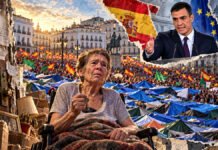
Pedro Sánchez’s socialist candidate wins crucial vote for control of parliament
The aftermath of the inconclusive national elections held on 23 July painted a complex picture, leaving no major party with a straightforward route to amass the necessary support for governing. As the political landscape hung in delicate equilibrium between left and right ideologies, a last-minute agreement ushered in an unexpected turn. Socialist contender Francina Armengol, with an eleventh-hour alliance with the hard-line faction of the Catalan independence movement, ascended to the role of parliament Speaker.
Now Spain’s political theatre sees the socialist government, under the leadership of Prime Minister Pedro Sánchez, clinch control over the principal administrative body of the parliament. This achievement follows the eleventh-hour victory of socialist candidate Francina Armengol, who garnered the endorsement of two pro-Catalan independence parties.
A palpable sigh of relief resonated through the corridors of power as Francina Armengol, hailing from the Socialist Party of the Balearic Islands, secured the backing of the resolute wing of the Catalan independence movement. This critical backing propelled Armengol to the position of President of Congress, a triumph achieved by a resounding absolute majority.
This vote, while seemingly an isolated event, carried the weight of a practice run for a pivotal investiture vote scheduled for the upcoming month. This impending vote will decide the figure who ultimately assumes the mantle of governance.
Gathering 178 affirmative votes out of the 350 in the Chamber, Armengol outshone the conservative Popular Party (PP) candidate. Despite the Popular Party’s status as the dominant force within Congress with 137 seats, they failed to muster the necessary cross-party support, rendering their majority insufficient.
Catalan Pivot
In the intricate political chess match, the socialist PSOE managed to secure the backing of the pro-Catalan independence party Junts. This alliance came at the price of amplifying co-official languages within Congress, launching an inquiry into the Pegasus case, and implementing measures to address the aftermath of the controversial Catalonian referendum known as “1-O.” While Pedro Sánchez’s Socialists, the Sumar left-wing coalition, and a group of four smaller parties collectively amassed 171 seats, a mirror coalition comprising the Popular Party, the far-right Vox party, and another smaller faction held an identical tally. The magical threshold for an absolute majority rested at 176 votes.
Notably, the seven members of Junts, a radical separatist Catalan party led by the exiled Carles Puigdemont, based in Brussels, emerged as the powerbrokers who would shape Spain’s political trajectory over the next four years. This revelation underlines the sway of a select few individuals in determining the course of a nation’s destiny.