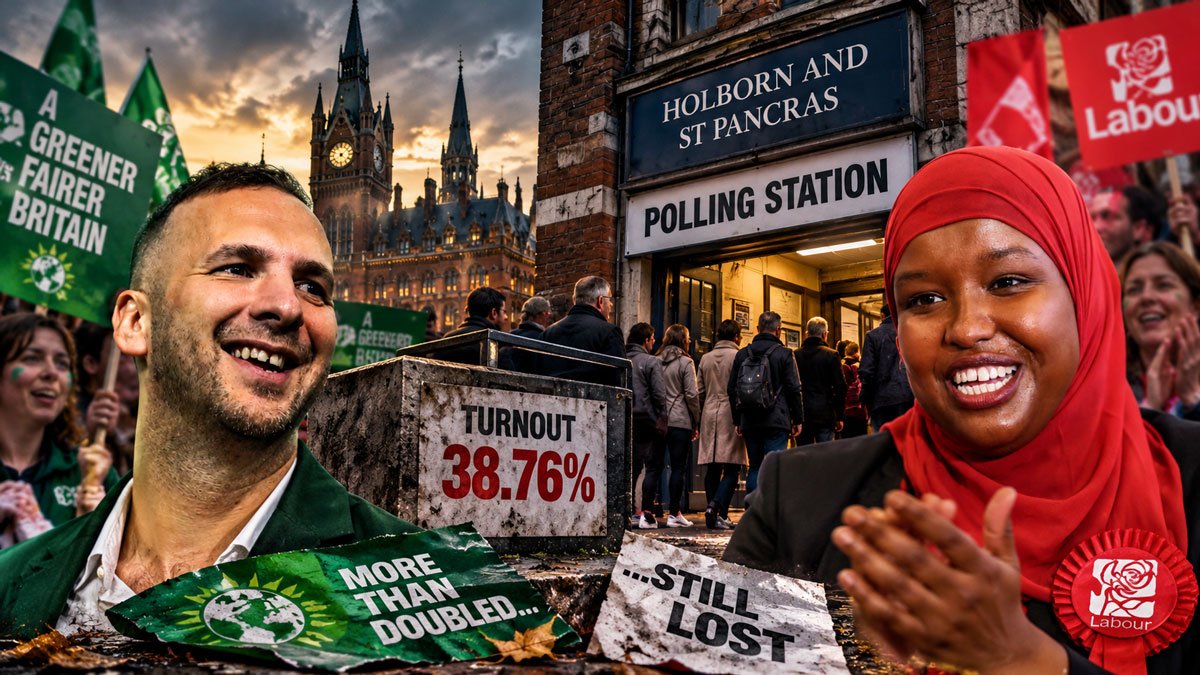
Holborn and St Pancras By-Election: Labour Hold
Sagal Abdi-Wali takes Holborn and St Pancras on a 38.76 per cent turnout. Zack Polanski more than doubled the Green vote and still lost the one contest he chose for himself.
Keir Starmer left Holborn and St Pancras with a majority of 11,572. Labour has just kept it with 3,364. Six voters in ten did not turn out at all. That is not a mandate. It is a tenancy, which is at least appropriate in a constituency where roughly three quarters of residents rent the roof over their heads.
Sagal Abdi-Wali, leader of Camden Council since May and a former child refugee from Somalia, won with 12,292 votes. Zack Polanski, leader of the Green Party of England and Wales, took 8,928. Ewan Cameron of the Conservatives came third on 1,922, Reform’s Peter Newman fourth on 1,612, and the Liberal Democrat Patrick Stillman trailed on 924. Turnout was 38.76 per cent, down from 54.1 per cent when Starmer last stood here two years ago.
Let me be fair to the Greens before I am hard on them, because the arithmetic deserves honesty. In 2024 their candidate David Stansell polled 4,030 votes in this seat. Polanski took more than double that on a turnout around eleven thousand votes lower. In share terms that is close to a tripling. A Green spokesperson said on the night that taking the fight to Labour in one of its safest seats showed how far the party has come, and on the face of the numbers that is not spin. In February the Greens took Gorton and Denton from Labour outright, with Hannah Spencer winning on a turnout of 47.62 per cent. This is a party that is genuinely growing.
That is precisely why last night was so bad for them.
Gorton and Denton was a seat the Greens chose to fight. Holborn and St Pancras was a seat their leader chose to inhabit. Polanski did not send a promising local candidate into Camden and hope. He put his own name on the ballot, moved the national operation in behind it, and told the press in September that he would remain leader whatever happened. Nearly fifteen hundred doors were knocked in the first three days after Starmer’s resignation, before the party had even selected anybody. When you stake your personal authority on a contest, you do not get to grade yourself on vote share afterwards.
When you stake your personal authority on a contest, you do not get to grade yourself on vote share afterwards.
And there is a number that should trouble Green strategists more than Abdi-Wali’s majority. In 2024, the independent Andrew Feinstein took 7,312 votes here with no party, no machine and no national profile beyond his own. Stansell took a further 4,030. Between them, the anti-Starmer left polled 11,342 in this constituency. Polanski, as leader of a national party in a by-election built around him, polled 8,928. Turnout was far lower, so the comparison is not a straight one. But a movement that absorbed Feinstein’s endorsement and Feinstein’s voters and still could not assemble Feinstein’s coalition has a problem it cannot solve with leaflets.
WHAT HAPPENED IN BRIGHTON
The problem has a date and a place. On Saturday 4 October, at the Green conference in Brighton, members voted by 1,022 to 813 to adopt a motion declaring Zionism a racist, ethnonationalist political project, committing the party to a single democratic state and formally making the Greens the first explicitly anti-Zionist party in mainstream British politics. Fifty-five per cent to forty-five. A party split nearly down the middle, on the eve of the most important by-election in its history.
Polanski was not in the hall. He had left after his Friday speech to campaign in Camden. He had backed an amendment offering safeguards for Jewish members, and that amendment was defeated, but he did not stay to speak against the motion and he did not vote on it.
Caroline Lucas, who led the party from 2016 to 2018 and remains its most recognisable figure, went on Newsnight and did not spare him. She said he should have been there and he should have voted. She called the motion flawed from top to bottom. Asked directly whether Polanski should quit the leadership, she declined to defend him, saying instead that we should see what happens in the coming days and weeks, while allowing that he had been taken up with the by-election.
Read that again. That is not criticism from an opponent. That is a former leader of the same party, invited on live television to say her leader should stay, choosing not to.
THE ARGUMENT THE GREENS DID NOT HAVE

Here is the defence the Greens will offer, and it is not a stupid one. Party conference is sovereign. Members, not leaders, make policy, and a leader who overrides a membership vote is a leader of a different kind of party. The motion carries no disciplinary weight, as the party’s own spokesperson pointed out. Polanski was doing the job the membership had given him, which was to fight an election. There is something honourable in a party that argues in public rather than managing dissent in private, and anyone who watched Labour’s internal machinery grind through the Corbyn years should hesitate before demanding more discipline and less democracy.
All true. And all beside the point.
The question was never whether Green members have the right to debate Israel and Palestine. They do. The question is what a party is for, and what it puts first when the two collide. In the week the Greens had their best ever shot at a Westminster seat, in a constituency where people are being priced out of the streets they grew up on, the party’s defining public act was a motion about the Middle East that split its own conference almost in half and that its leader was too busy to vote on.
Abdi-Wali, for her part, campaigned on the thing in front of her. She pointed out that around 76 per cent of people in this seat rent, against a national average nearer 36. She was not an inspiring choice, and plenty on the local left regard her as thoroughly Starmerite. She did not turn up to the Camden Muslim Network hustings, and the organisers noticed. Her party’s vote fell by 6,592 from Starmer’s 2024 total. She won anyway, because she talked about rent.
BOUNDARIES
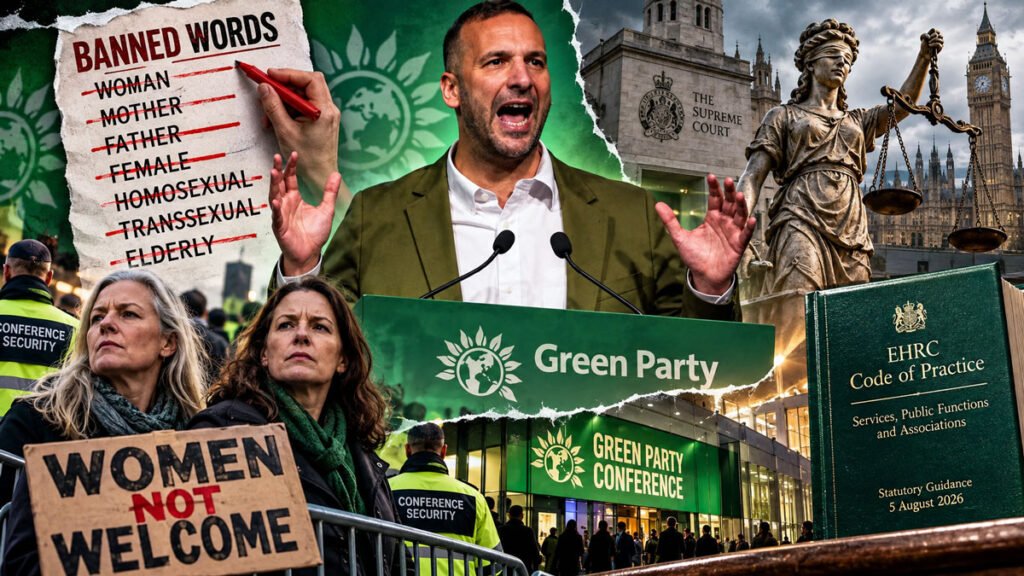
Something has happened to the Green Party, and the Zionism motion is a symptom rather than the disease. This was once a movement that understood boundaries as a physical fact. A watershed. A green belt. A hedgerow. A limit on how much a river can take before it dies. Its whole claim on our attention was that some things must be protected whether or not protecting them is fashionable.
That instinct has not disappeared, but it has been displaced. A party that built itself on defending the boundaries of the natural world has become notably less patient with boundaries elsewhere, including the ones women ask for around privacy, dignity and single-sex space. This newspaper’s position on that is settled and will not be softened to keep anyone comfortable. Somewhere between saving the planet and relitigating the meaning of sex, the Greens wandered into territory where the people they most need to persuade cannot follow them.
Polanski should not be hounded out over one defeat. He doubled his party’s vote in a Labour fortress and that is a real achievement, whatever happens next. But he set the test himself, and he failed it, and he was absent from the room where the damage was done.
THE TEMPTATION IN DOWNING STREET
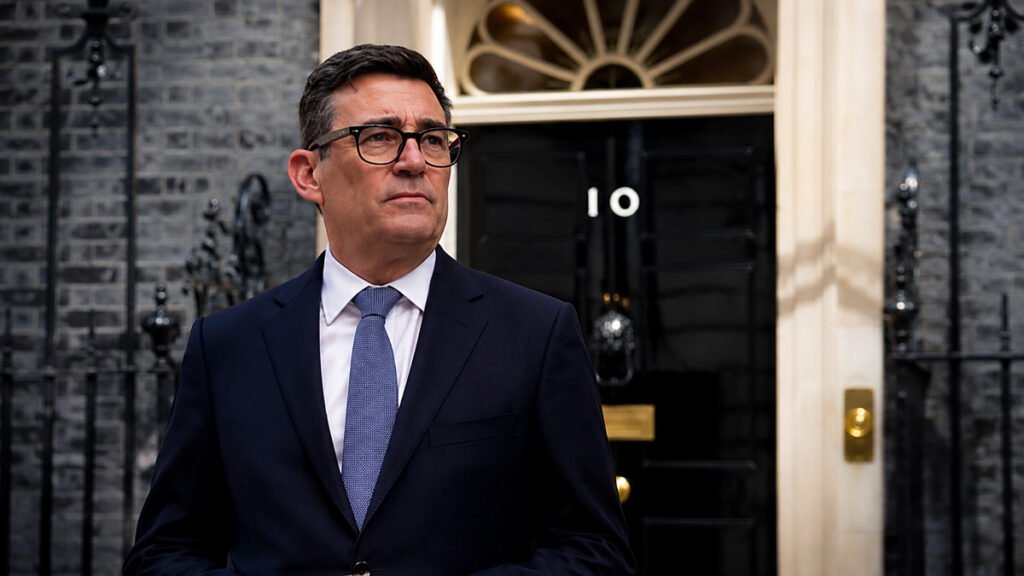
There is a man in Downing Street who should read this result more carefully than anyone in the Green Party, and his name is Andy Burnham.
Burnham has been Prime Minister since 20 July. He was acclaimed unopposed, which is to say that not a single Labour member, let alone a single voter, was asked to endorse him. He entered the Commons in June through a by-election in Makerfield that existed only because Josh Simons stood aside to create it. He is the seventh person to hold the office in just over a decade. He has never led a party into a general election, and the next one is not due until August 2029.
So far, that has not hurt him. Survation’s poll of 2 to 5 October put Labour on 30 per cent against Reform’s 24, the party’s best figure since December 2024 and the third Labour lead of Burnham’s premiership outside the margin of error. His personal numbers are the sort no British prime minister has enjoyed in years: Opinium had him at net plus seven in late September, YouGov at plus five. The press has already given it a name. The Burnham bounce.
Every instinct in Labour’s machine will now whisper the same thing. Go now. Convert the bounce into a mandate before the Budget, before the winter, before the shine comes off.
Holborn and St Pancras is the reason not to.
Look at what actually happened in a seat Labour held by 11,572 two years ago. The party’s vote fell by 6,592. The majority fell to 3,364. Starmer’s successor won, and won fairly, but she won by surviving rather than persuading. And the damage was not done by the right. The Conservatives went backwards here in raw votes. So did Reform. So did the Liberal Democrats. Everything Labour lost in this constituency, it lost leftwards.
That is the part that should keep Burnham awake, because it is the mirror image of the thing that got him here. Tim Bale of Queen Mary University put it plainly to Al Jazeera last week: very little of Labour’s recovery comes from Reform voters switching to Labour. The bounce is built on left-leaning and liberal voters coming home. Those are precisely the voters Polanski spent five weeks in Camden trying to take away, and he took 8,928 of them.
Now set that against the arithmetic of 2024. Labour won 411 seats on 33.7 per cent of the vote, the most efficient and the shallowest landslide in modern British history. A majority of that size built on a third of the vote does not degrade gently. It holds, and holds, and then it collapses all at once, because hundreds of seats sit within a few thousand votes of changing hands. Labour is currently polling between 28 and 30 per cent. In February, the Greens took Gorton and Denton from Labour on a swing large enough to rank among the biggest Labour by-election losses since 1931. In Makerfield, Reform’s candidate still polled 15,696 votes while losing.
Burnham cannot squeeze the Green vote by moving right, and he cannot hold off Reform by moving left.
Two fronts, pulling in opposite directions. There is no campaign clever enough to solve that in six weeks, which is all a general election gives you.
The honest case for going early is that legitimacy is a real problem, that an unelected prime minister governing on another man’s manifesto has limited authority, and that the bounce may never be higher than it is this month. All fair. But a general election called to settle a legitimacy question of your own making is not a mandate, it is a gamble with other people’s livelihoods as the stake. Burnham has nearly three years. The question is not whether he can win an election now. It is whether he can give people a reason to vote for him in 2029, and that reason will not be found in a poll. It will be found in rent, in bills, in water, in buses, in the things he spent nine years in Manchester saying a government ought to be judged on.
He has the one thing Starmer never had, which is permission. He should spend it on something.
The Greens did not lose Holborn and St Pancras to Labour. They lost it in Brighton, in a hall their leader had already left.
Enjoyed this read? I’m committed to keeping this space 100% ad-free so you can enjoy a clean, focused reading experience. Crafting these articles takes a significant amount of research and heart. If you found this helpful, please consider a “small donation” to help keep the lights on and the content flowing. Every bit of support makes a huge difference.