THE THIEFDOM
Manchester City’s guilty verdict opened a door. Behind it sits a public housing fund, a Gulf prince, and nine councils that underwrote the risk, raising questions about who benefited from publicly financed regeneration.
Football is a game of two halves.
One is played on the pitch. The beautiful game. The poetry of motion, the roar of the crowd, the working man’s game transformed into a billion-pound spectacle.
The other half is played behind closed doors, where the paperwork lives. No cameras. No commentary. Just men in suits, long leaseholds, offshore companies and signatures that move millions from public funds into private property empires.
It is this second half we need to examine.
The Manchester City scandal has exposed what an independent Premier League commission described as years of financial deception: sham sponsorship contracts, sponsorship money the commission found had come in part from the club’s own owners rather than the sponsors, and misleading accounts stretching across nine seasons. The club disputes the findings and has appealed. But follow the money beyond the Etihad and another story begins. It leads to a mayor’s office, a public housing fund, and the streets of east Manchester.
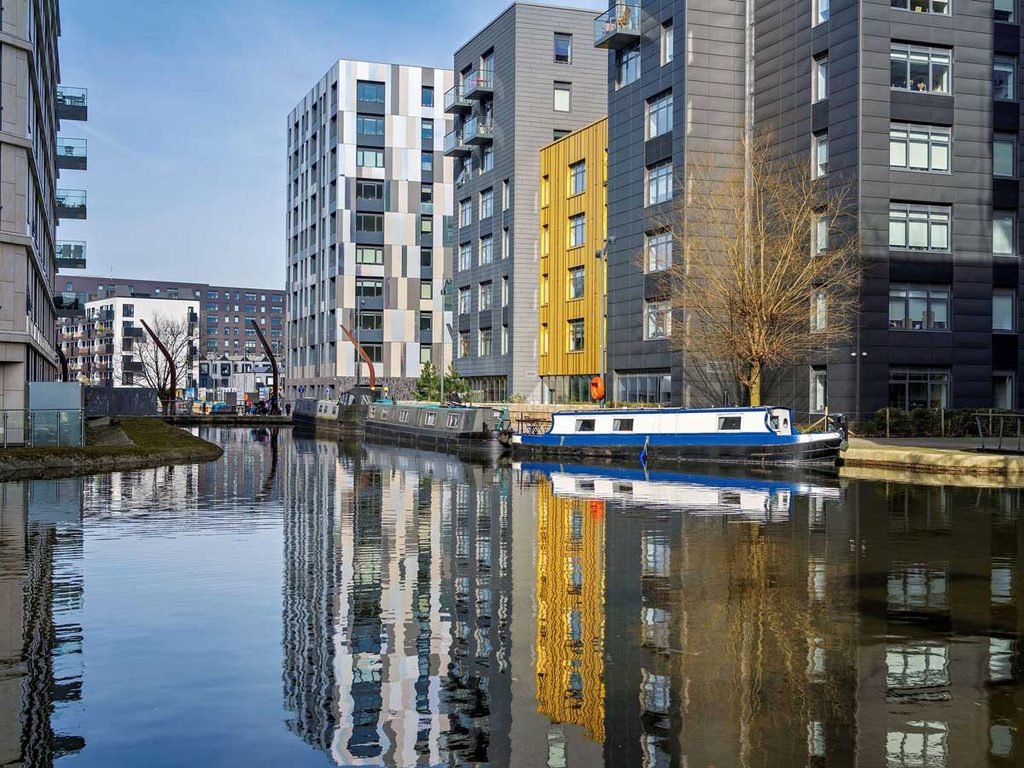
Because Sheikh Mansour’s Abu Dhabi United Group did not stop at buying Manchester City in 2008. Its investments extended into Manchester’s land, its housing, its regeneration. And according to The Telegraph’s investigation published on 8 October, three property companies ultimately controlled by the billionaire Gulf royal received around £55.7 million in taxpayer-backed loans from a public fund intended to tackle Greater Manchester’s housing shortage. New Little Mill Developments, Vesta Street Developments and Lampwick Developments: all registered in Jersey, all part of the Manchester Life partnership between Manchester City Council and ADUG. Lampwick alone took £24.5 million. The approvals came at two Greater Manchester Combined Authority meetings in 2017, both chaired by Andy Burnham.
The homes were built. The loans were repaid with interest. The paperwork went through the proper channels. And when academic researchers examined the Manchester Life developments, they found 1,468 homes delivered without a single affordable home among them.
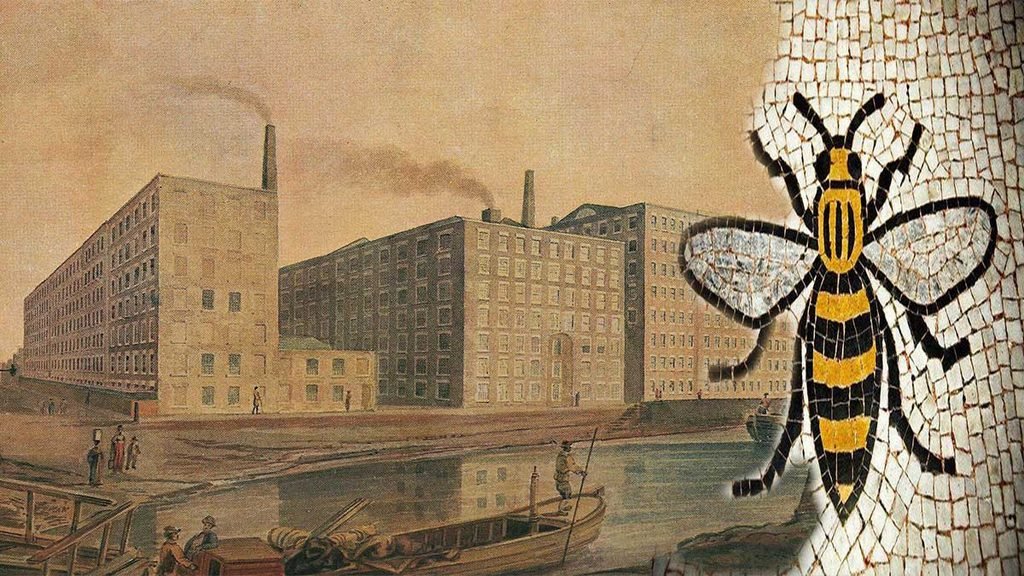
There is a district of east Manchester now called New Islington. Before the developers arrived, much of the surrounding neighbourhood was Miles Platting. Before that came the mills, and before the mills, the fields. Walk it today and you will find the worker’s bee cut into the old stone, the emblem of a city that told its people the wealth they made would come back to them. It never quite did. And the towers that have gone up beside that old stone, on ground their grandparents worked, were built with their money and let at rents they cannot pay.
That is where this story becomes something much bigger than football.
Nine Boroughs Underwrote Manchester Housing Loans
Here is the detail that turns a Manchester story into a Greater Manchester one, and it comes not from a newspaper but from the authority’s own accounts.
In March 2018, the GMCA’s Treasury Management Strategy set out how the Housing Investment Loans Fund actually worked. The combined authority did not at that point have the legal power to borrow the money it was lending. So the loans were made by Manchester City Council, which held a £300 million loan from what was then the Department for Communities and Local Government. Government took the first £60 million of any losses. The remaining £240 million was guaranteed, and the guarantee had to sit with somebody.
It sat with the other nine boroughs. In the document’s own words, “the other nine GM local authorities have each indemnified MCC for their share of the liability MCC has under the loan agreement with DCLG to repay a minimum of 80% of the Fund to DCLG in 2025.”
Read that again, and then read the dates. Those indemnities were live when the loans to Sheikh Mansour’s Jersey companies were approved in 2017. They only fell away in April 2018, when the loan book transferred to the GMCA. Which means that at the moment the money went out, the councils standing behind it were Wigan, Bolton, Oldham, Rochdale, Bury, Salford, Stockport, Tameside and Trafford. Not one of them received a penny of those three loans. Not one of their councillors sat in the room. Had the schemes failed, the bill would have landed on the general funds of some of the poorest boroughs in England, places where the libraries were closing and the children’s centres had already gone.
The loans did not fail. That is luck, not governance. And luck is not a system of accountability.
The GMCA’s Own Report Admitted the Misalignment

The most damaging document in this story is not The Telegraph’s investigation. It is the GMCA’s own loans report, tabled in the same pack, which states plainly that “affordable housing and section 106 agreements are dealt with at a local level”, before conceding, in the same breath, that commitments had now passed £300 million and that work was “ongoing to revise the Investment Strategy to better align the future investment approach with the GMCA housing objectives.”
That is a housing fund admitting, in writing, that affordable housing was somebody else’s department, and that its investments were not aligned with its own housing goals. It is not a leaked memo. It is a public report, tabled and approved, and nobody made a fuss because nobody was reading.
The results arrived exactly as the paperwork predicted. Across the £1.2 billion the fund eventually lent, eleven thousand homes were built, of which fewer than five hundred met the affordable threshold. Under five per cent. That figure comes from an independent evaluation the GMCA itself commissioned. Meanwhile Andy Burnham had stood for mayor in 2017 promising to end rough sleeping by 2020, to build ten thousand council homes by 2028, and to steer the housing fund away from luxury city centre schemes. Rough sleeping in Greater Manchester has since risen four years in a row. In 2024/25, the entire city region completed 611 social rent homes.
Why Repayment Does Not Answer the Housing Fund Question
Let us put the case for the defence as well as its own lawyers would.
These were loans, not gifts. Manchester Life says all three were repaid in full with interest, and that Sheikh Mansour’s investment vehicle put more than £160 million of its own capital into the first two phases of the development. The fund as a whole turned a £29 million profit for the combined authority and returned £20.9 million to the government that supplied the capital. Sir Richard Leese, then deputy mayor and a director of Manchester Life, is reported to have declared a prejudicial interest and left the room. The decisions were taken collectively by GMCA members. Chairing a meeting is not the same as taking a decision, and Burnham said in October 2025 that the lending had been done “very rigorously and properly”.
Concede all of it. Every word. And then notice what has just been conceded.
A housing fund that reports its success in interest earned has already told you what it was for. This was not a housing programme that underperformed. It was a merchant bank wearing a mayor’s chain, and the homes were a by-product of the lending rather than the purpose of it. Nobody stole anything. Nobody had to. That is a heavier charge than corruption, because corruption can be prosecuted and this cannot.
What it can be is named.
Manchester Life and the Norman Tenure That Never Left
The arrangement the Normans brought with them in 1066 did not work by theft. It worked by tenure. Land was not owned by the people who worked it; it was held. A lord held of the King, a tenant held of the lord, and the value travelled upward to someone the tenant would never meet. The brilliance of the system was that nothing needed to be taken by force. The paperwork did the taking. Everyone turned up to the same fields in the morning, and what they made simply left by a route they had no standing to question.
We have spent the better part of a thousand years trying to shake it off. The Levellers went at it. The Chartists went at it. The men and women who put that bee on those buildings went at it with union cards and co-operative societies and a conviction that a city could belong to the people who built it. And here it is again in Ancoats, wearing a lanyard.
Because the council did not sell the land outright. It granted long leaseholds. The researchers at Sheffield, Adam Leaver, Jonathan Silver and Richard Goulding, found that the leaseholds, the property assets and the income rights were all held through companies in Jersey, with ADUG holding majority control of the British joint venture companies too. An earlier study by Tom Gillespie and Jonathan Silver had already traced more than four hectares of public land transferred for over fourteen hundred homes, none of them affordable, in a city whose own policy asked for one in five. Lampwick Quay, built with public money, was later sold on to PGIM, an American asset manager.
So the public put up the land. The public put up the capital. Nine boroughs underwrote the risk. And the rent now leaves by a route the tenant has no standing to question. That is not a housing policy. It is a tenure, and it has a name older than any of the economics being argued over this week.
Nor is it a market, whatever Burnham thinks he is ending. Ask Aubrey Weis, the Manchester developer who spent a reported £3 million on barristers and forensic accountants arguing that the same fund had lent more than £500 million to one favoured developer, Renaker, on terms no commercial lender would offer. He lost at the Competition Appeal Tribunal and lost again at the Court of Appeal, although Lord Justice Zacaroli accepted that his arguments on the interest rates were well founded, and he has now applied to the Supreme Court. Whether Weis was right matters less than what his defeat demonstrates: a rival with three million pounds and five years could not get a proper hearing on whether a market existed at all. In March 2024, a meeting chaired by Burnham approved £120 million of loans to two Renaker vehicles in under a minute.
Burnham’s Manchesterism and the Osborne Blueprint

Burnham has a word for all this. He calls it Manchesterism, and he has described it as the end of neo-liberalism and as business-friendly socialism. In the same conversations he generously credits the original Greater Manchester devolution settlement to George Osborne and the late Sir Howard Bernstein.
Bernstein was the chief executive of Manchester City Council. He also sat on the board of Manchester Life. The architecture now being offered to the country as the answer to Thatcherism was drawn up by Osborne’s department and a council officer sitting on both sides of a deal with a Gulf monarchy, and it produced fewer than five hundred affordable homes out of eleven thousand.
And nobody above it was watching. Asked directly in 2024, the National Audit Office confirmed that it has no authority over, scrutiny of, oversight of or involvement in the Greater Manchester Housing Investment Loans Fund, and holds no information on the onward loans the combined authority made. More than a billion pounds of government money, lent to private developers, with no national auditor in the room.
Devolution was sold to us as power coming home. What came home was the power to do this, in a building most of us have never entered, by people most of us cannot name.
This is the model Burnham intends to export. More mayors, more combined authorities, more funds of this kind, each able to move hundreds of millions into private hands with no duty to publish the terms and no auditor with a remit to ask. Every new mayoralty inherits the same chequebook and the same silence around it.
So the demand is not a resignation. It is paper. Publish the interest rates, the security, the risk assessments and the conflict-of-interest advice on all three loans. Publish the indemnities, so that the people of Wigan and Oldham can see what was pledged in their name. Publish the hospitality register for the full mayoralty, which the Liberal Democrat spokesperson Anna Sabine has already requested and which remains closed. And give the National Audit Office the remit it has told us in writing it does not have, before the next ten mayors inherit the same unwatched chequebook.
None of that requires anyone to have broken a law. All of it requires someone to stop finding it convenient that no law was broken. Burnham says he has not downplayed the seriousness of anything. Fine. Then publish, and let the seriousness speak.
Eleven thousand homes went up in Greater Manchester on public money. Fewer than five hundred were meant for the people whose councils stood behind the debt. They did not take anything from us. We held the door, paid for the hinges, and called it devolution.
The bee is still on the buildings. The question is who owns the hive.
Enjoyed this read? I’m committed to keeping this space 100% ad-free so you can enjoy a clean, focused reading experience. Crafting these articles takes a significant amount of research and heart. If you found this helpful, please consider a “small donation” via PayPal or GoCardless to help keep the lights on and the content flowing. Every bit of support makes a huge difference.

Support The Tribune
INDEPENDENT. READER-FUNDED. AD-FREE.
If you value this article, help keep The Heartlands Tribune publishing independent journalism without intrusive advertising or corporate sponsors.
Choose your monthly amount
Secure payment via GoCardless