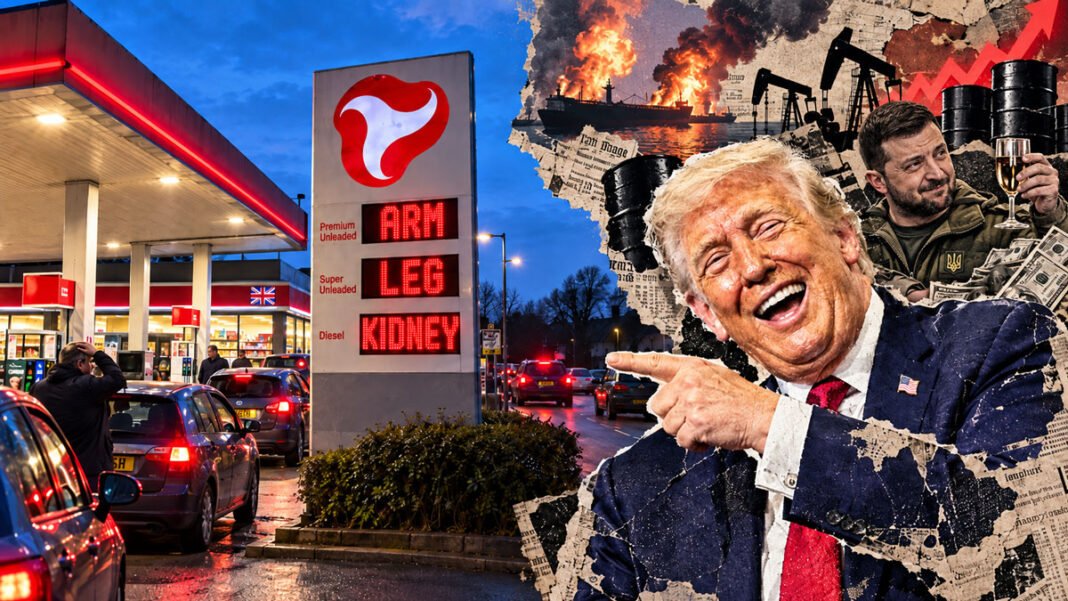
UK Diesel Price Crisis Hits £2 as Britain Lacks Fuel Reserves
As UK diesel prices cross £2 a litre following US pressure on the G7, decades of refinery closures and sold-off strategic reserves leave Britain with zero bargaining power.
The richest industrial nations on Earth, reduced to something resembling client kingdoms before the imperial court in Washington, while Donald Trump receives them as the benevolent supplier who may, or may not, keep the fuel flowing.
That isn’t quite the diplomatic language, of course. The official G7 statement says its members have agreed to release 100 million barrels from emergency stocks, with diesel front-loaded into the first 20 days. But that agreement came after the Trump administration threatened France and Germany with restrictions on US diesel exports unless Europe released stocks.
That is not how the official communiqué puts it. The G7 statement speaks of implementing commitments through a co-ordinated release of 100 million barrels, beginning immediately over four months, with a front-loaded substantial diesel release within the first twenty days. Sober, procedural, collegiate. What it omits is the fortnight of arm-twisting that produced it. Through Energy Secretary Chris Wright, Washington had told France and Germany to release 120 million barrels of diesel over six months or face a US export ban aimed squarely at them, according to Reuters. Politico reported the administration was readying a ninety-day ban. When Paris and Berlin folded, Trump announced it himself on Truth Social: Europe, he wrote, had just agreed to release a massive amount of its heavily stocked diesel oil.
Note what Europe emptied its reserves to fix. American diesel had passed six dollars a gallon, then six and a half. The midterms are in November. Stockpiles built against war and blockade were opened to steady the price at an American pump before an American election.
And Britain? Diesel has hit a record £2 a litre, while roughly 30 per cent of our supply comes from the United States.
The transport minister, Keir Mather, went out to assure the country there is no shortage, which is the sort of reassurance that makes people check the forecourt on the way home.
Now, the honest objection, and it deserves answering rather than shouting down. None of this is Britain’s doing. After being attacked by the US and Israel, Iran has choked the Strait of Hormuz, a response every strategist understood except apparently the US and Israel. Refineries across the Middle East, damaged by Iran, and across Russia, by Ukraine. No British government can conjure a ceasefire in the Gulf, and in Ukraine…well, it’s still feeding the arms dealers, so no real movement there either.
And all beside the point. War is an excuse to set the price. What our own country did over forty years has set your exposure to it, and decided whether you sit at the table or wait outside it.
How Britain Built the UK Diesel Crisis: 4 Refineries Left
This is what decades of selling off, closing down and outsourcing national capacity eventually looks like. Sovereignty doesn’t mean much when somebody else owns the refinery, controls the supply and names the price.
In the early 1970s Britain had eighteen operating oil refineries. We now have four. Grangemouth stopped processing crude in April 2025, ending more than a century of refining in Scotland, and became an import terminal by July. Prax Lindsey collapsed into administration in June 2025 and shut for good by October when no buyer could be found. Two gone in a single year, treated throughout as a commercial matter rather than a national one. Of the four that survive, three are run by American companies: ExxonMobil at Fawley, Valero at Pembroke, Phillips 66 on the Humber.
Read that again, then read the export ban threat again. We are asking the Americans not to turn off a tap that American firms already hold.
Trump never hid any of this. In his State of the Union in February he told Congress that American oil production was up by more than 600,000 barrels a day and that natural gas production stood at an all-time high because he had kept his promise to drill, baby, drill. He boasted of receiving more than 80 million barrels of oil from what he called a new friend and partner, Venezuela, weeks after American special forces seized its president. Crude. Also unmistakable. A state that owns energy, refining and reserve has leverage. A state that sells them has prices.
You don’t have to admire Trump, or agree with his politics, to understand the lesson his administration is demonstrating. A state possessing energy, industry, refining capacity and control over strategic resources has leverage. A state that deliberately gives those things away eventually discovers what dependence costs.
The diesel crisis did not expose a shortage of fuel. It exposed forty years of selling the things that made Britain sovereign.
And here is the part nobody in Westminster wants to say aloud. It worked. A thumb pressed on the arteries that feed the machine brought Washington a capitulation from its two largest European allies inside a fortnight, at no cost and no risk. Nothing in politics that cheap and that effective is ever used only once. Whoever sits in that building next, of whatever party, now has a proven instrument and every incentive to reach for it again. Planning on the assumption that they will not is not optimism. It is negligence.
UK Energy Security: Rebuild Storage, Ownership and Leverage
A nation that cannot store its own fuel is a nation living on borrowed time and someone else’s goodwill…
Time is running out to make choices we should have made a decade ago, starting with the glaring vulnerabilities. Start with storage, because it is the thing we can still do. Britain, almost alone among comparable states, holds no government strategic petroleum reserve. The Americans have the SPR. Germany has the EBV. We meet our obligation under the Energy Act 1976 and the Oil Stocking Order 2012 by directing private companies to hold stocks on our behalf, which is why, when the G7 opens the taps, other nations open their own tanks and we make telephone calls. Our obligation currently sits at 67.5 days of consumption rather than ninety, a 25 per cent discount granted because we were an oil producer. That concession is a relic of a country we no longer are, and it will go. Build the tanks and fill them while there is still fuel in the world to buy, because the hour to build a reservoir is not the one in which the drought arrives.
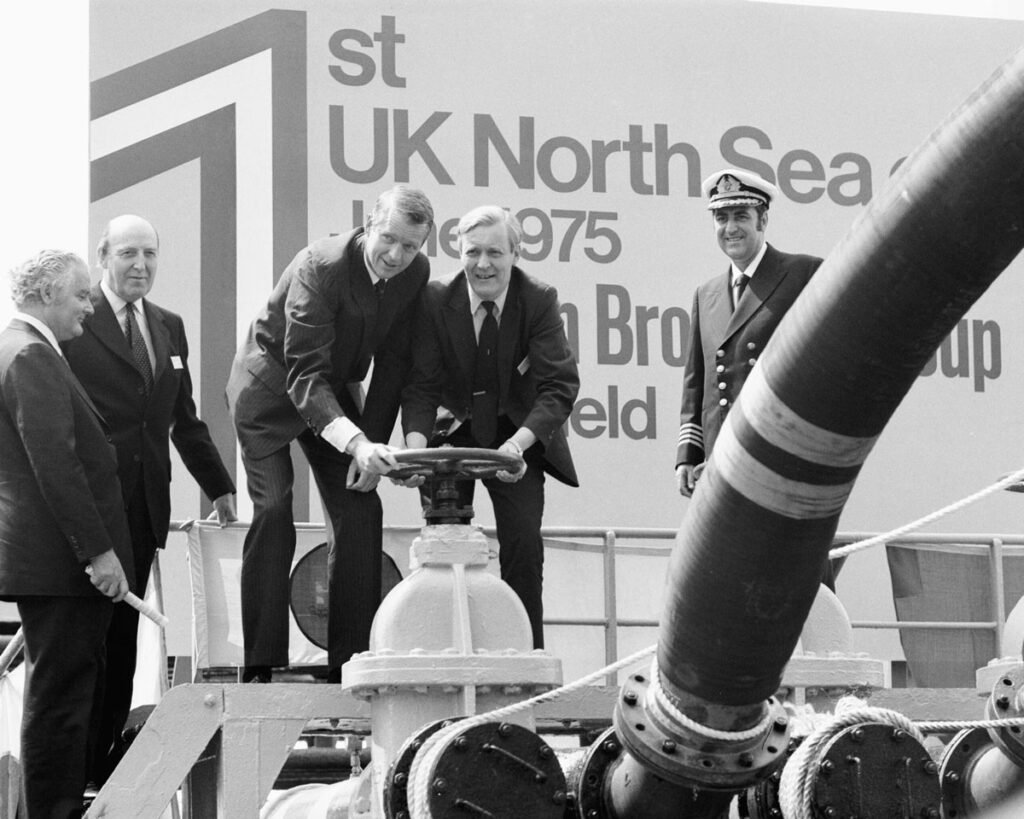
Then the harder question, which is ownership. In 1975 a Labour government created the British National Oil Corporation to give the public a direct stake in the oil under our own seabed. It was broken up and floated as Britoil in 1982, the last state shares sold in 1985, the lot swallowed by BP in 1988. Norway, facing the same geology in the same decade, kept two-thirds of Equinor in public hands and built the largest sovereign wealth fund on earth.
We took the one-off cheque. They took the asset and genertional wealth.
Understand what is and is not being argued here. The row at Westminster is between a government that bans new exploration licences and an opposition that wants the windfall tax scrapped, and neither side is talking about ownership at all. One offers less extraction by private firms, the other more. Ministers are quite right that extra licences would not cut a single penny off the pump price, because oil is sold on world markets and we are price takers, not price makers. But we are price takers precisely because we own none of it. A public stake in what remains of the North Sea, in storage, and in the refineries that convert crude into the diesel that moves our food, is not a demand to burn more. It is a demand to stop handing over the keys and then complaining about the rent.
Meanwhile the bill lands where it always lands. On the van driver and the haulier, in the weekly shop, in the heating and the bus fare and the small firm that cannot pass the cost on. Our lives enter the calculation only when an election nears and someone in London notices the numbers glowing above a petrol station.
For anyone still waiting for things to get better, understand that they rarely do. They change. The days of plenty were real, and they were squandered by people who called the selling of a nation’s assets efficiency and called the buying of them back ideology. That era is finished. What is left is a cold, clear question about what we still hold and whether we intend to keep it.
Britain is not short of diesel. Britain is short of vision and leverage. And both, unlike oil, are not something we ran out of. We sold it.
Enjoyed this read? I’m committed to keeping this space 100% ad-free so you can enjoy a clean, focused reading experience. Crafting these articles takes a significant amount of research and heart. If you found this helpful, please consider a “small donation” to help keep the lights on and the content flowing. Every bit of support makes a huge difference.