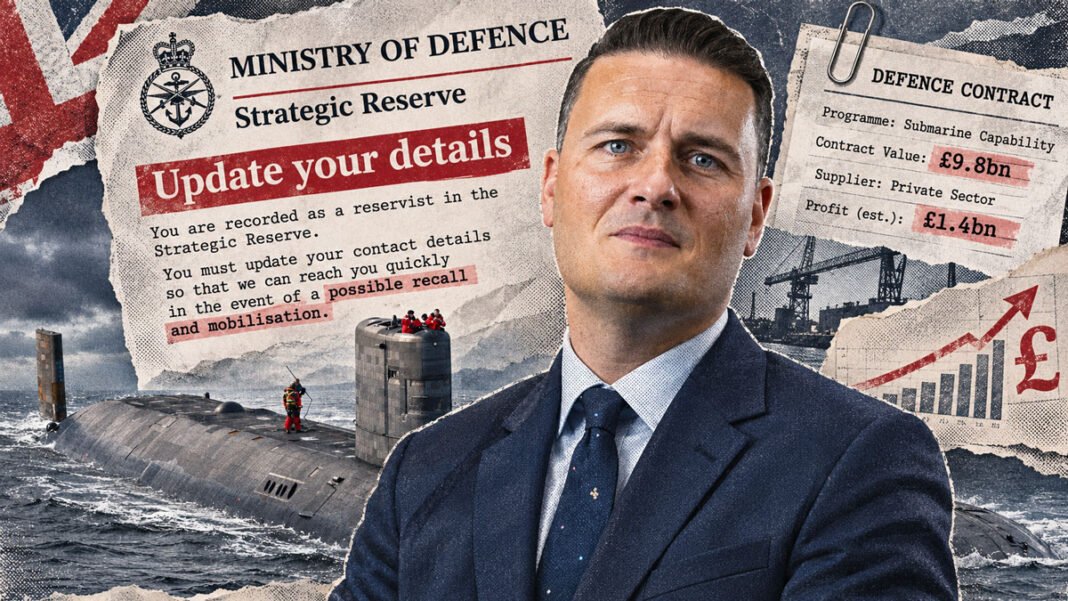
On the same morning, Britain’s veterans were told to update their details for possible recall, and Babcock signed the biggest contract in its history. Neither is a coincidence. Both follow a NATO spending figure fixed in The Hague long before anyone had to explain the threat that would justify it.
“Oceania was at war with Eurasia: therefore Oceania had always been at war with Eurasia.” –George Orwell, Nineteen Eighty-Four
Orwell’s line is usually quoted as a joke about how quickly official enemies change. It is darker than that. The enemy hardly matters in Nineteen Eighty-Four. What matters is the war itself: permanent, never examined, always the reason for the next sacrifice. The war never has to be won. It only has to keep going.
Julian Assange said something similar in 2011 about Afghanistan. He argued that the goal there was “an endless war, not a successful war”, a way of moving money out of Western tax bases and into the hands of what he called a transnational security elite. Ten years later the Afghan war ended in exactly the failure he described. Very few of the people who profited from it ever had to answer for that.
All of this came back to me this week, listening to Britain’s Defence Secretary.
Letters to the Reserves, £8.7 Billion to Babcock: The Forever War Comes Home
Letters have gone out to the strategic reserve: former regulars of the Army, Royal Navy and RAF who stay liable for recall after they leave. Each one is signed by a service chief. They ask veterans to update their contact details, employment and civilian skills, and they invite them to volunteer for training. The Times and LBC put the number at around 100,000. The i Paper says closer to 50,000. Nobody seems quite sure, which is telling in itself: the MoD has been warned for years that it does not know where most of these people are.
The veterans minister, Calvin Bailey, says the letters “do not mean reserves are about to be mobilised”. He calls it good housekeeping. If it were only housekeeping, it would have been a letter. Instead it was on the front pages, and the Defence Secretary was on the radio.
Nick Ferrari asked Wes Streeting on LBC what the maximum recall age was. “I don’t know, off the top of my head, Nick,” he replied. Pressed again: “We won’t be mobilising pensioners, obviously.” Then he explained what the exercise was for: updating records “so, in a deliberate and informed way, we can mobilise people.”
So which is it? Bailey says the letters have nothing to do with mobilisation. Streeting says they exist to make mobilisation possible. Each statement is designed to reassure, and together they tell you something else.
The detail Streeting didn’t know matters less than you might think. The answer is in his own department’s bill. In January the government announced it would raise the recall age for former non-commissioned personnel from 55 to 65, and lower the trigger from “national danger, great emergency or attack on the UK” to the much vaguer “warlike preparations”. He didn’t need the number. The letter had already done its job, which was to put the idea of recall into the head of every veteran, every veteran’s family and every newspaper reader in the country.
NATO 5 Per Cent Target: The Spending Decision Comes First
When Streeting explained the urgency, he went back to Covid. Britain was unprepared then; he had learned the lessons of the inquiry as health secretary, and he wasn’t going to make the same mistake at Defence. He imagined a future minister being asked about “the threat environment in Europe, given what NATO was saying, given what the government of the day was saying.”
That one sentence contains the whole method. The threat is real because NATO says it is real. The government acts because NATO says so. NATO’s view then becomes evidence for the government’s view. It is a closed loop, and anyone standing outside it asking for proof is treated as naïve, or worse.
The loop has an origin, and it is not in Moscow. In June 2025, at The Hague, NATO’s leaders agreed to spend 5 per cent of GDP on defence by 2035. The number came first. The declaration names a “long-term threat” from Russia and then splits the money in two. At least 3.5 per cent goes on core military spending. Up to 1.5 per cent goes on what it calls civil preparedness and resilience, and on strengthening the defence industrial base.
Read that second category again, then look at this week. Letters to 100,000 veterans: civil preparedness and resilience. An £8.7 billion contract for a private firm: the defence industrial base. The Hague wrote the shopping list ten years in advance. All that remains is to keep the public frightened enough to pay for it.
None of this means Europe is at peace. There is a real war on the continent, and it began long before the official story admits, in eight years of fighting in the Donbas and a careless eastward push by NATO that serious Western diplomats warned against.
A publication like the Tribune that opposes every imperial war, whether it’s the UK, the US or Moscow’s, has no business pretending the danger is invented. But a real war can still be used to sell a spending figure that was chosen first.
“The war in Ukraine did not set the 5 per cent. It supplies the justification for it.”
Devonport Submarine Maintenance: The Private Monopoly
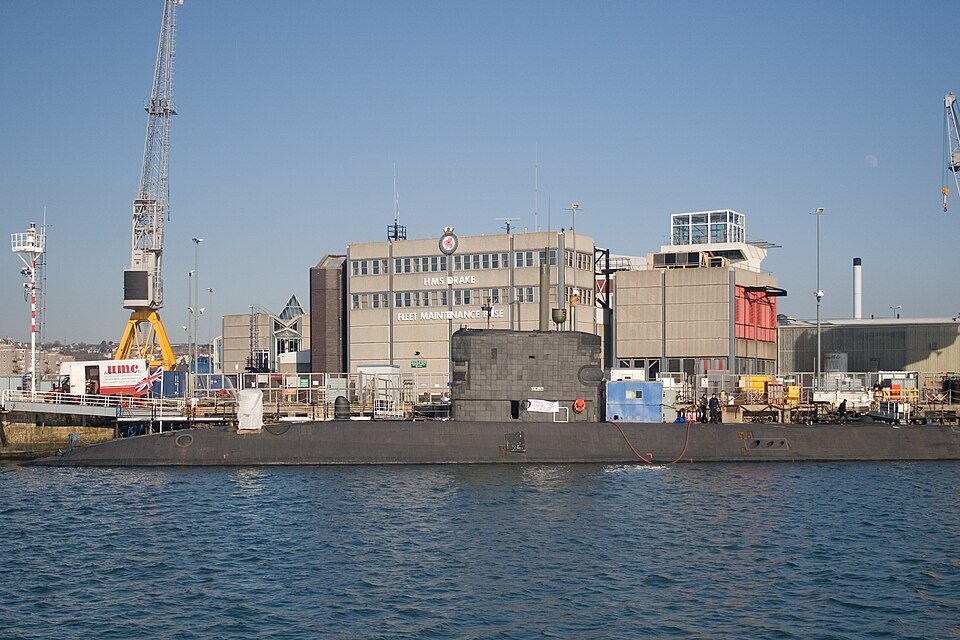
On the same day, Streeting was at HMNB Devonport signing the Gateway Agreement with Babcock. The government calls it “around £8 billion” over five years for submarine maintenance and naval base services at Devonport and Clyde. Babcock values it at £8.7 billion, the largest contract in its history, with a possible total term of up to fifteen years.
The best case for the deal is a strong one, and the Tribune accepts it. Britain’s submarines have spent far too long sitting in dock, and a deterrent that cannot get to sea deters no one. If we are going to spend on defence, it should be on actually defending this country, and keeping our own boats seaworthy counts. Ministers also point to 3,000 new jobs and 2,500 apprenticeships and graduate places, mainly in Plymouth, Clyde and Bristol. Those are real jobs in working class towns, and nobody should sneer at them.
But look at who is on the other side of the table. Babcock describes itself as the sole provider of in-service submarine support to the Royal Navy. There is no competitor. When one company holds the only key, the word “negotiation” is doing a great deal of work.
Babcock is not short of money. Last week it reported a 13 per cent rise in half-year underlying operating profit to £227 million, raised its interim dividend by 12 per cent, and is partway through a £200 million share buyback. Public money comes in through the dockyard gate and goes out to shareholders.
Devonport used to be a ‘Royal Dockyard, owned by the public’ it served. It was put under private management in 1987 and later sold. We now pay a private monopoly to maintain public warships in a yard the public once owned, and we are told this is what resilience looks like.
Tough Choices for the Working Class, Open Vaults for Contractors
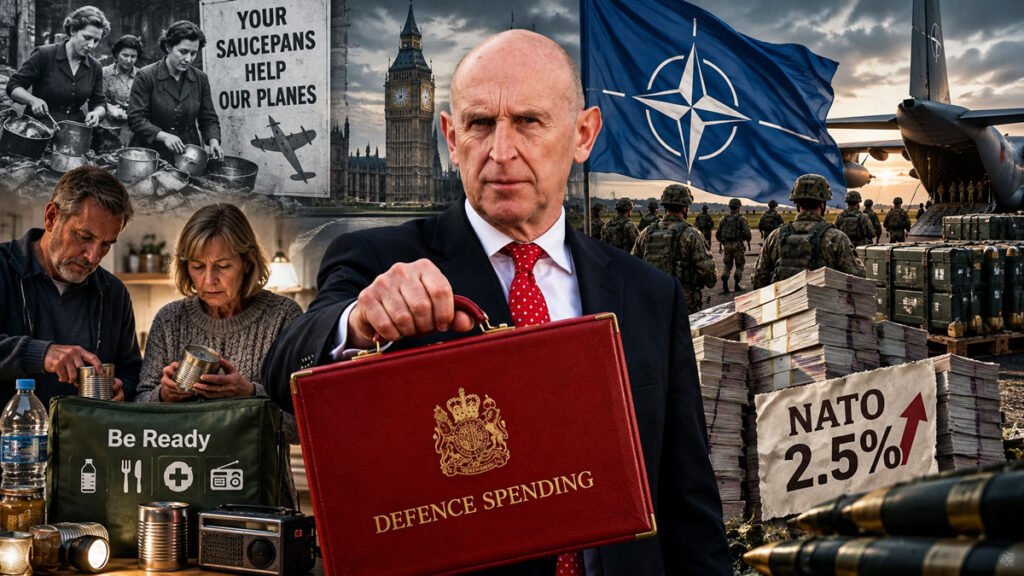
Look at the sentence Wes Streeting buried halfway down the Ministry of Defence’s official announcement on Thursday morning, because it is the most honest line this government has published all year. “Even when we have to move funding from other departments,” the Defence Secretary declared, “we will prioritise our nuclear deterrent and getting Britain warfighting ready”.
Read that admission alongside every lecture the working class has endured since Labour returned to office. When pensioners ask why winter fuel support was stripped away, they are told the public finances are broken and difficult choices must be made. When disabled people protest cuts to their weekly support, ministers sigh about fiscal rules and tight budgets. When councils plead for funds to build social housing, repair crumbling schools or rescue an NHS buckling under waiting lists, the Treasury shakes its head and explains that there is no magic money tree.
Then the sirens sound, the threat level is declared heightened, and £8.7 billion materialises before lunch, raided directly from the budgets of other departments. The money was never missing. It was simply waiting for a customer wearing a suit from a defence conglomerate rather than a working-class family asking for warmth, shelter or care.
This is the oldest racket in politics, dressed in fresh khaki. A government that lacks the courage to tax concentrated wealth or confront predatory markets discovers that foreign danger is the one lever that never fails to open the Treasury vault.
The ongoing cultivation of Russophobia serves a political and economic purpose.

Create an atmosphere of imminent war, fill the airwaves with talk of mobilising 100,000 reservists, and watch how quickly the debate shifts from what Britain can afford to what Britain supposedly cannot afford to question. Legitimate concerns about Russian military activity should not be confused with an unquestioning acceptance of every spending commitment made in response. Whether billions are destined for Babcock’s balance sheet or the Ukrainian treasury, the invocation of national security must never place public expenditure beyond democratic scrutiny.
Andy Burnham and Wes Streeting must be held to the same standard of financial scrutiny they impose on the poorest households in Britain. They should publish the full terms of the Gateway Agreement, including the exact cap on Babcock’s profit margins and the penalties for missed deadlines; they should itemise every pound transferred out of domestic departments to pay for it; and they should explain to Parliament why vital national infrastructure remains a private profit centre rather than a public asset.
A nation that cannot house its young, care for its sick or heat the homes of its elderly does not make itself stronger by writing blank cheques to arms contractors in the name of readiness. National security is a solemn duty of the state, not a master key to unlock the public treasury for private gain.
When the poor need money, it is a question of affordability. When the arms industry needs money, it is a question of national security. That is the political economy of perpetual war. The master key that opens the vaults of public wealth to private profit.
Enjoyed this read? I’m committed to keeping this space 100% ad-free so you can enjoy a clean, focused reading experience. Crafting these articles takes a significant amount of research and heart. If you found this helpful, please consider a “small donation” via PayPal or GoCardless to help keep the lights on and the content flowing. Every bit of support makes a huge difference.