The Monsters We Ignore: The Recurring Tragedy of Our Collective Failures
In the dark theatre of human horror, the stage is never empty. Each monstrous act is not an aberration, but a recurring performance that reveals the most terrifying truth: evil is not an accident, but a persistent condition of our human landscape ignored and allowed to flourish.
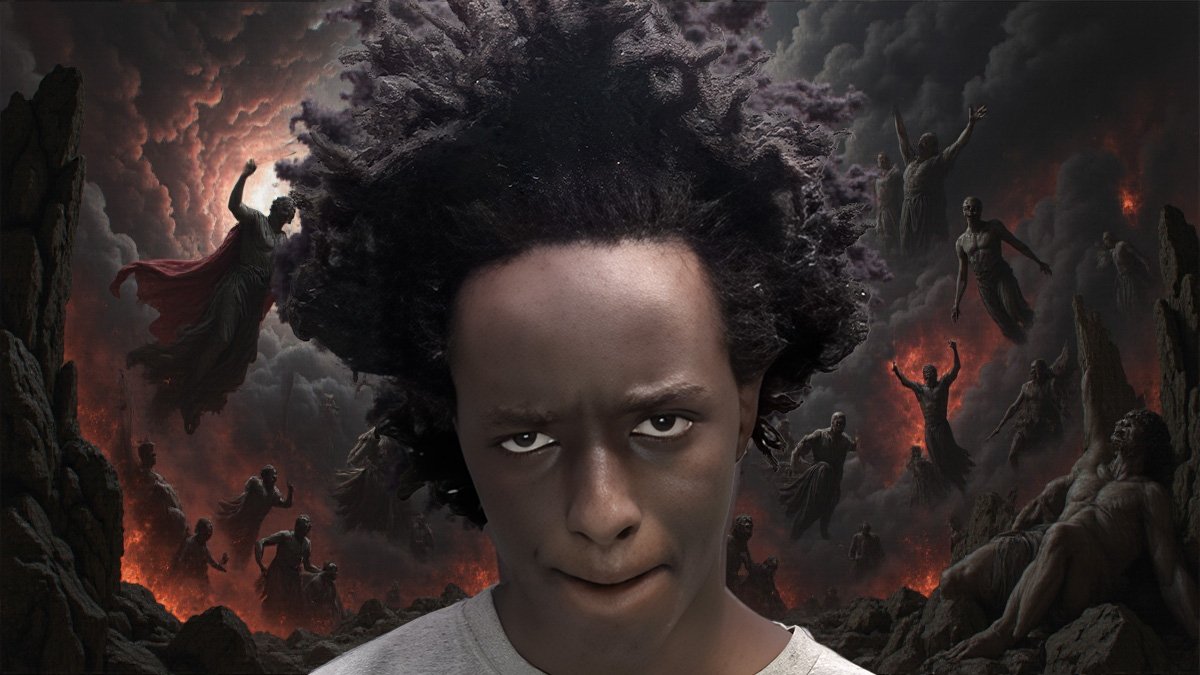
The Southport attack is not a singular tragedy, but a continuation—a grotesque echo of our collective failure to confront the darkness that dwells within societal shadows. Axel Rudakubana did not emerge from a vacuum, nor was he manufactured by social media algorithms. He is a product of systemic neglect—a monster ignored until his act of evil forced us to see him.
The warning signs weren’t subtle; they burned like a neon beacon, “This way to hell.” Yet, as accountability tightens its noose, the authorities conveniently shift the narrative, casting social media as the villain—suggesting the platforms radicalised Axel Rudakubana into carrying out his unspeakable acts. But even if remotely true these are merely symptoms, not the disease. The true horror lies not in understanding how monsters are made, but in acknowledging that they have always existed, waiting in the spaces between our collective denial., of a society that looks away until the screaming becomes impossible to silence.
Prime Minister Sir Keir Starmer now labels it a “new form of terrorism,” but there’s nothing new about this horror. This is humanity’s oldest story—the moment when civilisation’s thin veneer cracks, revealing the primal darkness underneath.

The events in Southport have cast a long shadow over our nation, leaving us all grappling with a profound sense of loss and horror. The senseless deaths of Alice Dasilva Aguiar (9), Bebe King (6), and Elsie Dot Stancombe (7) have torn at the very fabric of our society, leaving wounds that will take generations to heal.
This atrocity joins a long, grim lineage. Think of Dunblane, 13 March 1996, when Thomas Hamilton massacred 16 children and their teacher before taking his own life. It wasn’t just an attack—it was the annihilation of childhood’s sanctuary, a violation so profound it reshaped a nation’s psyche overnight.

Or consider Wolverhampton, 8 July 1996. On that sunny day, the children of St. Luke’s Church of England Infant School were enjoying a teddy bear picnic when Horrett Irving Campbell a paranoid schizophrenic vaulted a fence wielding a machete, slashing indiscriminately. The laughter of children, the simplicity of joy, was forever tainted by an act so monstrous it defied comprehension.

And then, of course, there’s James Bulger—a name that still summons tears and chills to the heart. On 12 February 1993, two-year-old James was led away from a shopping centre by two ten-year-old boys. What followed was a plunge into a darkness so unfathomable, so devoid of mercy, that it fractured the national psyche. James’s mutilated body was discovered two days later on a railway line, and the world was left reeling at the horrifying revelation that evil could wear the face of children.

And what of the “Bastard Parents”—those who tortured and murdered their own children, from Baby P to Sara Sharif? Their stories are grim epitaphs of systemic failures, tales of suffering that could have been prevented but instead became grim reminders of lessons unlearned.

Dunblane. Wolverhampton. James Bulger. The “Bastard Parents.” Each horror stands as a monument to our collective trauma, and each monster holds up a mirror to the cracks in our society that we refuse to mend. But much worse, each monster known to the authorities.
The monsters thrive on that complacency, not in extraordinary circumstances, but in the mundane spaces of institutional indifference. Every missed report, every dismissed warning, every bureaucratic shrug every family member that turns away becomes a silent accomplice.
Neither are we passive witnesses in this narrative. We are active participants—either by our vigilance or our silence. The choice has always been ours: to recognise the subtle signs of impending horror, or to be forever reactive, counting bodies in the aftermath.
In the end, the most dangerous monster is not the individual who commits atrocity, but the system that creates, enables, and then looks away. Our true battleground is not in identifying monsters, but in dismantling the conditions that manufacture them.
Understand the line between civilisation and barbarism is thinner than we dare admit—a membrane so fragile that one moment of systemic neglect can tear it apart, releasing the darkness we desperately want to believe does not exist within us.
Because make no mistake: another monster waits in the shadows, unchallenged, unseen, preparing to turn our nightmares into reality. When they strike—and they will—we’ll have no one to blame but ourselves. Do not shield your children from this truth. Tell them openly: the world contains both light and darkness. Teach them to recognise evil’s subtle signs, to understand that vigilance is not paranoia but survival. Arm them with knowledge, resilience, and the courage to confront the shadows before they consume us. We must do this because the only result to come from any public inquiry will be a sanitized postmortem—another bureaucratic whitewash that transforms systemic failure into a hollow ritual of accountability, where ‘lessons learned’ becomes nothing more than an epitaph for the next set of innocent victims.