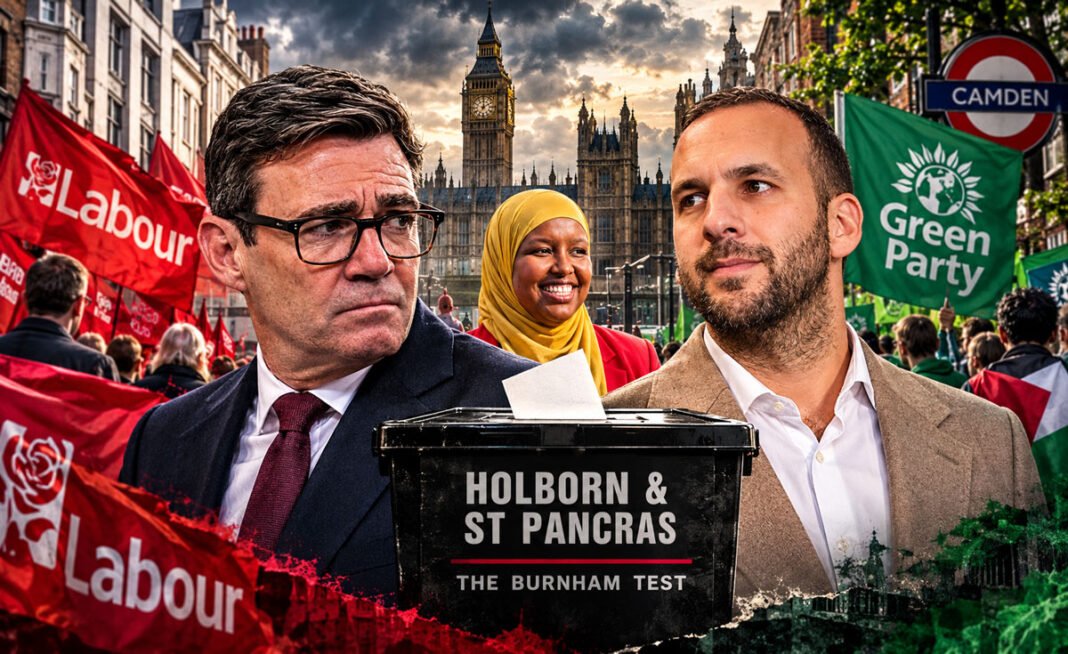
The Burnham Test: Holborn Could Decide Whether Labour Dares Go to the Country
The Holborn by-election is being sold as a test of Andy Burnham’s Labour revival. But divided Greens, George Galloway and first past the post may decide the result before voters do.
It was five months ago that the leader of Camden Council lost his seat…
Not narrowly, and not quietly. On 7 May, the Greens took all three seats in Holborn and Covent Garden, a clean sweep in a ward that had returned Labour councillors without interruption since 2002, and Richard Olszewski finished outside the places in his own patch. Labour lost fifteen seats across the borough that night and clung on with a majority of three. The Greens became the largest opposition group on a council Labour has controlled for all but four years since 1971.
Keir Starmer was still Prime Minister when that happened. The leadership crisis had not yet broken. The Burnham era had not begun.
Hold that date in your mind when the Holborn and St Pancras result is declared on Friday morning, because Westminster has already decided what the by-election means, and Westminster is wrong.
The woman who inherited the wreckage of that council, Sagal Abdi-Wali, confirmed as Camden’s leader on 20 May, is Labour’s candidate today.
She is defending the seat Starmer vacated on 1 September, when he left the Commons to pursue a role in “international affairs”. I confess, even writing that sentence feels faintly absurd. British politics has a remarkable habit of taking men who have ‘failed spectacularly’ at home and finding them a larger stage abroad from which to continue influencing the rest of us whether we want them or not, and it’s usually not.
Altogether, fifteen candidates are on the ballot. However, the press has decided it is a two-horse race between Abdi-Wali and the Green leader, Zack Polanski.
And the entire political class has agreed, in advance, on what the contest is for. Remove Starmer. Insert Burnham. Call the defectors back to the polls and see whether they come home. A controlled experiment, conducted in public, with one question: was the problem Labour, or was the problem the man at the top?
It is an elegant experiment. It has one flaw. The control group spent the final fortnight setting fire to itself.
What Burnham actually inherited

The numbers explain why Labour was frightened in the first place.
In July 2024, Starmer took Holborn and St Pancras with 18,884 votes, 48.9 per cent of the total. The independent Andrew Feinstein, campaigning hard on Gaza, took 7,312. The Greens took another 4,030. Labour’s majority was 11,572, and the two insurgent candidacies behind it added up to 11,342.
You cannot shunt votes between candidates like counters on a board. But Feinstein has endorsed Polanski, and that makes the arithmetic politically live rather than merely academic.
Then came May, and the ground moved under Labour’s feet in the places that matter. In Camden Town ward, Labour took 43.4 per cent to the Greens’ 35.8. In Kilburn the Greens took two of three seats. In Bloomsbury and Highgate they broke through. In St Pancras and Somers Town the Camden People’s Alliance, standing on an explicitly pro-Palestinian and anti-Starmer ticket in alliance with the Greens, took a seat after a recount.
Burnham’s inheritance, when he took the leadership unopposed on 17 July and the premiership on 20 July, was not simply an unpopular government. It was a coalition in pieces. Reform was taking one slice of Labour’s old working-class vote, the Greens another slice of its younger metropolitan left, independents had proved what Gaza could do to a Labour majority, and the Liberal Democrats were still perfectly capable of relieving Labour of affluent progressives.
His first task was never just to be more likeable than his predecessor. It was to put Humpty Dumpty back together.
Within the next twenty-four hours we find out how many pieces he has found. Except that we do not, because of what happened in Brighton.
The weekend the Greens handed it over
Zack Polanski saw it coming. That is what makes it remarkable.
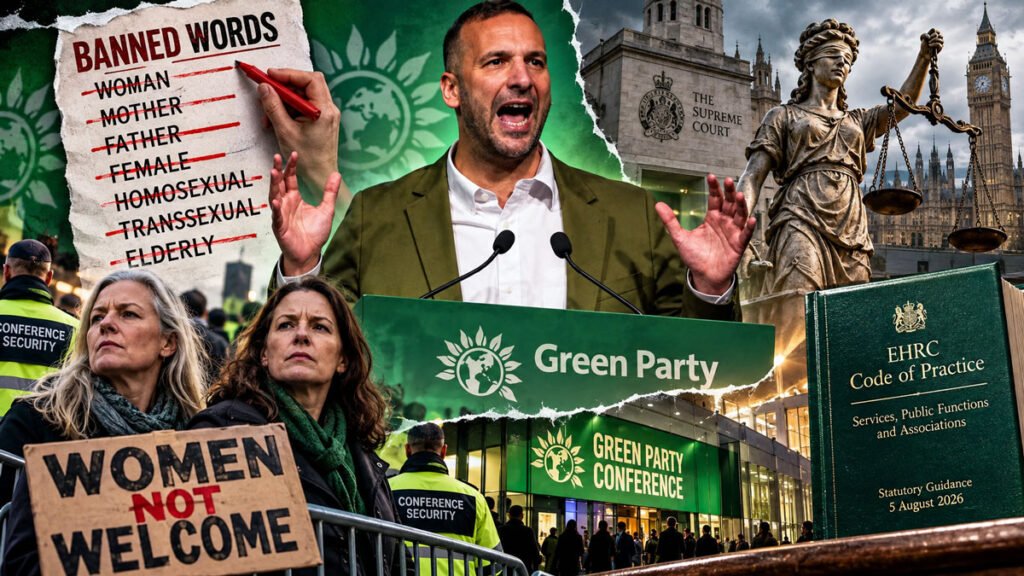
On 18 September, the Guardian’s Peter Walker reported that Polanski had asked the party’s ruling executive to postpone its annual conference so the Greens could throw everything at Holborn. The executive refused. The venue was booked, members had taken leave and paid for hotels, and roughly three thousand people were expected at what would be the party’s largest gathering ever. So the Greens spent the final weekend of a parliamentary by-election campaign in Brighton, eighty miles from the doorsteps they needed to knock.
Polanski also wanted the motion on the agenda amended. He is Jewish, and he pushed for protections for Jewish members and for the removal of language calling for a single democratic Palestinian state. Conference rejected three amendments, including one that would have shielded Jewish members from being reported or disciplined over their association with synagogues or community organisations identifying as Zionist.
Then, on Friday, he gave his keynote speech and left for London.
On Sunday 4 October, in his absence, members voted by 1,022 to 813 to make the Green Party of England and Wales formally anti-Zionist, defining Zionism as an ethnonationalist political project and declaring that anti-Zionism should not be equated with antisemitism.
Set aside, for one moment, what you think of the motion itself. Look instead at how it was made.
Fewer than one per cent of the Green membership voted on it. The campaign to pass it was driven by Greens for Palestine, a group with no official affiliation to the party, which had spent months urging supporters to join specifically in order to vote for it. The majority of the party’s MPs opposed it. The chair of Jewish Greens, Vivien Lichtenstein, a member of twenty-nine years who has worked on Israeli-Palestinian peace initiatives since the 1980s, told the BBC’s Today programme that “It is quite possible that I will leave the party.” The deputy leader of the Wales Green Party resigned on Tuesday after seven years. The European Green Party condemned the decision. The Board of Deputies of British Jews called the Greens “an extremist party.” Israel’s foreign ministry has barred Polanski from entering the country.
A leader cannot control every decision a democratic membership makes, and should not try. That is the honest defence, and the Greens are entitled to it. Member-led policymaking is not a scandal; it is the thing the Greens have always said distinguishes them from Labour’s stage-managed conferences and Reform’s wholly owned subsidiary of one man’s opinions.
But there is a difference between a party making its own policy and 1,835 people in a hall in Brighton making it for a membership that was not there. A movement that spent a year demanding the democratic renewal of British politics has just handed its most consequential decision to a fraction of one per cent of itself, after an outside faction recruited for the vote, while the leader who had asked for the whole weekend to be cancelled was ninety minutes up the line canvassing.
Polanski wanted to lead a national insurgency. On the day his party took the most divisive decision of his leadership, he was somewhere else. That absence has allowed everybody else to decide what it meant.
He went into the final week needing to explain why Holborn should send him to Parliament. He has spent it being asked what his own party believes.
Enter Galloway, from several thousand miles away
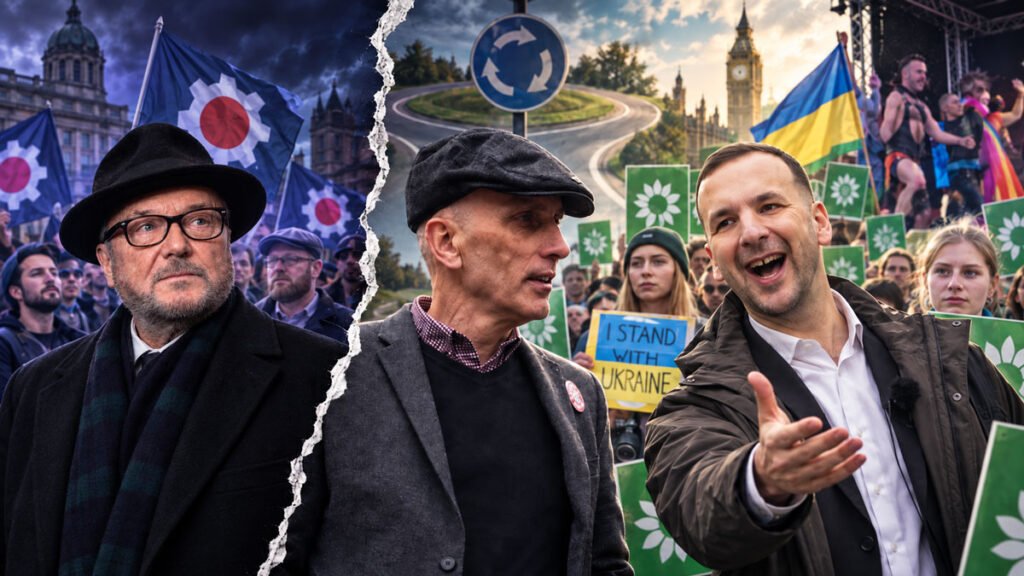
As though the left required another dividing line, George Galloway announced on 14 September, on his own podcast, that he would contest the seat for the Workers Party unless the Greens made him an offer he could not refuse. They did not. He is on the ballot.
He is also abroad. Galloway has remained outside Britain in what he calls self-imposed exile since being detained by counter-terrorism officers in late 2025. At the time he declared his candidacy he was living in Moscow. By 22 September he had relocated to South Africa for a political tour, saying he will return when the Home Office confirms he will not be detained on arrival. His campaign is being fought remotely while activists canvass Camden on his behalf.
His stated reason for standing against Polanski is not Gaza. It is Ukraine. Galloway says the Green leader is “a supporter of NATO” and of Volodymyr Zelensky, and the Workers Party, responding to the row, attacked the Greens for what it called their support for Zelensky’s NATO spearhead.
It cost him his deputy. Chris Williamson, the former Labour MP for Derby North, resigned from the Workers Party in protest, posting that he had quit because “I profoundly disagree with the decision to stand” and calling on his party to get behind Polanski instead. He was the only senior figure to say publicly what the arithmetic has been saying all along.
Galloway does not need to win Holborn to shape the result. He needs only to take enough votes from people who dislike Labour but would otherwise have voted Green.
That is the cruelty of first past the post. You do not always have to beat your enemy. Sometimes you merely have to beat your enemy’s enemy.
Labour has watched this film before and knows how it ends. In Ilford North in 2024, Wes Streeting survived Leanne Mohamad by 528 votes while the Green candidate took 1,794. In Birmingham Yardley, Jess Phillips held off the Workers Party’s Jody McIntyre by 693 while the Greens took 1,958. Those Green voters would not all have gone elsewhere, and it is dishonest to pretend otherwise. But Labour held both seats because the opposition to it could not combine, and that is the whole of the lesson.
The Greens, the Workers Party, the independents and the assorted fragments of the anti-Labour left agree with real passion that Labour must be punished. They have never managed to agree which of them administers the punishment. Get the Tories Out once gave the left a single organising instruction. Get Labour Out gives it nothing but a grievance.
A collection of people united by what they hate is not a coalition. It is a queue.
The recovery is thinner than it looks
Now the steelman, because Labour deserves one.
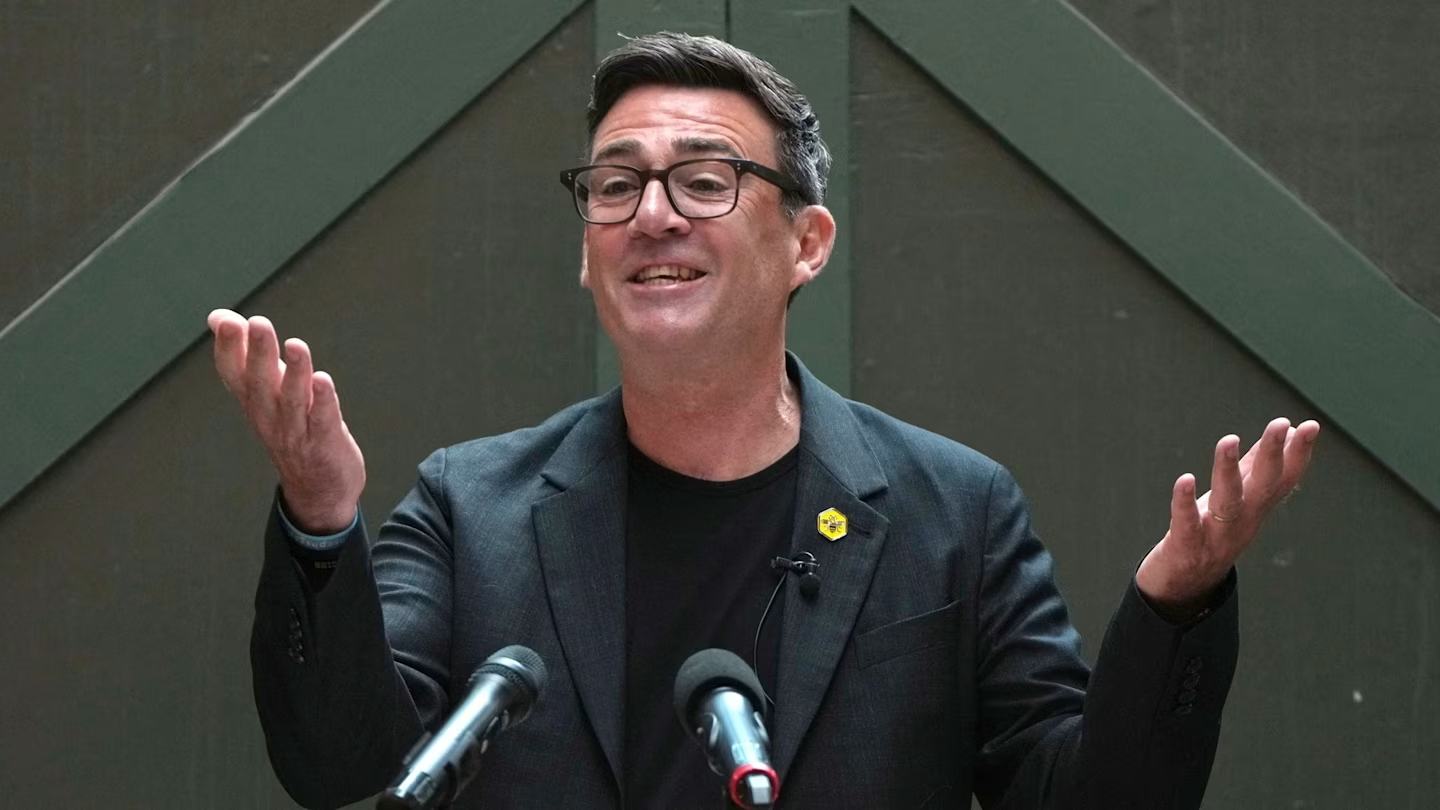
Burnham’s revival is real. Ipsos, fielding between 10 and 15 September, put Labour on 27 per cent against Reform on 23, the Conservatives on 21 and the Greens on 13, a four-point Labour lead going into conference season. Opinium’s poll of 2 October had Labour on 30, Reform 25, the Conservatives 17 and the Greens 11. More in Common this week has Burnham’s net approval at plus 16, up five points. Professor Sir John Curtice told Left Foot Forward that Labour is a great deal more popular than it was on 7 May and the Greens considerably less so, which makes Holborn a “substantial challenge” for Polanski.
That is a genuine turnaround and it would be churlish to deny it.
Now look underneath.
The approval figures do not agree with each other, and the disagreement matters. More in Common has Burnham comfortably positive. Ipsos, asking about satisfaction with his performance as Prime Minister rather than general favourability, found 31 per cent satisfied and 44 per cent dissatisfied. Both can be true. People can like the man and distrust the government, which is precisely the condition Labour was in before it changed leaders.
Ipsos also found that seven in ten Britons remain dissatisfied with how the country is being run, and its own analysts warned, in terms, that Labour’s lead is narrow, that Burnham’s ratings are nothing to write home about by historical standards, and that Labour should not take its advantage for granted.
Opinion polls are promises whispered down a telephone. Ballot boxes count. And what the ballot box will record is not how far Labour has climbed, but how far everybody else has fallen.
Have the Greens peaked?
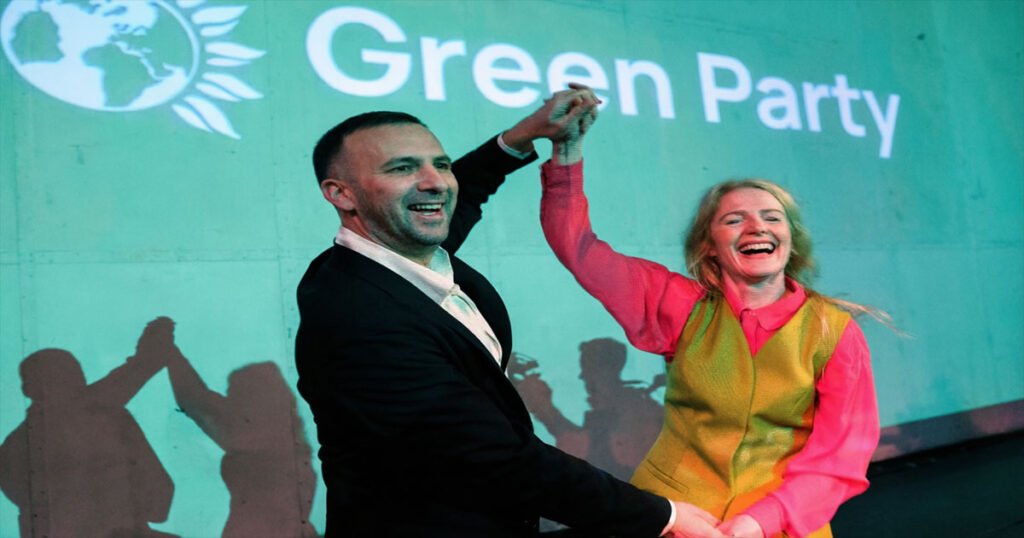
Almost certainly, and not because of Andy Burnham.
The Green high-water mark was February, in Gorton and Denton, where Hannah Spencer overturned a Labour majority of 13,413 to take the seat, one of the largest Labour majorities ever lost at a by-election. YouGov polling around that contest had the Greens above 20 per cent and contending for second place nationally. In March, 28 per cent of Britons said they would consider voting Green and Polanski’s net favourability stood at plus five.
The average now has the Greens at 11 per cent, down more than five points on the spring peak and lower than a year ago. YouGov, publishing on 30 September, found Polanski’s net favourability had fallen to minus 19, that half the public view him unfavourably, that only 21 per cent think he is doing a good job, and, most damaging of all, that fewer Britons will now consider voting Green than before he became leader. More in Common, polling on the eve of the by-election, put him at minus 28, the least popular leader of any major British party, below Nigel Farage.
The decline began before Burnham arrived. Curtice traces the sharpest fall to Polanski’s response to the Golders Green attack in April, when he shared a post criticising the police, and observes drily that there have been one or two moments in the past year when the leader’s thumbs should not have twitched quite so quickly.
This is the ceiling every insurgency meets, and it is never where the insurgents expect. It is not reached when voters desert. It is reached when the movement acquires the apparatus of a party: factions, conferences, standing orders, members who would rather be right than be in government, and a leader who must either face them down or be absent when they vote.
The Greens found their ceiling at their own conference, not at a ballot box.
Polanski has told the Guardian he does not need to win Holborn to remain leader, calling the race “50/50”. He has said he will stay whatever happens. He may well be right that he can. The more serious question is what he would be leading. A party of 11 per cent with five MPs and a policy platform set by 1,835 people, bleeding its Jewish members and its European sister parties, is not an insurgency. It is a pressure group with a parliamentary delegation.
Why this points towards an early election

Here is where it gets interesting, and here is where the public interest lies.
Burnham has denied, publicly and repeatedly, that he will go to the country early. In a round of regional interviews on Friday 25 September he told ITV Calendar that the next election would be in 2029 and that of the speculation “I can knock that dead”. He told BBC East Midlands a flat no when asked about May. Downing Street had already dismissed the talk.
That denial cannot simply be waved away because an early election makes a better story.
Neither can what the i Paper reported last week. Caroline Wheeler, citing multiple sources close to the Number 10 operation, reported that a May election has not in fact been ruled out, and that some of Burnham’s closest advisers privately concede there is still a chance he goes to the country. The reported motive is straightforward: a mandate of his own for social care reform, and room to raise taxes without being accused of breaking someone else’s manifesto.
Parliament dissolves automatically in July 2029, with the last possible polling day in August that year. Prime Ministers do not choose election dates according to vows made in September. They choose them according to opportunity.
And the opportunity is this. Labour is not more popular because it has resolved anything. It is more popular because Reform has slipped, because the Conservatives remain becalmed, and because the Greens have spent the autumn arguing with themselves in Brighton while the Workers Party argues with the Greens from Johannesburg. Every one of those conditions is temporary. None of them is in Labour’s gift. All of them could be gone by the autumn of 2027.
If Labour wins Holborn comfortably today, Burnham’s strategists acquire the one thing they do not currently possess: evidence, from a real ballot box, that changing the leader changed behaviour. If Labour scrapes it, the celebration will require rather more champagne than mathematics. And if Polanski takes the former Prime Minister’s seat after Labour changed leaders specifically to stop him, then Burnham has not healed the wound. He has put a barm cake over it.
But the majority will matter more than the winner, and the turnout more than either. A comfortable Labour hold tells Burnham that Starmer really was a substantial part of the problem. A narrow one tells him the anaesthetic is working but the patient is still on the table.
What should happen next
The case for scrutiny here does not rest on partisanship. It rests on consent.
A government that goes to the country because its opponents are temporarily in pieces is not seeking a mandate. It is buying one at a discount, and it will spend the following five years treating a fractured opposition as though it were an endorsement. That is how we got the last decade: governments elected on narrowing slices of a shrinking turnout, each one louder than the last about the will of the people.
So three things are owed to voters before any of this proceeds. Burnham should be held precisely to what he said on 25 September, and asked, repeatedly and on the record, to reconcile it with what his own advisers are briefing. The Greens, having discovered that a thousand people in a conference hall can set the policy of a national party, should be asked whether they regard that as democracy or merely as procedure. And the rest of the left, which has now twice in two years handed Labour seats it had no business keeping, might note that the arithmetic of first past the post is not a moral position. It is a machine, and it does not care how sincere you are.
Fifteen candidates will fight over one London constituency today while the party system that governed this country for a century carries on coming apart. The old instruction was simple: keep the Tories out. For millions it has become something emptier. Keep Labour out. Keep Reform out. Keep the Greens out. Keep the lot of them out.
The electorate has not yet worked out what replaces the old system. It has simply stopped believing the old one is owed its obedience.
Labour is not winning the argument. It is merely the last party left standing. And a government that mistakes its rivals’ collapse for the consent of the governed will always call the election it has not earned.
Enjoyed this read? I’m committed to keeping this space 100% ad-free so you can enjoy a clean, focused reading experience. Crafting these articles takes a significant amount of research and heart. If you found this helpful, please consider a “small donation” to help keep the lights on and the content flowing. Every bit of support makes a huge difference.