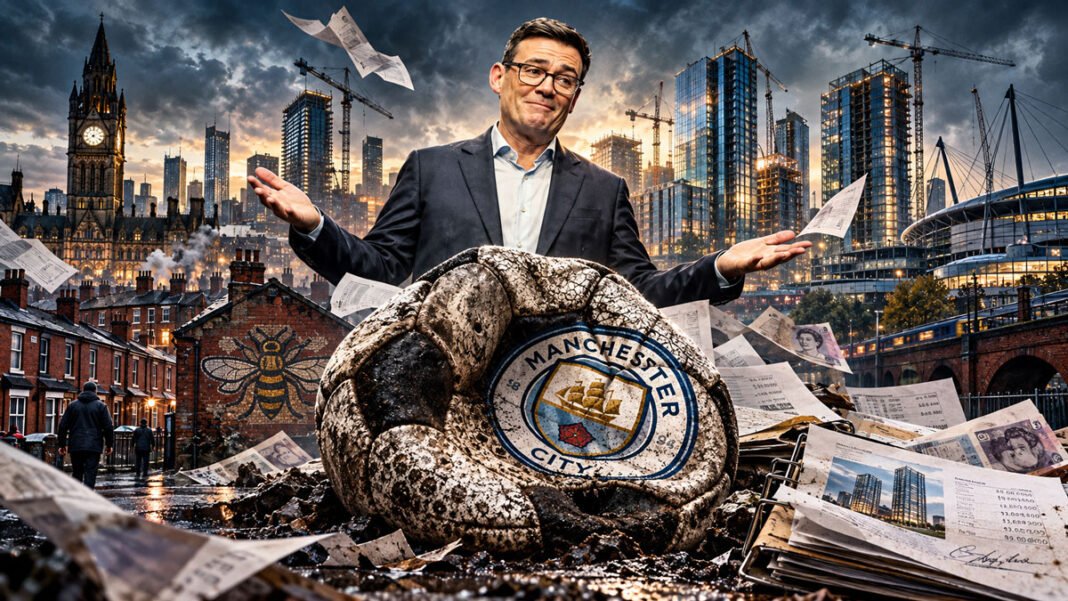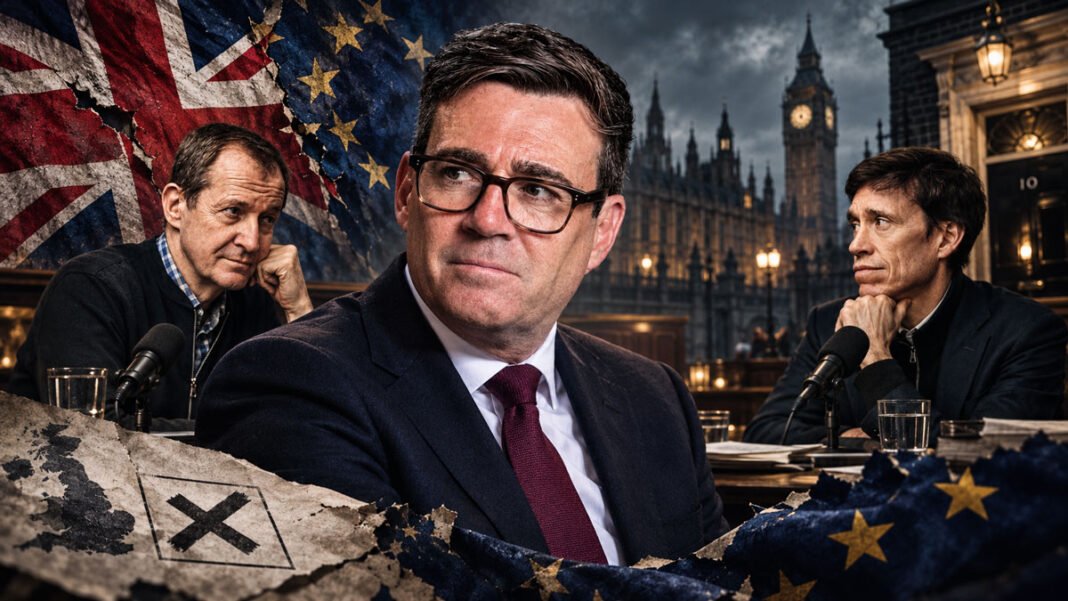
Burnham Brexit Russia Claim: Minister Cannot Say What Russia Did
Prime Minister Andy Burnham’s unsubstantiated claims of Russian interference in Brexit are a dangerous insult to 17.4 million voters. Without a mandate, he is rewriting history to force Britain back into the EU.
Stephen Doughty was given four chances to say what Russia actually did.
He was sitting on the Good Morning Britain sofa on Monday, a Foreign Office minister sent out to defend his Prime Minister’s claim that the 2016 referendum was tainted by Moscow. Susanna Reid put the question plainly: what did Russia do in 2016 that interfered with the vote, and did it influence the outcome?
Doughty talked about disinformation. He cited a figure of £1.5 billion in Russian interference spending this year, a number he did not source. He said he would not share specifics. Reid told him he was ‘muddying the waters‘ rather than clarifying them. Ed Balls, a former Labour cabinet minister and no enemy of this government, told him flatly that it was embarrassing. The presenters gave up and ended the interview.
That is the entire evidential basis, so far, for the most serious allegation any British Prime Minister has made about a British vote.
The Truth Behind Burnham’s Russian Interference Brexit Claims
The claim came a day earlier, in an interview with The Rest Is Politics, the podcast presented by Alastair Campbell and Rory Stewart. Andy Burnham said that when he entered Downing Street in the summer he asked whether Russia had interfered in the 2016 vote, and received the clear answer that yes, there was. Hold that venue in mind, because we will come back to it.
Note what is absent. He did not say who gave him that answer. He did not say what the answer consisted of. He did not say whether anything Russia is alleged to have done moved a single vote in a single ward. He said it mattered to get this on the record so that voters in Germany and France understood that some of this politics is instigated by Russia. The audience, apparently, was Berlin and Paris. It was not Bolton.
Three Remainers in a Room: One Remainer Said to the Other…
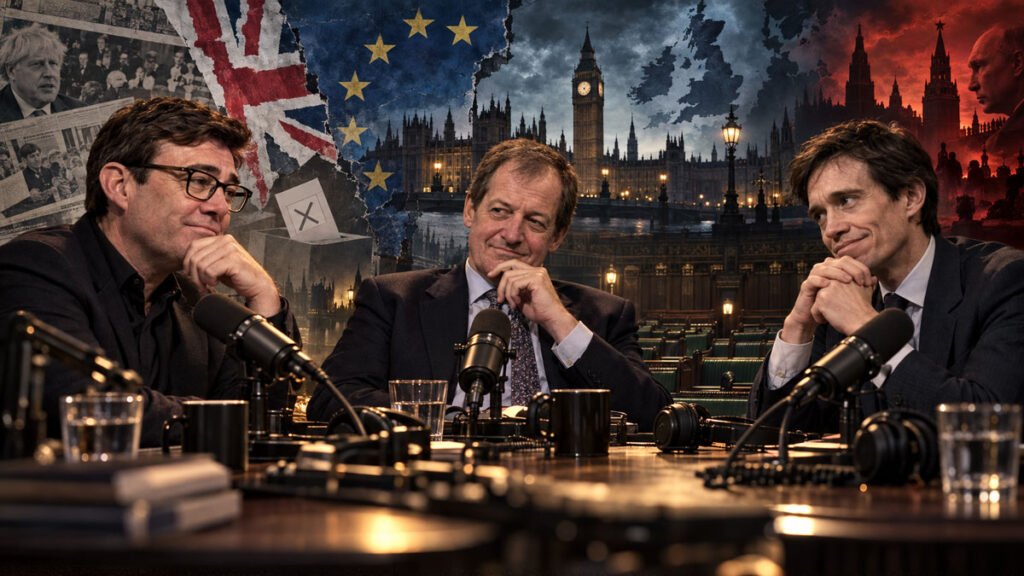
The claim did not arrive in the House of Commons, where it could have been questioned. It did not arrive as a statement to Parliament, where it would have had to be stood up. It arrived on a podcast, in front of two men who were never going to ask him for the evidence.
Look at who was in that room…
Burnham voted Remain and has never pretended otherwise. He took Makerfield in June, a seat where around 65 per cent of those who voted in 2016 chose to leave, and he took it while Reform’s leaflets attacked him over his opposition to Brexit. The voters knew exactly what he was. They sent him anyway, which tells you something about how little else was on offer.
Across the microphone sat Alastair Campbell, who called the referendum result the worst decision Britain had made in his lifetime and announced at once that he would set about changing people’s minds. He was as good as his word. He became editor-at-large of The New European in 2017, was among the first movers behind the People’s Vote campaign, joined its top table in 2018, helped plan the October 2018 march on Parliament and the larger one the following year, and in May 2019 was expelled from the Labour Party for voting Liberal Democrat to punish his own side over Brexit. Call that many things. Do not call it neutrality.
He also did not wait for the result before concluding that the public had been got at. On 12 March 2016, three months before a single ballot was cast, Campbell published a piece accusing the Mail, the Sun, the Express and the Star of sinking to fresh depths of dishonesty and of functioning as propaganda sheets for one side. He marvelled that any of their readers was left who had not become, in his phrase, a fully fledged OUTer. He added, as these pieces always do, that those readers were not as stupid as the proprietors imagined. The compliment sits awkwardly next to the argument, which is that they had been manufactured.
Mark that date, because it is the whole story in miniature. Three months before the country voted, the explanation for a Leave victory was already written and waiting: the public had been worked on by a hostile information operation. In 2016 the operation was Fleet Street. In 2026 it is Moscow. The structure of the argument has not altered by a single beam. Only the villain has been recast, and the claim has been moved somewhere it cannot be checked.
In 2016 the operation was Fleet Street. In 2026 it is Moscow. Only the villain has been recast.
But Campbell’s Brexit years are not the reason his presence in that room matters. Before any of it, he was Tony Blair’s director of communications, the man who oversaw how the intelligence case for invading Iraq was put to the British public. The Chilcot report concluded in July 2016 that the judgements about Iraq’s weapons had been presented with a certainty that was not justified.
Sit with that for a moment. A Prime Minister goes on a podcast and says he asked a question of the security services and received a clear answer, the contents of which the public may not see. Nodding along is the man who handled the last unverifiable intelligence claim this country was asked to take on trust. That one was also clear. It was also certain. It was also wrong, and a great many people died because of it.
That one was also clear. It was also certain. It was also wrong.
There is a second debt owed here, and it is about whose marching counts. In February 2003 the largest demonstration in British political history filled central London to stop that war, and the government Campbell served pressed on regardless. Fifteen years later, a considerably smaller crowd demanding that the referendum be run again was received as the authentic voice of the nation, and Campbell helped organise it. The name chosen for the campaign gave the whole thing away. If the second one was to be the People’s Vote, what exactly had the first one been?
Rory Stewart completes the set, and he is the most interesting of the three because he is the least shrill. From around 2011 until shortly before the referendum he was a member of the Trilateral Commission, the off-the-record network founded by David Rockefeller in 1973 to gather political and corporate elites from America, Europe and Japan, according to membership records obtained by Declassified UK. That is not a conspiracy. It is a curriculum vitae, and it is an education in a particular way of seeing the world: government as administration, borders as friction, democracy as a process that occasionally produces an output requiring careful management by people who know better.
What that room is structurally incapable of producing is a question. Not a hostile one. Not a sceptical one. Not even the obvious one. Campbell had reached his verdict on why people would vote Leave three months before they did it. Stewart arrived at the same place by the civil servant’s road, accepting the result in principle while treating it as an administrative problem to be contained. Burnham voted Remain and has spent ten years managing that fact in public. Assemble those three and the one thing none of them is equipped to ask is whether the thing they would all like to be true actually is.
That was not an interview. It was a communion.
Three men. Three Remain votes. One conviction that none of them has ever quite said aloud, which is that the largest democratic exercise in this country’s history was an injury to be treated rather than an instruction to be carried out.
That is the room in which the British electorate was informed it had been played by Moscow.
Set this against the official record, because the gap is the story.

Parliament’s Intelligence and Security Committee, in its July 2020 Russia Report, did not find that Russia interfered in the Brexit referendum. It found substantial evidence of interference in the 2014 Scottish independence referendum, and it concluded that Russian interference in British politics is commonplace. On the EU vote itself, its finding was narrower and far more damning of ministers than of Moscow: the government had not seen or sought evidence of successful interference in British democratic processes. The government’s own response was that it had seen no evidence of successful interference in the EU referendum. The committee’s criticism was that almost nobody had looked.
Nobody looked. That is a scandal, and the Tories who presided over it deserve every word of the contempt the ISC directed at them. But “nobody looked” is not the same as “we found something”, and neither is the same as “it changed the result”. Three entirely different propositions, and Burnham has quietly collapsed all three into one.
It is worth conceding the strongest version of his case. States interfere in one another’s politics constantly, through propaganda, money, espionage and social media, and anyone who imagines Britain’s hands are clean has not been paying attention. Labour knows this better than most: in 2024 the Trump campaign filed a complaint with the Federal Election Commission over British Labour Party staffers volunteering for Kamala Harris. Ed Davey was not being absurd when he said it needed saying by a Prime Minister. Democracies should defend themselves, and a covert operation, if one were ever proven, would be a graver thing than any lawful donation.
But that is the point. We are being asked to accept the grave thing on trust, while the documented interference in that referendum sits in the public record, unmentioned, because it ran the other way.
US Banks and £9.3m State Leaflets: The Real Brexit Interference

On 22 April 2016, two months before the vote, the President of the United States stood in Downing Street beside David Cameron and told the British public that if they left the European Union they would go to the back of the queue for an American trade deal. Barack Obama acknowledged he had, in his words, the temerity to weigh in, and insisted he was not there to fix any votes. It led the bulletins and the front pages for days. Nobody has ever called it interference. It was called the special relationship.
Then there was the money. On an analysis of Electoral Commission filings by the Sunlight Foundation, American financial firms put roughly £1.76 million into Britain Stronger in Europe. Goldman Sachs gave £500,000. JP Morgan gave £500,000. Citigroup and Morgan Stanley gave £250,000 each. Bloomberg gave another £250,000. PricewaterhouseCoopers added £7,508.50, which has the ring of an invoice rather than a donation.
These were not disinterested friends of British democracy. These were institutions with a direct, enormous and openly stated commercial stake in the City of London keeping its access to the European market. They were defending passporting rights, and they were entitled to say so. But let nobody pretend that Wall Street banks bankrolling one side of a British constitutional referendum is a smaller thing than a troll farm in St Petersburg. It is a larger thing, done in daylight, with receipts.
And then there was the state itself. In April 2016 the government spent £9.3 million of public money on a pro-Remain leaflet delivered to 27 million households, with an accompanying website and social media campaign. The designated lead campaign on each side was capped at £7 million. The government, in other words, outspent the legal limit for either campaign, on top of that campaign, with money taken from the very people it was lobbying. The cabinet secretary signed it off. Downing Street cited Harold Wilson’s 1975 leaflet as precedent, which rather proves the point about how old this habit is.
So look at the shape of the thing. The most powerful man in the world flew in to warn against Leave. The biggest banks on earth funded Remain. The British state spent £9.3 million of public money campaigning against the choice its own electorate was about to make. Every one of those interventions was overt, documented and aimed at the same outcome.
And they lost anyway.
Ten years on, the proposition from Downing Street is that the side with the president, the banks and the government leaflet was the side that got cheated.
Anyway. I was under the impression that Brexit was the work of thick northerners and the grey-haired vote. And Cambridge Analytica…It is becoming difficult to keep up with the official explanation, which seems to be revised whenever the previous one stops working.
Burnham’s Mandate: No Members’ Vote, No Public Approval
Tony Benn left the Commons in 2001 with five questions he thought every powerful person should face. What power have you got, where did you get it, in whose interests do you use it, to whom are you accountable, and the last and only one that finally matters: how do we get rid of you?
Apply them to the man now in Downing Street.
Andy Burnham returned to Parliament on 18 June this year, winning the Makerfield by-election by more than nine thousand votes, in a seat vacated on 14 May by Josh Simons, who resigned so that Burnham could stand. Keir Starmer announced his resignation four days later. Burnham was declared Labour leader on 17 July at a special conference, unopposed, nominated by 379 Labour MPs, over 94 per cent of the parliamentary party. There was no members’ ballot. There was no vote share, because there was no vote. On 20 July the King asked him to form a government, making him Britain’s seventh Prime Minister in a decade.
Not one member of the public has been asked to approve any of it. The next general election is not due until 2029. On the current trajectory, Britain faces the best part of three years of parliamentary trench warfare over a question already answered by 33.5 million people at a turnout of 72 per cent, the largest democratic exercise in this country’s history.
In whose interests, then? To whom accountable? And how, exactly, do we get rid of you?
From Makerfield to No 10: Burnham’s Brexit Shift
You will read that Burnham’s old Remainer instincts are resurfacing. The record shows something less flattering than a relapse. There was never a position to relapse from.
Ahead of Labour conference in 2017, Burnham gave an interview to HuffPost UK warning that the party would lose northern voters if it refused to confront free movement. It was reported at the time as the mayor of Greater Manchester speaking up for Leave towns. Read what he actually said. “I voted remain.” On single market membership: “I’m not saying I’m against” it. On free movement, that a reform was needed which addressed people’s concerns.
That is not a case for leaving. It is a case for being seen to understand people who voted to leave. He had voted Remain. He would take single market membership if it were going. His objection to the Norway model was not that it was wrong but that it would be divisive, and his argument for respecting the result was that the alternative would look like the establishment denying it. The anger he described was always somebody else’s.
He was right about the danger, mind. His stated fear was a “London-centric Brexit” in which the City was defended at the negotiating table while manufacturing, pharmaceuticals and the car industry were quietly traded away. That was a sharp insight, and a left one, and almost nobody in his party was making it.
The anger he described was always somebody else’s.
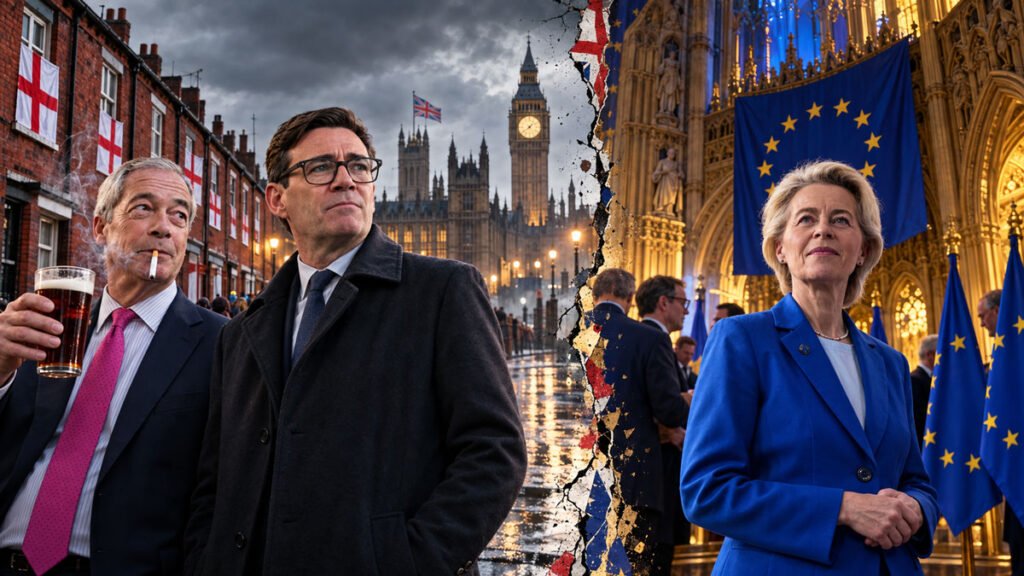
Which makes what followed harder to forgive. He is now Prime Minister. Every lever he warned about is in his hands. He could spend the next three years making certain the settlement serves Bolton rather than the City, which is precisely the job he identified in 2017 and precisely the job nobody has done since. Instead, campaigning in Makerfield in May, he told ITV he would not fight on rejoining and that the case existed only in the long term; by September he was no longer ruling out a rejoin pledge in Labour’s next manifesto; and among his first acts in Downing Street was a call to Ursula von der Leyen promising a closer and more ambitious relationship with the European Union.
The through-line is not a conviction abandoned. It is that there was no conviction to abandon. In 2017 the north was angry, so he counselled Labour to listen to it. In 2026 the parliamentary party, the commentariat and Brussels want the question reopened, so he is reopening it. On both occasions he read the room and positioned himself at the front of it.
That is worse than a Remainer in a Lexit coat. A man with a position can be argued with.
He sits, let us remember, for Makerfield, inside the borough of Wigan, where 104,331 people voted Leave against 58,942 for Remain. Very nearly 64 per cent.
Rejoining the EU Is Not an Economic Quick Fix
If the case for reopening this were economic, it would at least be arguable. It is not.
The OECD’s September forecast puts UK growth at 1.1 per cent for 2026; the IMF puts it at 1.0 per cent. The IMF’s figure for the euro area is 0.9 per cent. The OECD has France at 0.4 per cent. In the second quarter of this year the UK grew 0.5 per cent against the euro area’s 0.4, Germany’s 0.3 and France’s flat zero.
Nobody should mistake this for success. Britain is not thriving. It is limping, and limping slightly faster than a bloc that is also limping. That is precisely the point. Rejoining is not an economic rescue, because no rescue is on offer. The direction of travel is ideological, not economic, and those pushing it should have the honesty to say so.
What Did The EU Do For Blaenau Gwent

Here is the fact that ought to end the argument.
West Wales and the Valleys was classified by Brussels as a “less developed” region because its GDP per head sat below 75 per cent of the EU average. It received the highest level of EU structural funding available to any region in every funding round from 2000 onwards. In the 2014 to 2020 round alone, Wales was allocated nearly £2.7 billion, almost four times the UK average per person.
It qualified for the top tier every time because, every time, it was still poor enough to qualify.
Read that again. Three consecutive programmes, two decades, billions of euros, and the region never climbed out of the bracket. The money arrived. The poverty stayed.
Then, in June 2016, Blaenau Gwent voted 62 per cent to leave, the highest Leave vote in Wales.
The metropolitan explanation has always been false consciousness, or the tabloids, or now, apparently, the Kremlin. The simpler explanation is that people who had watched the cheques arrive and the high street empty anyway drew the obvious conclusion. They were not duped. They were unimpressed.
The national picture confirms them. The Resolution Foundation reported in July that Britain’s regional income gaps have barely moved between 1997 and 2023. Kensington and Chelsea has roughly four and a half times the disposable income per head of Leicester, a ratio that has held for nearly three decades. More than half of the poorest fifth of local authorities in 1997 were still in the poorest fifth in 2023. Ruth Curtice, the foundation’s chief executive, says Britain has among the highest regional inequality of any advanced economy.
That span, 1997 to 2023, covers almost exactly the years of Britain’s full and enthusiastic EU membership, structural funds and all. The gap did not close. Membership was not what was holding these towns back, and it was never going to be what saved them.
What would have saved them is not a mystery. The same report notes that German reunification cost roughly £70 billion a year for twenty-five years. British levelling-up spending in 2022 was £4 billion.
Four billion. That is the measure of how seriously Westminster has ever taken this, under any flag, and it is the number Burnham should be ashamed of, not the referendum result.
PUT IT TO THE COUNTRY OR LET IT GO
Andy Burnham built something real in Greater Manchester. He took the buses back into public control when almost nobody in his party had the nerve to try, and he was right, and it worked. That is the argument he should be having nationally: rail, water, energy, housing, the slow unglamorous reconstruction of public capacity in the places that were stripped of it.
Instead, a man who can tell you when the next bus leaves Leigh cannot tell you what Russia did.
If he truly believes rejoining is the answer to Britain’s condition, there is an honourable route. Write it into a manifesto. Stand on it. Ask the 17.4 million. Win or lose the argument in front of the people who have to live with the result, rather than announcing it on a podcast to reassure Berlin.
What he may not do is use a security claim he will not evidence to corrode the legitimacy of a vote he lost, while occupying an office no voter has ever awarded him. That is not defending democracy from foreign interference. That is interfering with it from the inside, which is both easier and worse.
They were not outspent by Moscow. They were lectured by a US president, outspent by Wall Street and out-campaigned by their own government using public money, and they voted Leave anyway. That is not the profile of a manipulated electorate. That is the profile of one that could not be bought.
Publish the evidence or withdraw the charge. Call the election or drop the project. But stop telling the poorest regions of this country that the reason they are poor is that somebody in St Petersburg lied to them.
Nobody in Blaenau Gwent needed a Russian troll to tell them they had been left behind. They could see it from the bus stop.
Enjoyed this read? I’m committed to keeping this space 100% ad-free so you can enjoy a clean, focused reading experience. Crafting these articles takes a significant amount of research and heart. If you found this helpful, please consider a “small donation” via PayPal or GoCardless to help keep the lights on and the content flowing. Every bit of support makes a huge difference.

Support The Tribune
INDEPENDENT. READER-FUNDED. AD-FREE.
If you value this article, help keep The Heartlands Tribune publishing independent journalism without intrusive advertising or corporate sponsors.
Choose your monthly amount
Secure payment via GoCardless