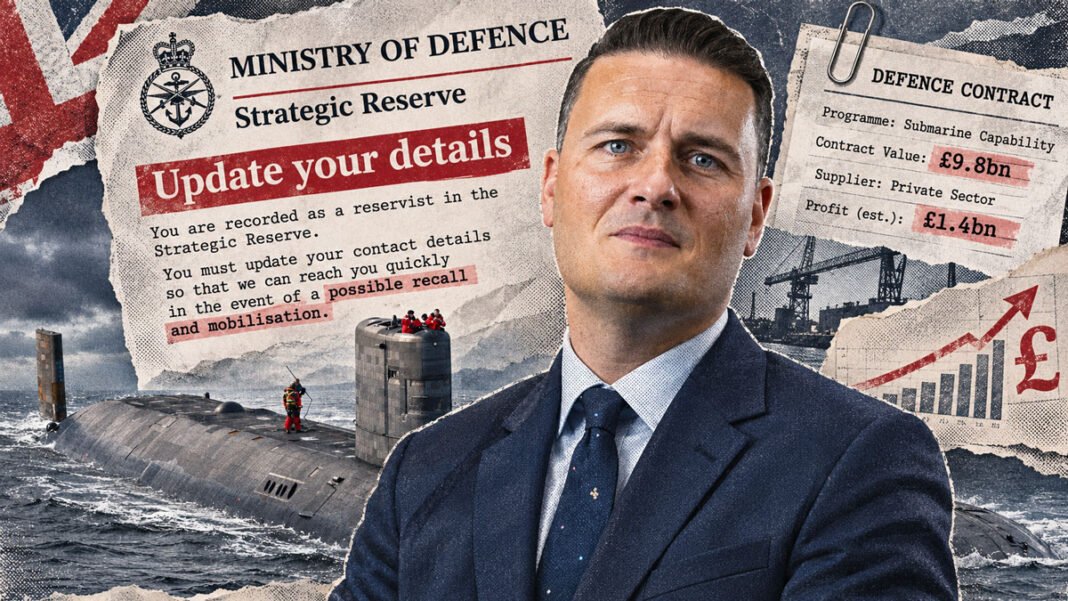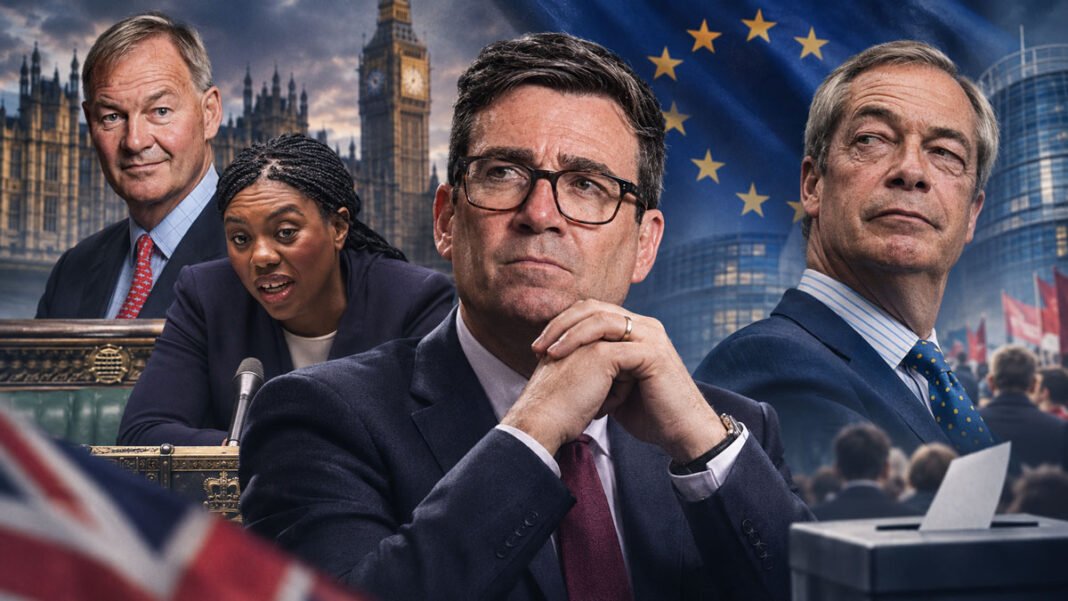
The Brussels deal is only the warm-up act. Whether Labour’s next manifesto promises to Brejoin the EU outright or promises a referendum on rejoining, the plan is the same: turn the next general election into the real referendum, fought on ground where Labour’s opponents are split three ways.
Last week in Brussels, Andy Burnham signed the deal he has been promising since conference. It covers food and farm checks, a link between the two carbon markets, and a Youth Experience Scheme for young Europeans. On Monday he told MPs it was “right we consider the range of options for our long-term relationship with our largest market.” He promised to say more in his ten-year plan in mid-December. ITV’s headline on the statement was that rejoining without a referendum would be “unthinkable”.
Set that reassurance beside what he said before it. Asked in the autumn whether he might skip a referendum and simply put rejoining in Labour’s manifesto, he told Channel 4 News: “I wouldn’t rule anything out at this moment.” Before the summit, he instructed his own ministers that government policy afterwards would be to explore options for the long-term relationship “for consideration in the next Parliament”. The next Parliament is the one chosen at the next general election.
Believe the direction of travel, not the reassurances. A government doesn’t announce where it’s going while it is still laying the track. What is being prepared is a general election fought as a proxy referendum. It may take one of two forms. One is a straight manifesto pledge to rejoin, with victory claimed as a mandate. The other, which sounds more democratic, is a promise to negotiate first and hold a referendum later. Burnham has kept both options open. Asked whether an in-out referendum could feature in a future manifesto, he said: “Things are possible.” Either way, the decisive vote is the general election, and Labour wants that vote held on its own terms.
LEND ME YOUR VOTE
The motive is survival. The Burnham bounce is real, but it is young. Until July, Reform had led nearly every poll for more than a year. In the week before Keir Starmer announced his resignation, Survation had Labour on 19 per cent and Reform on 27. Labour now leads the polls, but on less than three votes in ten, and its coalition is fraying at both ends.
Nor has the summit given him the lift he hoped for. A week on, the Brussels deal is already yesterday’s news, wrapping today’s chips, and the chips are not getting any cheaper. Ministers have paraded the headline claim that the deals could add up to 0.5 per cent to GDP by 2040. The government’s own impact assessment, published on Thursday, tells a quieter story…
For the agri-food agreement, the centrepiece of the reset, it puts the long-run gain at somewhere between ‘NOTHING’ and 0.14 per cent. Linking the carbon markets adds an estimated 0.1 per cent more.
Much of the rest of the headline figure comes from the Youth Experience Scheme, which the government says alone adds 0.2 per cent. That is growth from more young workers, not from more trade. Add people and GDP rises almost by definition, but nobody already here gets any richer. It takes some strange accounting to call that a gain while nearly a million young people in Britain are not in education, employment or training. Put the young Europeans’ contribution to one side, and the government’s own figures for the reset itself are face-saving at best.
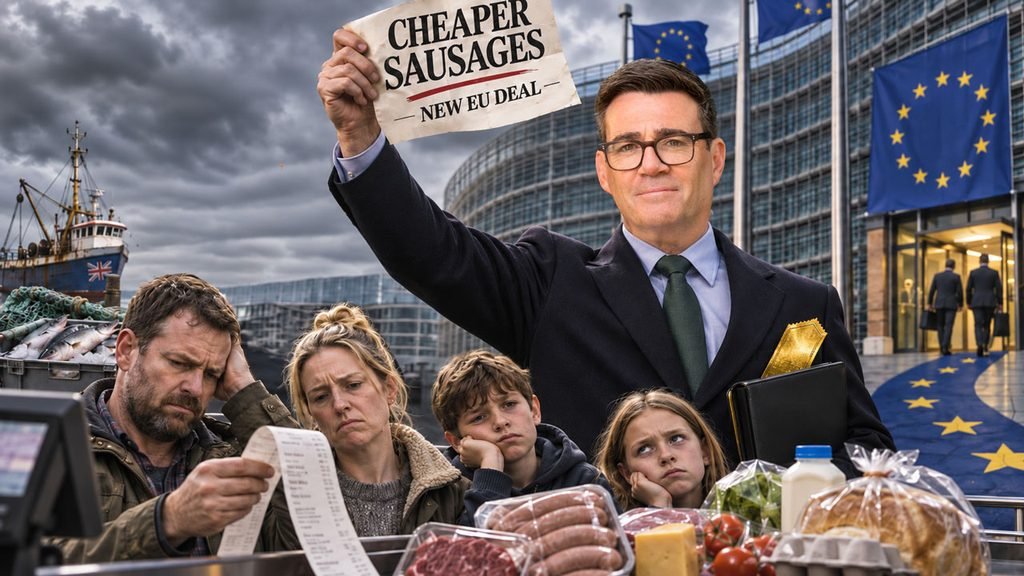
What Britain gives up in return is set out in the same document. Both the food and carbon treaties involve dynamic alignment, meaning Britain will apply EU law it has no vote on. Ministers say they will pay a financial contribution towards EU agencies and databases, but they don’t say how much. On the shopping bill, the assessment promises only that the deal “could help reduce the pressure on food price inflation”. It also admits deep uncertainty about whether any savings will reach shoppers. Exporters may save on border checks. But democratic self-government has a value beyond economics, and even judged on the government’s own economic terms, the rewards are remarkably modest. No one should expect to see their shopping bill fall.
Meanwhile, the coalition frays from both ends. On the left, voters tired of managerial austerity, Labour’s warmongering and its record on Gaza are drifting to the Greens and even the Liberal Democrats.
Across the post-industrial heartlands, Reform remains the biggest threat in the seats that decide who governs Britain. A government squeezed from both sides cannot count on winning a conventional contest on its record. It has to change the subject.
Europe is the subject… Rejoining does not divide Labour’s opponents; the right has managed that by itself. What it does is pull together the voters Labour needs and cannot otherwise reach.
Burnham cannot make a deal with the Greens. In October he ruled out any partnership with them while they keep their policy describing Zionism as racism, and Labour told its council groups to end local coalitions with them. So he has to go over the Greens’ heads to their voters. That is the “lend me your vote” offer. Set aside Gaza, the arms budget, Ukraine and Iran and everything else for one election, because Europe is the bigger prize, and those battles can be fought inside the EU once Reform is beaten. A pledge to rejoin, or to hold a second referendum, is the only offer big enough to make that request.
It is the mirror image of 2019. Then, Boris Johnson asked Labour Leave voters to lend him their votes, once, to get Brexit done. Next time, Burnham will ask Liberal Democrat and Green voters to lend him theirs to take Britain back in.
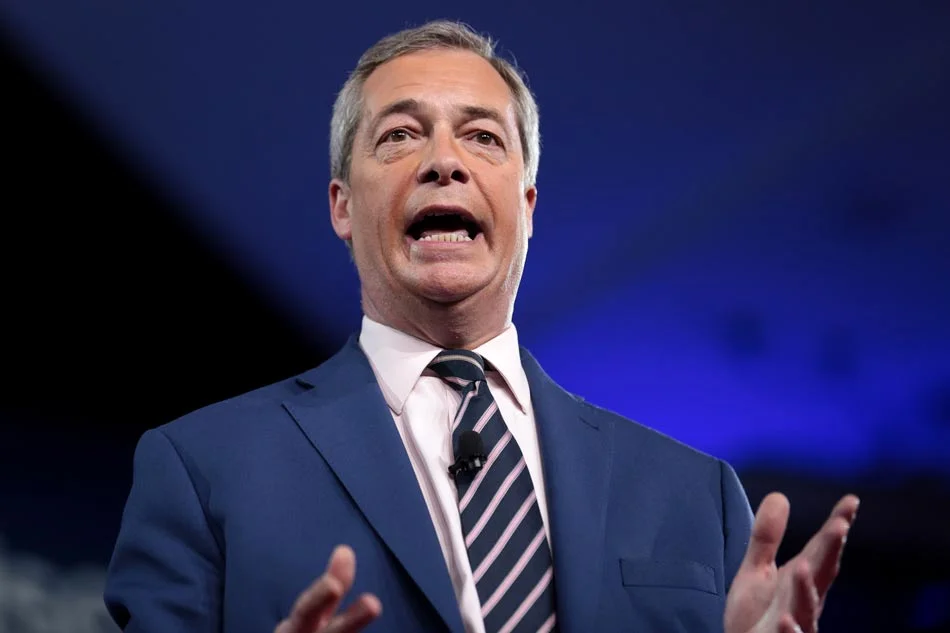
The arithmetic is already on the table. An MRP by PLMR and Electoral Calculus projects a Labour majority of 56 on 28 per cent of the vote, with the Conservatives, Reform UK and Restore Britain on 47 per cent between them but divided. In that model, Restore, on 8 per cent, takes enough votes from Reform to cost it seats. Restore has since fallen back to 3 or 4 per cent with YouGov, but it took nearly 7 per cent in the Makerfield by-election.
The whole plan rests on a gamble that the right stays divided. Reform has ruled out any agreement with Lowe’s party, citing antisemitism and extremism in its leadership.
Asked whether he would kiss and make up with Lowe, who left Reform and founded his own party after bitter rows with senior figures, Farage said: “I don’t kiss chaps all that much, to be honest with you. I mean, I might have a civil chat.
“But … sit down with Calvin Robinson, who wants to drive the Jews out of America? I don’t think so. Shall I sit down with Steve Laws, who wants a deportation policy that would be ambitious in 1938 Germany? I mean, am I going to sit down with those people and do a deal? Not a chance, and I think really that Rupert Lowe should be disavowing these people.”
He added: “Have a look at some of those people who have embedded themselves in Restore Britain. I’m not going to say anything disobliging about Mr Lowe; we might have had our disagreements over the years. But you can’t sit down and do an electoral pact with an organisation that has people like that relatively senior within it. I’d be very surprised if anybody sitting on the front row [Reform colleagues] would want me to go down that path.”
On Monday, Farage had said: “I’ve said before that if Lowe were to get rid of those people, that would be a different kettle of fish.”
And there’s the rub…political kettles of fish have a habit of changing when the prize is big enough. Farage has already left the door ajar. Should the Conservatives, Reform and Restore Britain ever agree to stand aside for one another in key constituencies, Labour’s electoral arithmetic could unravel overnight. Labour is gambling its political survival on a feud that may prove less enduring than the ambitions of those involved.
There is a second gamble, closer to home. Not every Labour voter will follow. In Bolsover, Dennis Skinner’s old seat, Reform already controls the county council, holding 42 of Derbyshire’s 64 seats. A projection based on current national polling puts Reform five points ahead of Labour in the constituency. Asked to back a party promising to take Britain back into Europe, many of those voters will hold their noses and vote Reform. Labour may win over a Green voter in Bristol and lose a former pit village in Derbyshire.
If both gambles hold, the result is a Labour majority won on a minority of the vote. The morning after, it would be presented as a sovereign mandate to reverse the biggest democratic vote in British history…for the rest of the country that would not sit well…
THE THINK TANKS DID THE MATHS FIRST
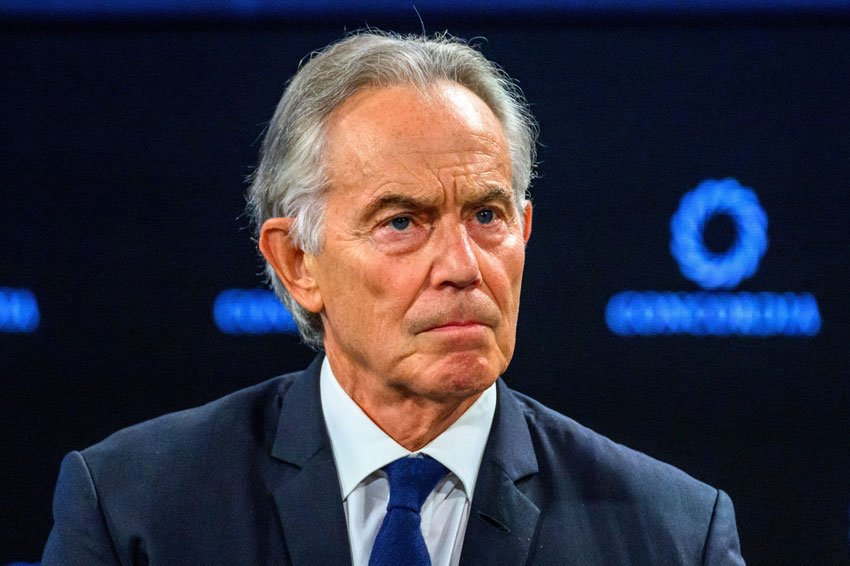
This isn’t speculation about what might happen. The groundwork is already in print. The Guardian reported that senior Downing Street officials had been reaching out to think tanks and pollsters to test public support for rejoining, with a view to possibly including such a promise in the next manifesto. The reports came out in step.
The Tony Blair Institute published “Beyond Leave and Remain: A Path to Rejoining a Reformed Europe”, calling for Britain to rejoin within a decade. Its headline finding was electoral, not economic: its poll of 13,400 adults found a pledge to reverse Brexit was the only scenario tested that would stop a Reform-led government, and that it could secure Labour 321 seats. Next came the Institute for Public Policy Research, the think tank closest to Labour. It urged that EU membership become Britain’s “medium-term” goal, claimed that 54 per cent of Labour voters considering a switch to Reform supported joining, and argued that old arguments about freedom of movement had lost “salience”. A Messina Group survey for the Guardian found 49 per cent supporting a return and 28.5 per cent opposed, and suggested Labour could increase its vote share by proposing a new referendum and campaigning to rejoin.
The campaigners say it even more plainly. Naomi Smith, chief executive of Best for Britain, said its seat-level polling showed that “half-measures on Europe won’t deliver a Labour-led government at the next general election”. Inside the party, ministers told The Independent the question is now “how it is expressed in the manifesto, rather than if”. One senior minister said they had to be “mindful of Nigel Farage and revitalising Reform”.
Look at what this coalition is actually arguing. Hardly any of it says rejoining would raise wages in Wigan. It says rejoining would win seats. That is the proxy referendum, described by the people designing it.
A REFERENDUM ON LABOUR’S TERMS
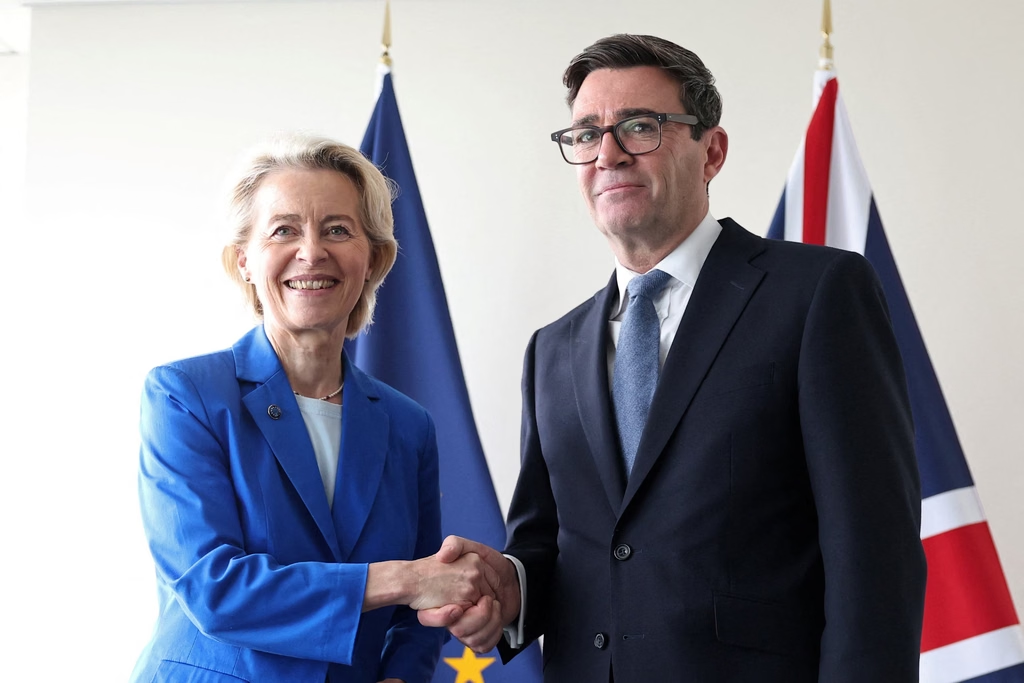
The more careful supporters of rejoining already know a bare manifesto pledge would be called a stitch-up. So the alternative is taking shape. Former business secretary Peter Kyle has backed an election pledge to seek membership, followed by negotiations and a public vote. David Lammy says that forming the next government would give Labour the mandate to begin formal negotiations.
Notice the order. The general election comes first, and with it the “mandate to negotiate”. Then come years of talks, run by ministers who already want to rejoin, with a Brussels that has already tied Britain to its food rules. Only at the end would the public be offered a vote, on a question the government had framed, at a time it had chosen, after years spent presenting membership as the natural next step. That is not a decision handed to the people. It is a confirmation vote, staged after the real decision has been made.
Anyone with a memory longer than the think tanks’ will recognise it. This was Labour’s offer in 2019: negotiate a new deal, then put it to a second referendum. Keir Starmer pushed the policy through the party, and voters in the heartlands saw it for what it was, a way of asking the question again until they gave the right answer. Boris Johnson answered with three words, “Get Brexit done”, asked Labour Leave voters to lend him their votes, and walked into Number 10 with a majority of 80.
The Quiet Part…The deal would also come with terms the government would much rather not discuss. Burnham says he cannot imagine recommending that Britain join the Schengen border-free area or replace the pound with the euro. Every recent new member has had to commit to adopting the euro eventually, and Brussels, not Downing Street, would decide whether Britain got an exemption. Rejoining would also bring back free movement and the jurisdiction of the European Court of Justice. Those conditions will not be printed on a Labour leaflet in Makerfield.
The Conservatives played this game too. David Cameron promised a referendum to see off UKIP and hold his party together. It was an electoral device dressed up as a democratic principle, and it blew up in his face. Burnham’s version would be worse: Cameron at least promised voters a choice they had not had for forty years, while Burnham would be asking them to reconsider one they had already made.
“A referendum promised to win a general election is not a gift to voters. It is bait.“
THE LABOUR MARKET THEY WANT BACK
To make this work, the Prime Minister must first bury his own past. In December 2016, as MP for Leigh, Burnham broke with the London consensus. He told the Commons that free movement was being used to undermine skilled wages, and declared there was “nothing socialist about a system of free movement” used by multinationals to hold pay down. He understood what every bricklayer, warehouse packer and care assistant in Lancashire knew from their payslips. When employers can draw without limit on labour from lower-wage economies, the working class loses its bargaining power.
Ten years later, the same man wants an “honest discussion” about freedom of movement, and says staying out of it will not be a red line in talks.
The Youth Experience Scheme is the first step. To be fair, it is not free movement. It lets people aged 18 to 31 live here for up to three years to work, study, volunteer, work as au pairs or travel, with a cap of 100,000 a year from each side, no access to benefits and no right to bring dependants. EU diplomats, EL PAÍS reported, called the cap “limited and precise”, chosen to avoid the political charge of “free movement”. But if the cap is filled every year, there could be up to 300,000 young European workers in Britain at any one time. They would arrive in a labour market where nearly 981,000 people aged 16 to 24 were not in education, employment or training between April and June this year. At the same time, the government is considering slowing planned minimum wage rises for young workers. The bottom of the labour market gets more competition, and the young people already in it get less protection.
It is no mystery who asked for this. The CBI’s “Building Bridges” report called for reciprocal youth participation schemes with the EU. UKHospitality lobbied for years. Tui, Jet2, Abta, UKHospitality and UKinbound signed a letter to ministers, and Abta’s public affairs director said they had been lobbying governments since 2016, adding: “this is what effective lobbying is about”. Best for Britain had campaigned for such a scheme since May 2023.
One detail gives the game away. On the referendum’s tenth anniversary, the CBI’s Rain Newton-Smith told the Financial Times that businesses don’t want to go back. Big business wants the labour without the vote. The working class was never at the table.
Burnham’s defenders have a fair point here. After Brexit, the Conservatives’ points-based system brought in more migration from outside the EU than free movement ever did, and Burnham now argues free movement was a less difficult kind of immigration than today’s. That is a damning verdict on the Tory system. It is not a case for handing employers back an open supply of labour. The answer to a broken immigration system is democratic control backed by union-enforced pay rates, not the market the CBI misses.
THE ECONOMY LABOUR CAN’T STOP PRAISING
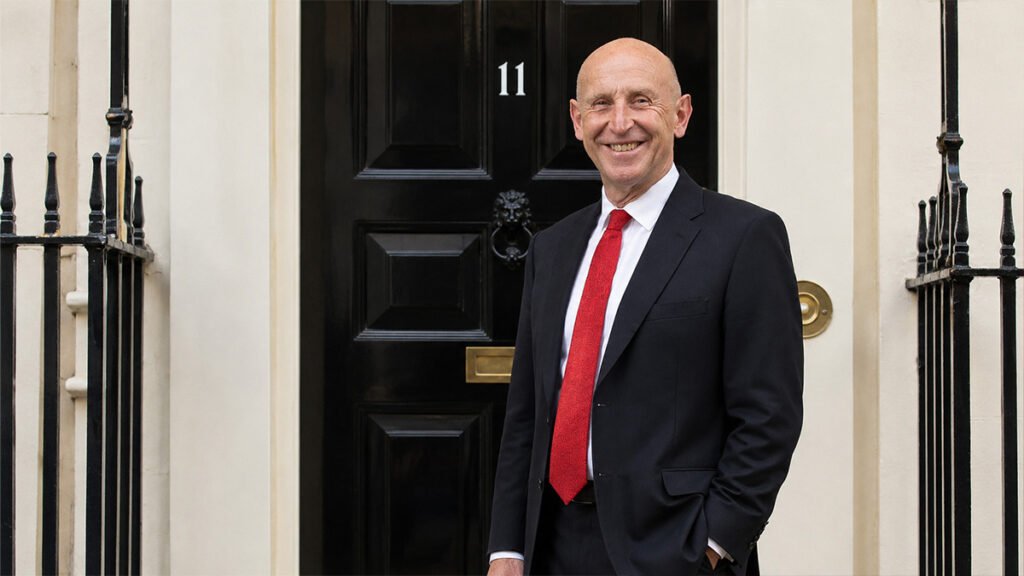
The case for crawling back to Brussels rests on one claim, repeated endlessly: Britain is failing outside the EU. Labour’s problem is that its own Chancellor keeps saying the opposite. John Healey’s Budget last month boasted that the UK recorded the joint-fastest GDP growth in the G7 in the first half of this year. In September he described growth as “still fragile, but the fastest in the G7”. At the G20, he said Britain faced global pressures “from a position of relative strength”.
Now listen to the Prime Minister. He told Labour’s conference that Brexit has done “more harm than good”, and he points to a decade of low growth since the referendum. Both claims can’t carry the argument at once. If Britain is recovering under Labour, Brexit is not the weight dragging the country down.
If Britain is failing, the Chancellor is spinning at the dispatch box. A rejoin election would require ministers to argue both things in the same campaign: that they run the economy well, and that the economy is doomed outside Europe. Every opposition spokesman will be glad to point that out.
The official figures support the Chancellor, not the Prime Minister. According to the House of Commons Library, UK GDP grew by 0.7 per cent in the third quarter of 2026, while German growth was 0.2 per cent and French output fell by 0.1 per cent. Germany’s economy is just 2.1 per cent above its pre-pandemic level, the lowest in the G7. The EU is not sinking; Spain and Ireland have kept the eurozone as a whole growing. But its two largest economies are stalling, and nobody can seriously claim Britain needs rescuing by them.
The same is true of the cost of living. The Food and Drink Federation reports that gas prices have more than doubled since February, a war-driven energy shock that is hitting the eurozone too; high prices come from leaving energy in private hands and farmers unprotected against fuel and fertiliser costs, and rejoining Brussels would fix neither.
Britain’s problem is not a shortage of Brussels regulation. It is decades of underinvestment, asset-stripping privatisation, and a Treasury orthodoxy that refuses to rebuild infrastructure with public money. The single market will not build a council house in Wigan or reopen a steelworks on Teesside. Its state-aid and procurement rules would also restrict how a serious public-ownership programme could be funded. The food deal, which an initial Treasury projection suggests could in time add 0.4 per cent to GDP, means Britain takes on EU rules that its voters had no say in writing.
Taking rules without a say in writing them is the opposite of taking back control.
THE GENIE WILL NOT STAY IN THE LAMP
Burnham’s defenders will say every government campaigns on a manifesto and every election gives a mandate. They will say Johnson delivered Brexit through a general election in 2019. That is true, and it shows exactly where the difference lies. In 2019, a general election carried out what a referendum had decided. Burnham’s version would use a general election to overturn one.
He knows the difference, because he campaigned on it. In May, fighting a Leave-voting seat, he said: “I’m not proposing the UK rejoin the EU. I respect the referendum.” Makerfield elected him on that promise. On Monday he set his own “Makerfield test” for the EU deal: making life better here at home, particularly in neglected communities. The real Makerfield test is simpler. Would he tell the voters of Makerfield in 2029 what he is now telling Brussels and the think tanks?
Clever Westminster manoeuvres have a habit of blowing up in the faces of the people who design them. You can commission all the flattering polls you like, just as Mandelson and Alister Campbell’s People’s Vote did. You can fill every studio sofa with pundits saying the public regrets 2016 and Brexit has failed.
Outside the M25, people have long memories. They remember being told their vote was a mistake to be corrected. If the next election is turned into a backdoor referendum, many Labour MPs in heartland seats may find the genie was best left in the lamp.
Andy Burnham once promised a new path that would bring the country back together. “The last thing we should do right now,” he said, “is rerun those arguments.” Add that to the list of broken promises. Whether the manifesto says rejoin or says referendum, Brexit is back at the centre of British politics, and it will stay there: in a Parliament with time for little else, in boardrooms putting off investment until they know which rules apply, and on factory floors waiting to find out. Between now and the next election, and long after it, every argument will come back to Europe.
If the Prime Minister wants to take Britain back in, he should say so plainly and put the question on its own, with every term on the ballot paper: the euro, free movement, the court and the cost. Until he does, the country waits. The age of uncertainty has begun.
Labour’s next election campaign has already begun, and it has one policy. Nye Bevan had a name for it in 1957: “an escapist conception”, in which market forces take the place of political responsibility. Almost seventy years on, Labour is still looking for the exit.
Enjoyed this read? I’m committed to keeping this space 100% ad-free so you can enjoy a clean, focused reading experience. Crafting these articles takes a significant amount of research and heart. If you found this helpful, please consider a “small donation” via PayPal or GoCardless to help keep the lights on and the content flowing. Every bit of support makes a huge difference.