Monopoly Capitalism: Never Stops Insulting
There is a particular kind of insolence that belongs only to the custodians of essential services in modern Britain. It is the quiet, bureaucratic entitlement that allows men in suits to treat a public catastrophe as a private dividend.
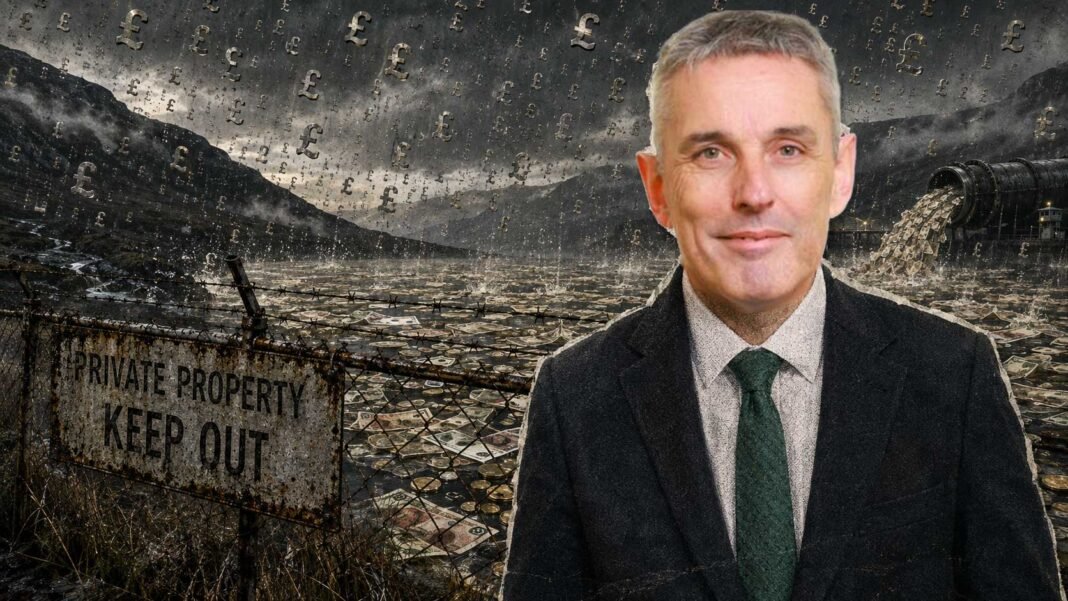
At the end of July, as Britain’s largest water monopoly teetered on the precipice of financial collapse, Thames Water quietly handed a £1 million signing-on fee to its finance chief, Steve Buck. The money did not come from stellar performance, nor did it reflect a single mile of repaired pipework or a single river cleansed of human effluent. It was drawn directly from an emergency borrowing facility provided by a syndicate of lenders attempting to keep the company solvent.
In plain English, a utility carrying £21 billion in debt, warning that its cash reserves will run dry before the end of the year, borrowed money at emergency rates to hand a seven-figure sum to an executive who joined the enterprise only fifteen months ago.
This is not a market functioning under pressure. It is an extraction mechanism operating at peak efficiency.
The disclosure came via a letter sent by Sir Adrian Montague, the chairman of Thames Water, to MPs on the Environment, Food and Rural Affairs Select Committee. In it, Sir Adrian acknowledged what every household in London and the Thames Valley already knows: that customers will regard these payments as deeply unfair while service standards remain in the gutter. Yet, having acknowledged the injustice, the board paid the money anyway, while negotiating retention settlements for fourteen other executives, including two who have already departed. Meanwhile, chief executive Chris Weston saw his total pay package climb past £1 million last year.
Fairness demands that we look at the board’s justification. Sir Adrian’s defence rests on the cold mechanics of employment law and corporate survival. Thames Water had taken formal legal advice; Mr Buck’s package had been contractually agreed upon when he was poached from Pennon Group, and its payment had merely been deferred. The board argues that during an unprecedented three-year crisis, the company cannot attract or retain senior financial leaders without offering competitive packages. Without executive continuity, they claim, any hope of a solvent restructuring vanishes, leaving millions of customers in regulatory limbo.
It is a neat, lawyerly argument. It is also entirely hollow.
Contractual obligations are treated as sacred scripture when they run toward boardroom bank accounts, but they evaporate the moment they concern the public. Thames Water holds a fundamental contract with the British public: to provide clean water and safely dispose of sewage. That contract has been violated daily for years. When ordinary citizens fail to meet their contractual duties, they face court orders and disconnection. When water executives oversee systemic failure, they claim immunity behind legal advice and demand seven-figure retention checks to stay at the wheel.
If a corporate leadership team cannot navigate an enterprise through a crisis without extracting millions in personal bonuses from emergency credit lines, then that leadership has failed its primary test. Paying executives lavish sums to stay at a collapsing company does not secure talent; it rewards the management of decay.
The underlying illness, however, lies deeper than boardroom greed. It lies in the financial architecture that allowed private equity to treat a vital natural monopoly as a cash-generating asset.
A syndicate of fund managers known as the London & Valley Water consortium, including Apollo Global Management, Elliott Management, Farallon Capital Management, and Silver Point Capital, currently holds £17 billion of Thames Water’s debt. They have proposed a £10 billion restructuring plan, offering to inject equity and write off £9.6 billion in existing debt, on the condition that they retain control and eventually float the business back onto the public markets in the 2030s. To ensure their leverage, these distress investors have already retained litigation specialists, threatening to sue the government if the state steps in.
They are holding the water supply of fifteen million people hostage to protect their financial yield.
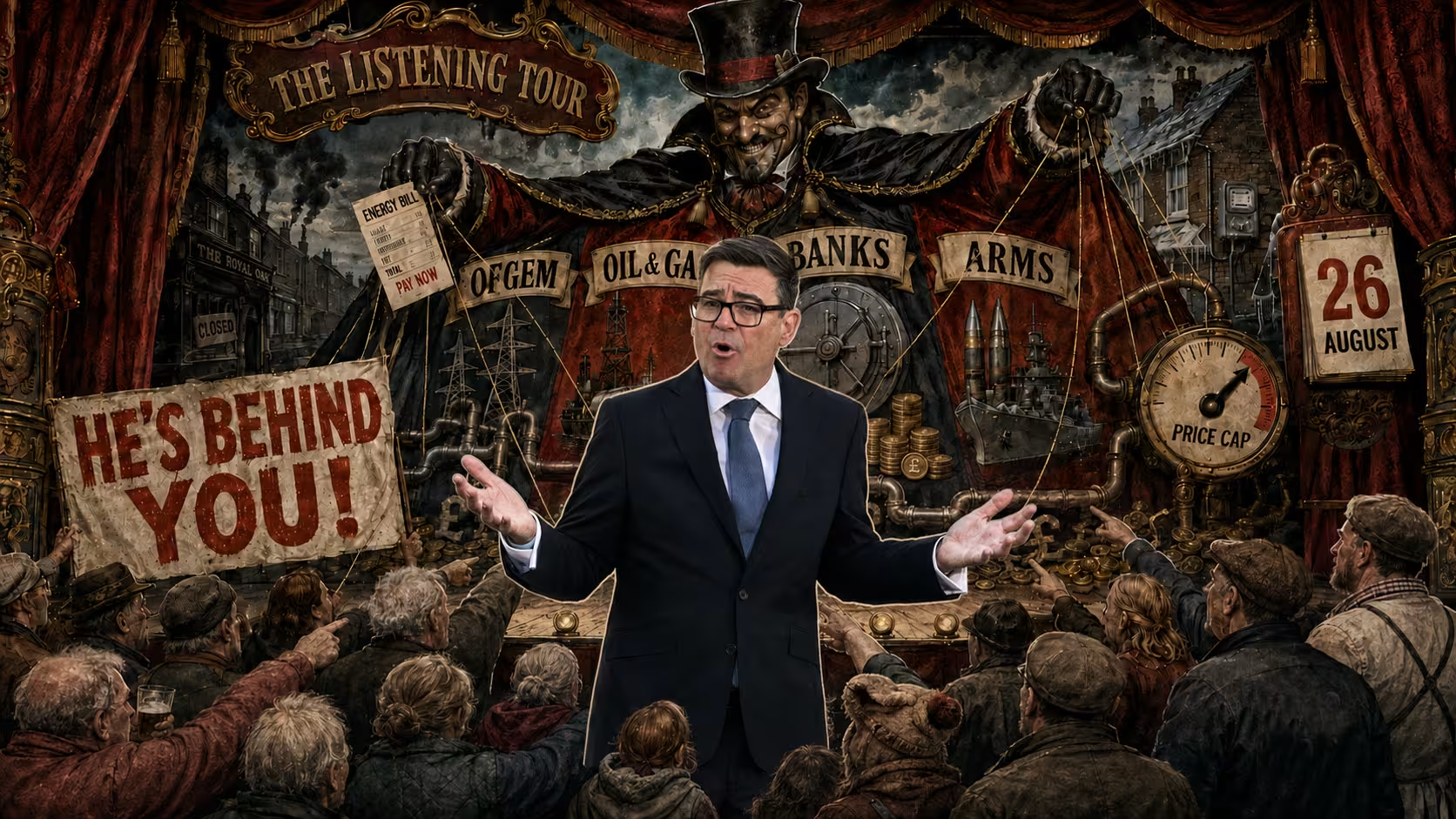
This presents an immediate, inescapable test for the Environment Secretary, Angela Eagle, and Prime Minister Andy Burnham. The government has flirted with compromise, proposing “golden shares” and vague notions of “public control” to satisfy political rhetoric without dismantling the private structure. Her predecessor, Emma Reynolds, rightly rejected earlier rescue proposals as inadequate for consumers. Continuing to search for a private buyer or a creditor-led bailout is a failure of statecraft.
The mechanism to end this scandal already exists. The government must place Thames Water into a Special Administration Regime immediately. Placing the company into special administration would wipe out the speculative equity, force corporate lenders to take their losses, and return the management of Britain’s most critical natural resource to public hands, where it belongs.
Water is not a commodity to be traded, leveraged, or milked for executive bonuses. It is the primary common wealth of a nation. A state that allows private financiers to draw emergency loans to pay million-pound signing bonuses while rivers rot has surrendered its authority.
When a system reaches the point where failure is incentivised and collapse is financed on credit, it cannot be reformed by legal tweaking or regulatory sternness. It must be taken back.
When the boardroom treats insolvency as a bonus scheme and emergency loans as a payroll facility, that is not a business in distress; it is a crime scene with a corporate logo.