INSUFFICIENT EVIDENCE
The FCA fined a bank chief executive £642,430 for trying to unmask a whistleblower. Then an FCA official told Simon Andriesz that losing his anonymity had cost him his protection. The regulator now accepts that was wrong.
Simon Andriesz typed three letters into a search box. HWL. He had spent years as a managing director at BGC Partners and he knew that senior people there signed internal emails with their initials, so when the United States Justice Department released millions of pages from the Epstein files, he knew exactly what to look for. He found a 2018 exchange between Howard Lutnick and Epstein discussing the prospects of a start-up in which both had an interest. Lutnick is now the United States Commerce Secretary. He ran BGC and Cantor Fitzgerald for decades. Andriesz took what he had found to the House Oversight Committee, and in July he told the BBC’s File on 4 Investigates about it.
He died in Thailand on 23 September, aged 57. His family said he had taken his own life and that there was no suggestion of foul play.
Nobody has to have silenced Simon Andriesz for his death to be an indictment. He spent nine years telling the right authorities, in writing, through the proper channels, and the British system he told kept answering that it had looked carefully and found insufficient evidence.
THE MAN THE AMERICANS PAID AND THE BRITISH FILED

Andriesz had been a whistleblower long before Epstein’s name entered his story. By the BBC’s account he raised concerns internally about accounting irregularities at BGC in 2016 and was dismissed in 2017. By his own account he reported to the FCA from 2017, and he spoke to the FBI in 2020 and 2021.
In November 2019 the US Commodity Futures Trading Commission ordered BGC Financial to pay a $3 million penalty for supervision, reporting and recordkeeping failings stretching over five years. The CFTC paid Andriesz a whistleblower award of around $420,000, identifying him as an overseas claimant whose first-hand information had contributed significantly to the action. An American regulator read what he sent, acted on it, and paid him for the value of it.
The British response ran differently. The all-party parliamentary group on investment fraud and fairer financial services says HMRC issued a substantial determination on matters he raised; Andriesz himself put the figure at £96 million, which BGC disputes. The FCA, by his account, issued what amounted to a regulatory slap on the wrist. When he sent the regulator evidence of what he regarded as retaliation by his former employer and its lawyers, the FCA told him there was insufficient evidence to conclude that retaliation had occurred, a finding he believed made it harder to win at tribunal.
BGC denies it all. The firm told the BBC his allegations were categorically false and that his employment ended because he refused duties and abandoned his role. A US arbitration panel ordered BGC Financial to pay him $500,000 in 2024 without giving reasons. A UK employment tribunal struck out his claim in August on procedural grounds, with no finding on retaliation. Nothing here asserts that BGC did what he alleged. The point is that he died with every substantive question about his treatment unanswered by any British body able to answer it.
A PROTECTION THAT RUNS ONE WAY
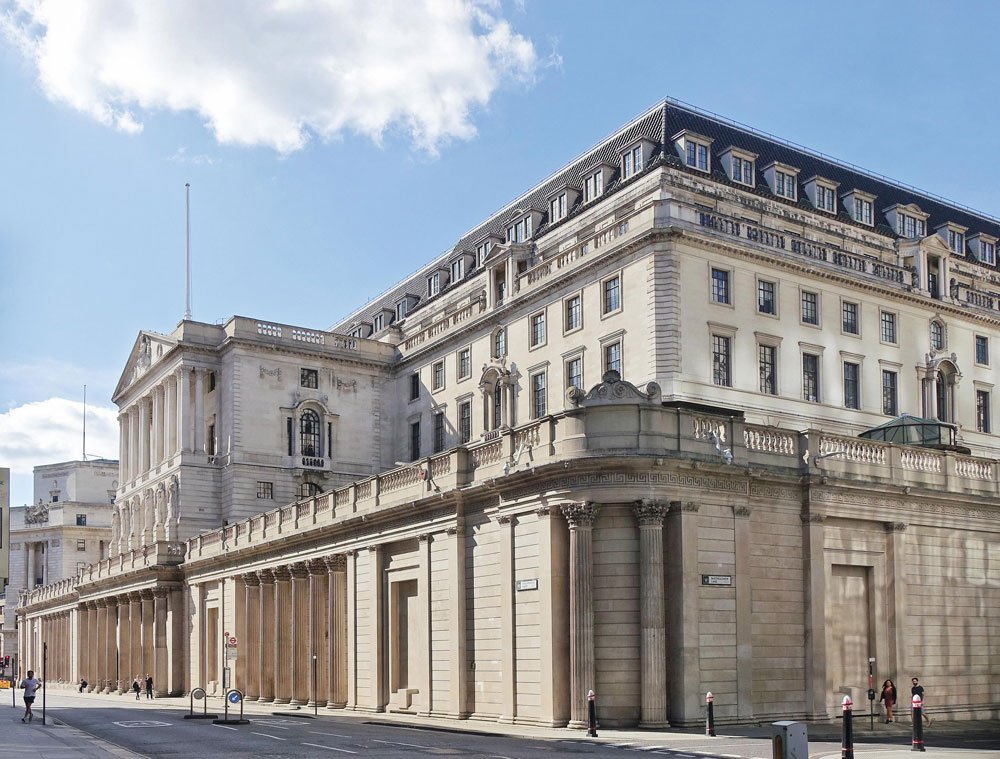
In May 2018 the FCA and the Prudential Regulation Authority jointly fined Jes Staley, then chief executive of Barclays, a total of £642,430. His offence was attempting to identify the author of an anonymous whistleblowing letter. Mark Steward, then the FCA’s enforcement director, said Staley had acted in a way that risked undermining confidence in Barclays’ whistleblowing procedures. It was the first case brought under the Senior Managers Regime. Staley kept his job.
Hold that principle still for a moment. The regulator fined a bank chief executive a six-figure sum on the basis that a whistleblower’s anonymity is the load-bearing wall of the entire system.
Now set it beside what the APPG says happened to Simon Andriesz. An FCA official told him he had lost whistleblower protection because his identity had become known. The FCA has since accepted that the advice was wrong.
Same institution. Same principle. Enforced in one direction and withdrawn in the other.
When a bank punctures a whistleblower’s anonymity, anonymity is sacred and there is a fine. When a whistleblower loses his anonymity in the course of fighting for nine years to be heard, anonymity turns out to have been the condition of his protection, and the protection evaporates. He was told, in effect, that the price of speaking loudly enough to be noticed was forfeiting the shelter that speaking was supposed to earn him.
Weeks before he died, Andriesz told a public event organised by MPs, whistleblowers and campaigners that he felt thoroughly let down and had been put through absolute hell by the FCA. At a Transparency Task Force meeting in July he said the regulator merely pays lip service to its own rules. Those are his words, and they were spoken while there was still time for somebody to act on them.
A BOARD MEMBER REVIEWING HER OWN BOARD

The FCA’s answer is a review. It has asked Lea Paterson, a new non-executive director, to examine how it interacted with Andriesz, in its own words to learn any lessons for the future.
The case for Paterson is strong and deserves stating properly rather than sneering at. She set up and led the Bank of England’s Independent Evaluation Office. She has been a civil service commissioner since 2022 and sits on the board of the Independent Parliamentary Standards Authority. If you were designing a person to audit a regulator’s culture, you would end up with something close to her CV. She also carries no responsibility for what was done to Andriesz, because her FCA board role began on 1 October, eight days after he died.
That is also the weakness. She is reviewing an institution whose board she joined last week and on which she will sit while the findings land. The evaluation office she built at the Bank exists to help the Bank’s own Court of Directors keep its performance under review. Internal evaluation, however rigorous, is the organisation marking itself and deciding what to publish.
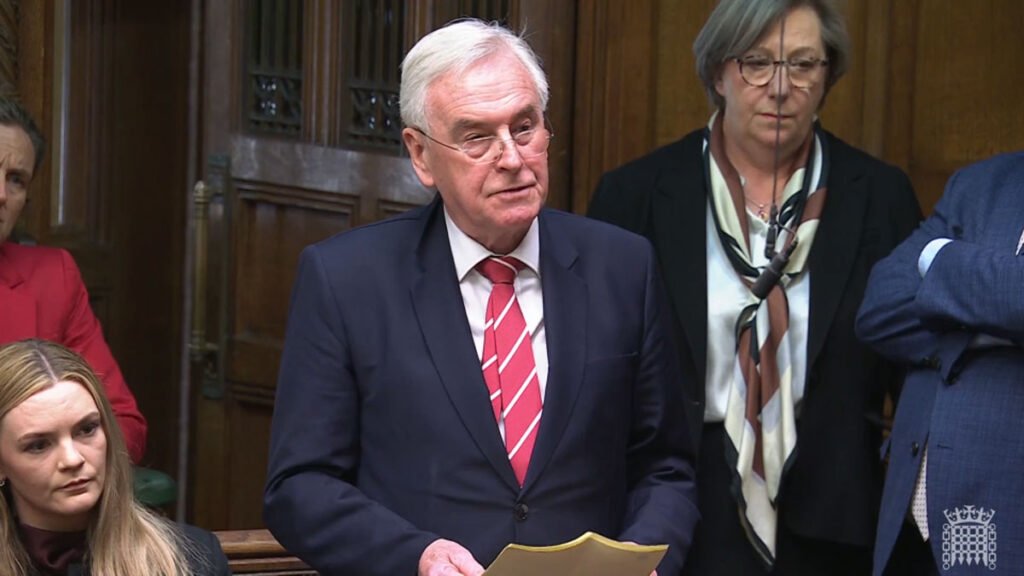
John McDonnell, the Labour backbencher who chairs the APPG, called Andriesz’s death a profound and preventable tragedy and has demanded that the FCA pay for an independent and non-conflicted body to evaluate its handling of whistleblowers. His group’s reasoning is not sentimental.
In November 2024 the APPG published the findings of a two-year call for evidence drawing on roughly 175 respondents, including whistleblowers, victims and the FCA’s own former staff. It concluded that the regulator was opaque and unaccountable, slow to act and slower to admit failure. The FCA’s public response was that it strongly rejected that characterisation of the organisation.
THE NUMBERS BENEATH THE MAN
Andriesz was not an outlier. The FCA received 1,369 whistleblowing disclosures in 2025/26, up a fifth on the year before. In the final quarter of 2025 it closed 282 reports, of which nine, around three per cent, resulted in what it calls significant action: an enforcement step, a skilled person review, a restriction on a firm or an individual. The regulator will tell you, fairly, that most of the rest informs its supervisory work. It will also tell you that confidentiality rules under the Financial Services and Markets Act 2000 stop it discussing individual cases.
That confidentiality protects firms from premature accusation, and it gags the regulator when it wants to defend itself. The person who bears both costs is the whistleblower, who is told nothing, shown nothing, and left to work out from the silence whether anything happened at all.
Then there is the money. The FCA is funded by levies on the firms it regulates. Not by the public purse, not by Parliament, but by the industry. The APPG recommended legislating to change that, and it is the recommendation Westminster has shown least appetite for, which tells you how uncomfortable it is. A regulator paid by the regulated, immune from civil liability to the consumers it exists to serve, and reviewing its own conduct through its own board is not a watchdog. It is a trade association with statutory powers.
A CASE THAT LOSES ITS WITNESSES

Andriesz is also the latest name in a case that has a habit of losing the people who knew most. Jeffrey Epstein was found hanged in a New York cell in August 2019, awaiting trial. Jean-Luc Brunel, the Paris modelling agent accused of procuring girls for him, was found hanged in La Santé prison in February 2022, awaiting his. Daniel Siad, the scout who appears some 2,000 times in the Justice Department’s files and was under investigation by Paris prosecutors for trafficking, was found dead at his home in Colombes on 20 July, before any charge was brought. Virginia Giuffre, the most prominent of Epstein’s accusers, died in April 2025, and her family said she had taken her own life. Ian Fleming’s Goldfinger held that once is happenstance, twice is coincidence and three times is enemy action. The Tribune makes no such claim, and no inquiry has linked any of these deaths to another. We say only what the record shows: not one of the three men at the centre of this case has faced a jury, and the woman who named a prince is gone. In a case where the powerful have outlived the evidence and the accusers have not outlived the strain, the person holding the paperwork is the most exposed person in the building. Britain gave this one a review.
What should happen does not require new law. The FCA should fund an evaluation it does not control, by a body that does not report to its board, with terms of reference agreed with the APPG rather than drafted in Stratford. It should publish the Paterson review in full, including anything unflattering. The Treasury Committee should call the FCA’s chief executive, Nikhil Rathi, to account for how an official came to misstate the rules on whistleblower protection to a man already in crisis. And Parliament should finally build what it has dodged for decades: an Office of the Whistleblower with teeth, independent of every regulator it oversees.
They did not need to silence him. They only needed to outlast him.
If you have been affected by anything in this article, Samaritans can be reached free on 116 123, at any hour, from any phone.
Enjoyed this read? I’m committed to keeping this space 100% ad-free so you can enjoy a clean, focused reading experience. Crafting these articles takes a significant amount of research and heart. If you found this helpful, please consider a “small donation” to help keep the lights on and the content flowing. Every bit of support makes a huge difference.