JEFFREY SACHS WARNS EUROPE ABOUT ITS DARK FUTURE
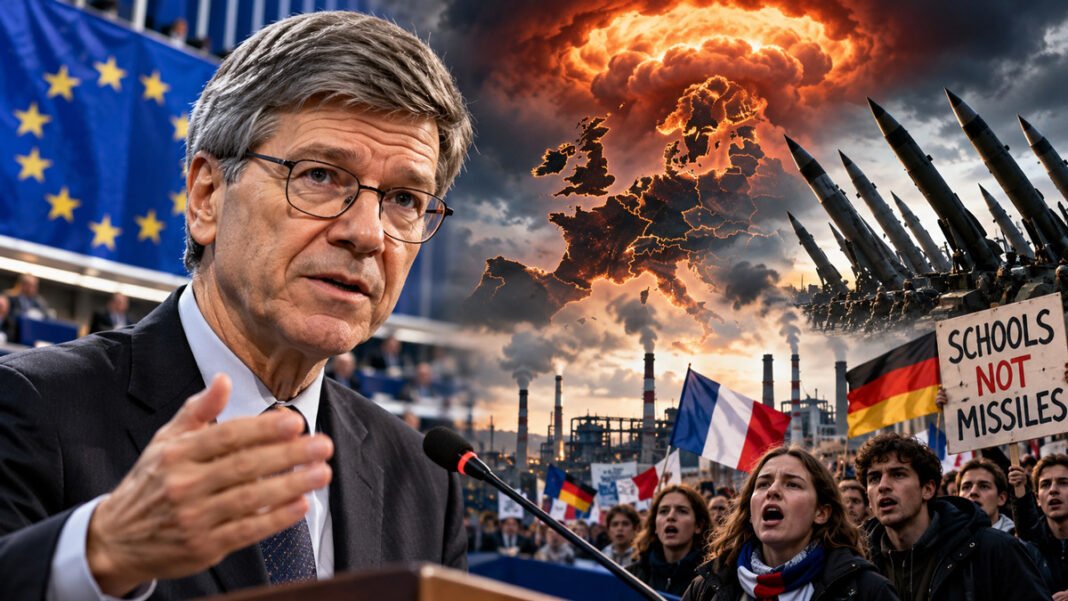
Speaking to the European Parliament, Jeffrey Sachs warned that Europe is replacing economic strategy with Keynesian militarism. As energy costs bite and youth protest across France and Germany, leaders are spending billions on missiles while refusing the cost of a phone call.
A Nuclear Warning to the European Parliament
The core of Jeffrey Sachs’s warning to the European Parliament fits on a postcard, which is presumably why so few people in power will repeat it. You do not corner a nuclear state.
Sachs reaches back to the Cuban Missile Crisis and to John F. Kennedy, who had looked over the edge and come back from it. In his American University address of June 1963, Kennedy warned that nuclear powers must avoid confrontations that force an adversary to choose between humiliating retreat and nuclear war. He put the words “above all” in front of that sentence. He had earned the right to.
Russia has roughly 1,600 strategic warheads deployed today. Europe’s political class discusses humiliating it the way other people discuss a football result. Sachs names the people doing it, which is more than most commentators will risk, and then makes the point that ought to end the argument: the pundits assuring us the nuclear threats are a bluff will not be available for comment afterwards if they are wrong.
The War Economy Comes at an Economic Price

Then comes the section that should trouble anyone who pays a gas bill.
Sachs is a development economist by trade, and what he sees in Europe is not a strategy at all. He sees a continent that cut itself off from its nearest supplier of cheap energy, watched its industrial base buckle under the price of American liquefied natural gas, and then announced that the answer to all of it is rearmament. Hundreds of billions for weapons. Keynesian militarism, as he calls it, with the quality of life it was supposed to deliver nowhere in sight.
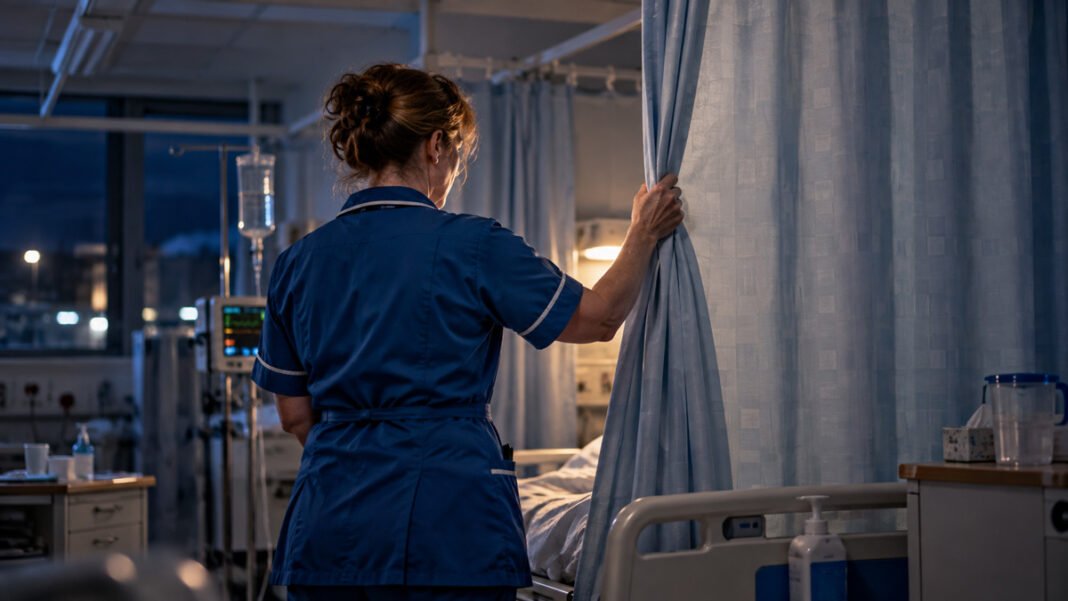
He is blunt about what that buys. Britain cannot keep its health service open. Schools across the continent are failing the children sitting in them. We propose to run a war economy on top of public services we have already proved we cannot fund.
Strip away the flags and it is a transfer, and not a complicated one. The arms manufacturers take the contracts. The politicians take the applause. The working class takes the bill, in taxes now and potentially in blood later, should anyone be reckless enough to finish what the rhetoric starts.
You do not build prosperity by building missiles. You build it with a productive economy, secure work, affordable energy and the unglamorous business of investing in people. Europe needs an industrial strategy. What it is being handed is a procurement programme with a grievance attached.
Keynesian Militarism and the Decay of European Public Services
This is the most damning charge in the hour, and Sachs lands it almost in passing. Europe’s leaders no longer have an economic vision. There is no answer to the closing factories, no answer to energy costs strangling the firms still standing, no plan for what this continent makes or sells or builds in twenty years. Into that vacuum has gone rearmament, and rearmament is now spoken of as though it were a strategy rather than an admission that nobody has one.
Sachs is careful to say he is no enemy of Europe. He thinks its quality of life is the highest in the world and that this is an achievement worth defending and exporting. He simply cannot understand why the people running it have decided the thing to do with it is spend it on missiles.
Nor does he accept the public asked for any of this. He points to the young people on the streets of France. He is right, and the detail is worse than he had time to say.
France has been in revolt since September, over the state of its schools. Students walked out, and the protests pulled in parents, teachers, student unions and universities behind them. By 5 October, between 400 and 500 schools across France were partly or entirely closed. More than 6,500 people have been arrested since it began, most of them minors. The Prime Minister, Sébastien Lecornu, has told his ministers to come back with proposals by the end of October. The same anger over crumbling classrooms and rising costs has since surfaced in Belgium, Greece, Italy, Ireland, Germany and Austria.
That is not a tantrum. It is a verdict. These are children telling a government that it has no future to offer them, and the government’s only answer is to promise them one with a uniform in it.
Because in Germany, the young have gone straight to the point. On 25 September, organisers of the School Strike against Conscription put around 45,000 pupils onto the streets of some 100 towns and cities, against a government whose Military Service Modernisation Act now requires eighteen-year-old men to complete a questionnaire on their willingness and suitability for military service. Broadcaster DW headlined its report with the pupils’ own answer: they are not cannon fodder. They have called the next national strike for 20 November.
Two countries, two grievances, one budget behind both. French teenagers are in the street because the money is not in their schools. German teenagers are in the street because they can see where it went instead, and they have worked out who is expected to carry it. Neither set was consulted. One of them is being asked to fight.
So let us hear less about apathetic youth. They are not apathetic. They are doing the only thing available to people whose opinion has no route onto a ballot paper, because on rearmament there is no serious disagreement between the parties permitted to win. The consensus was assembled above their heads and handed down as inevitability.
Then we are invited to tut at the turnout figures.
Voter apathy is not a disease of the public; it is a rational response to a political class that offers different coloured ties for the exact same set of economic outcomes.
OCEANIA HAD ALWAYS BEEN AT WAR WITH EASTASIA

And here is where Orwell walks into the room, because the most effective weapon deployed in this war has not been a missile. It has been the memory hole.
Before February 2022, Ukraine had a different history and a different seat in the world. It was not a shining democratic martyr awaiting rescue. Transparency International ranked it among the most corrupt states in Europe. It had a documented record as a source country for human trafficking, and a banking and political system that made it a byword for laundered money. None of that was controversial to say in 2019. All of it has been quietly deleted.
And there was a war. From April 2014 until the full invasion, the Donbas burned. United Nations monitors put the dead at around 14,000. Eight years of shelling, of ceasefire lines, of OSCE monitors counting violations, of civilians in Donetsk and Luhansk living in cellars. That war is now very nearly unmentionable, because to mention it is to concede the thing the official narrative cannot concede: that something was happening before 2022 which the word “unprovoked” was designed to erase.

Whether it should be called a civil war is a fair fight, and I will not pretend otherwise. Russian equipment, Russian money and at times Russian regular units were in the Donbas from 2014, which is more than a domestic quarrel. But the question of what to call it is not the scandal. The scandal is that we have agreed to behave as though it never happened at all. Oceania had always been at war with Eastasia.
The same erasure covers what came before it. On 21 February 2014, the foreign ministers of Germany, France and Poland brokered a deal between Viktor Yanukovych and the opposition: a unity government and early elections. Within a day it was dead, Yanukovych had fled, and Washington recognised what followed without a murmur about constitutional process. Sachs calls that a coup. Others call it a revolution of dignity. What is not in dispute is that a signed European agreement was overtaken within twenty-four hours and the European powers who witnessed it said nothing.
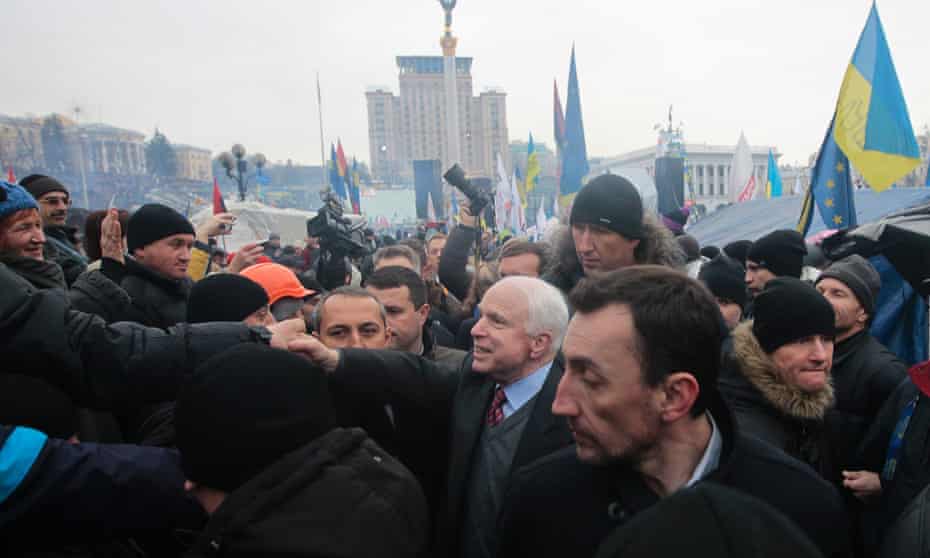
Sachs says Victoria Nuland handed out five billion dollars to bring it about, and here he overstates his case, which does his argument no favours. The five billion was a figure Nuland herself used in a December 2013 speech for cumulative American assistance to Ukraine since 1991, not a fund for regime change. But the evidence that did not need exaggerating was already on the record. Weeks before Yanukovych fell, a leaked telephone call between Nuland and the US ambassador in Kyiv, Geoffrey Pyatt, caught the two of them allocating posts in a government Ukraine had not yet got, and disposing of the European Union’s objections in two words. That call is real, it was never denied, and it tells you precisely who believed they were choosing Ukraine’s next administration.
Then Minsk. Sachs is right that Minsk II was not a Russian land grab. It required Ukraine to devolve power to the eastern regions, and the Security Council endorsed it unanimously in Resolution 2202. It was never implemented. And we no longer have to speculate about why, because the architects told us. Angela Merkel told Die Zeit on 7 December 2022 that Minsk was an attempt to give Ukraine time, and that Ukraine had used the time to become stronger. François Hollande, asked by the Kyiv Independent whether Merkel was right, said that she was, and that the merit of the agreements was the opportunity they gave the Ukrainian army.
Read that again. The two European leaders who guaranteed the peace deal later described it in public as a device for buying time to prepare for war. They were not quoted by Russian state media. They said it in Die Zeit and to a Ukrainian newspaper, under their own names, and nobody in Brussels has explained it since.
If you want to know why Moscow treats European security guarantees as worthless, you do not need a theory about Russian paranoia. You need only their own signatures and their own interviews.
Foreign Policy Double Standards and the Vetoed State

Sachs saves his bluntest language for Gaza, and he is not careering off topic when he does. He is making the same point about the same institution.
He calls it genocide. He is in considerable company: the United Nations Commission of Inquiry reached that finding in September 2025, as did the International Association of Genocide Scholars, while the case brought by South Africa remains before the International Court of Justice. One year into the American-brokered ceasefire, the UN’s acting Special Coordinator told the Security Council this month that for Palestinians living along the Yellow Line the ceasefire exists in name only, and that Israeli operations since it took effect have killed some 1,500 Palestinians, including more than 320 children, according to Gaza’s health ministry. Washington remains opposed to Palestinian statehood.
And Sachs offers one detail that ought to be taught in every politics department in Britain. The slogan that gets students suspended and arrested here, the one about the river and the sea, was Likud’s formulation first. It is in the party’s 1977 platform, declaring that between the sea and the Jordan there would be only Israeli sovereignty. The words are policed when Palestinians use them and ignored when the governing party of Israel wrote them down.
That is not a debating point. It is the whole machine on display: who is permitted to speak, whose history is retained, whose dead are counted.
The Price of a Phone Call: Why Europe Refuses Diplomacy
Which brings us back to the detail from this talk that has stayed with me.
Asked what Europe should actually do, Sachs did not call for a summit, a framework, a facility or a process. He said a European leader should pick up the telephone to Moscow. He then offered his own Zoom account, and said he would pay the bill himself.
Four and a half years into this war, with the Americans announcing ceasefires that neither belligerent confirms, that remains the most serious proposal anyone has made.
They have found hundreds of billions for the shells. They cannot find the price of a phone call.
So ask yourself who in all of this is actually speaking for peace. Then ask who decided you were not allowed to.
Enjoyed this read? I’m committed to keeping this space 100% ad-free so you can enjoy a clean, focused reading experience. Crafting these articles takes a significant amount of research and heart. If you found this helpful, please consider a “small donation” via PayPal or GoCardless to help keep the lights on and the content flowing. Every bit of support makes a huge difference.

Support The Tribune
INDEPENDENT. READER-FUNDED. AD-FREE.
If you value this article, help keep The Heartlands Tribune publishing independent journalism without intrusive advertising or corporate sponsors.
Choose your monthly amount
Secure payment via GoCardless