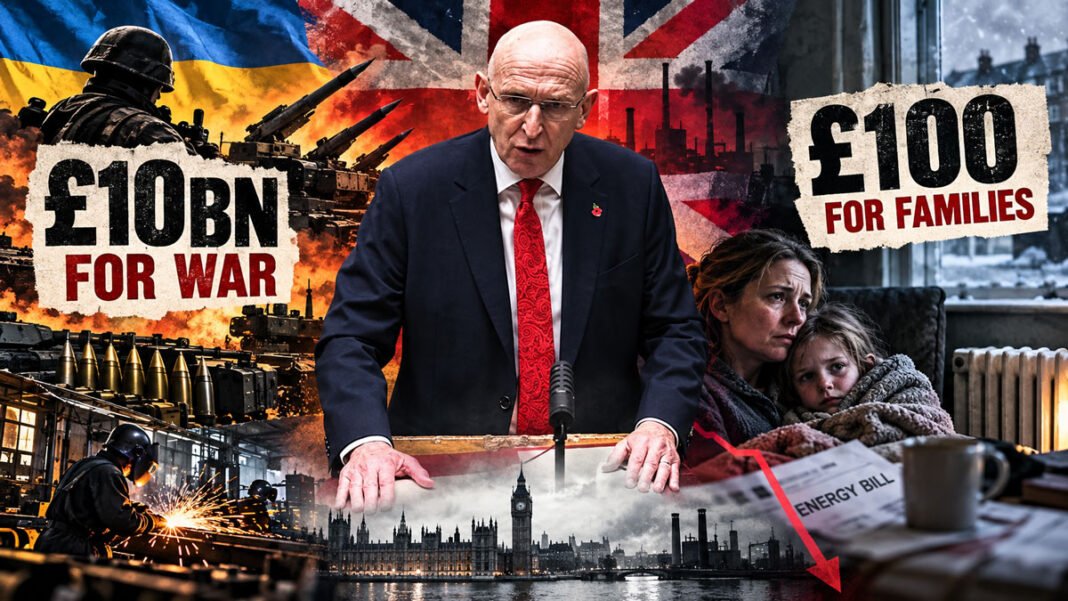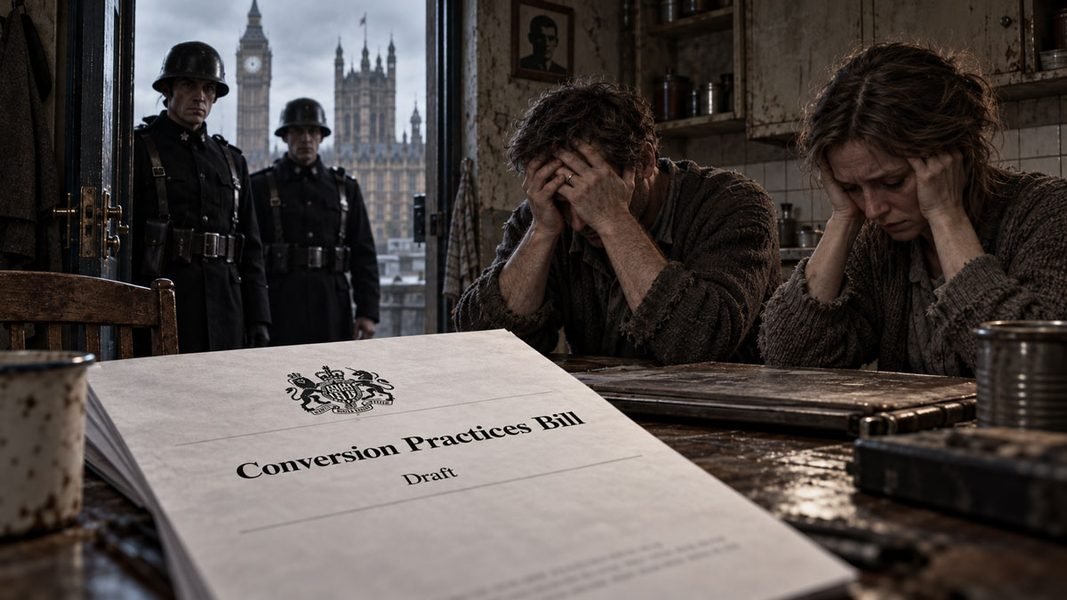
Under the guise of outlawing abuse, the government has drafted a law that crosses the threshold of the front door. It will not protect the vulnerable. It will disarm parents and hand anyone who wants to turn a child against them the legal machinery of coercion.
Conversion Practices Bill: The State at the Front Door
Ask yourself what remains of private life when a father can be investigated, and threatened with five years in prison, for telling his daughter that she is a girl.
That is not a rhetorical flourish. It is what the draft Conversion Practices Bill, published in June and now before a joint committee of both Houses, makes possible. Ministers have wrapped it in the softest language of modern virtue. They speak of dark rituals, quack therapists and cruelty to the young, and nobody sane defends any of those things. But a minister’s language does not go before a Crown Court judge. The statute does, and this statute does not stop at the clinic door or the prayer meeting. It walks straight into the kitchen.
Olivia Bailey, the minister who steered the draft into Parliament, assured the public that the bill “is not about policing how parents parent.” In the same interview, she confirmed there would be no “carve-out” for parents. Where the line falls between a loving parent and a criminal one, she said, is for the courts to decide, not politicians. So a mother will find out where the line was only after the police have crossed it.
No father stands in the dock yet, because the bill is not yet law. Every prime minister since Theresa May has promised it. Keir Starmer’s government published the draft, and Andy Burnham’s has inherited it. It would apply to everyone in England and Wales: parents, teachers, youth workers, pastors and counsellors, not only therapists. It creates an offence of carrying out an abusive conversion practice, a second of encouraging one abroad, and a third of breaching a new civil order designed to stop one before it happens. Ministers will say it is only a draft. That is exactly why it must be fought now, before there is a first case.
A LAW IN SEARCH OF A CRIME
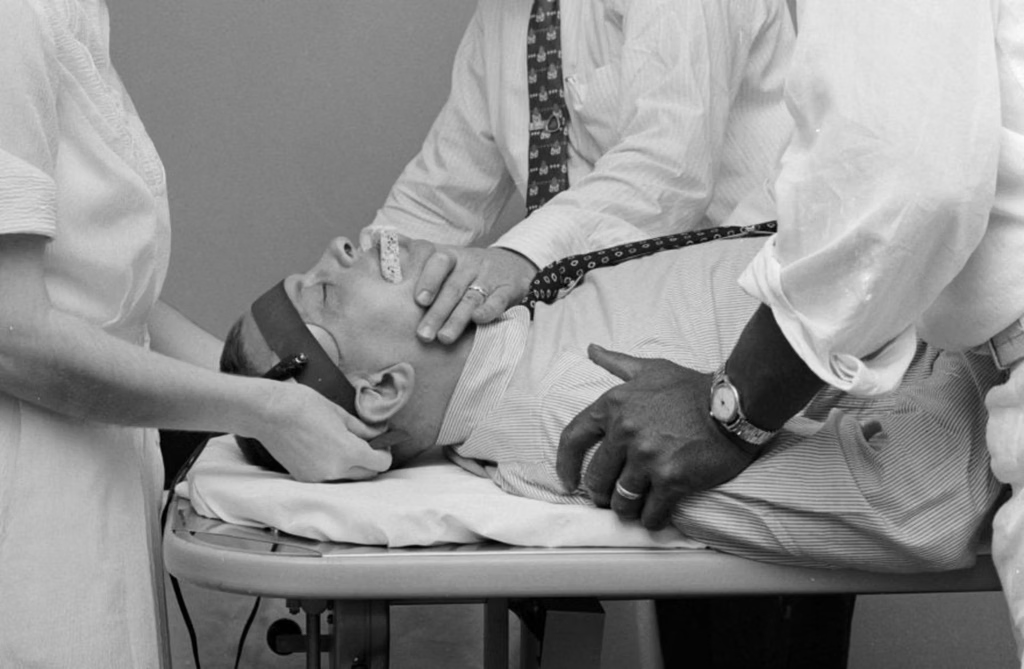
There is a real history here, and the left should own it. Within living memory, the NHS tried to cure gay men with electric shocks and drugs that made them vomit. Some congregations still try to pray homosexuality out of teenagers. A movement that believes in the dignity of ordinary people should want every trace of that driven out of British life, and this paper does.
But almost everything that made that history cruel is already a crime: assault, actual bodily harm, false imprisonment, threats, and coercive control. Asked to show the gap, the government has struggled. As Sonia Sodha has pointed out, its impact assessment gives no clear examples of abusive conduct that current law fails to reach.
What it offers instead is arithmetic. Baroness Cash told peers it claims a benefit of £783 million, on the assumption that the law will prevent 100 per cent of conversion practices.
Baroness Cash then dismantled that arithmetic before peers, exposing the rotten foundations of the government’s entire case. The bill’s claimed economic benefit of £783 million rests on two preposterous assumptions: first, that the legislation will prevent 100 per cent of conversion practices; second, that exactly 38 per cent of those saved will also avoid depression, a figure lifted from an American study that was never peer-reviewed. The underlying estimate of 75,000 to 93,000 victims relies on a Stonewall survey claiming that 10 per cent of LGBT people have undergone an exorcism, an absurd measure that would imply 24,600 gay exorcisms in this country every year. Against all that, the bill’s costs amount to 45 minutes of training per police officer. Departments are bound by the Treasury’s Green Book rule against cherry-picking data; Cash told peers this document fails that test. “One might laugh,” she said, “if only it were not so gravely serious.”
The minister, Olivia Bailey, had told MPs it was “beholden on us all to ensure that this conversation is based on real facts”. Her real facts came from a report by the charity Galop, which she said contained hundreds of case studies of abuse happening now. It identified fewer than 200 cases, and only 51 of those people were seeking help specifically with conversion practices. Galop’s own researchers conceded that the abuses they found already matched existing crimes, from actual bodily harm and rape to forced marriage and coercive control. What the minister did not mention was that Galop had run a helpline for the government, funded to the tune of £360,000 over three years. The government’s star witness was its own contractor.
So what is genuinely new? Two words: “transgender identity”. The draft writes this concept into criminal statute, defines it loosely enough to include people who identify as “neither male nor female”, and makes trying to change it a potential crime.
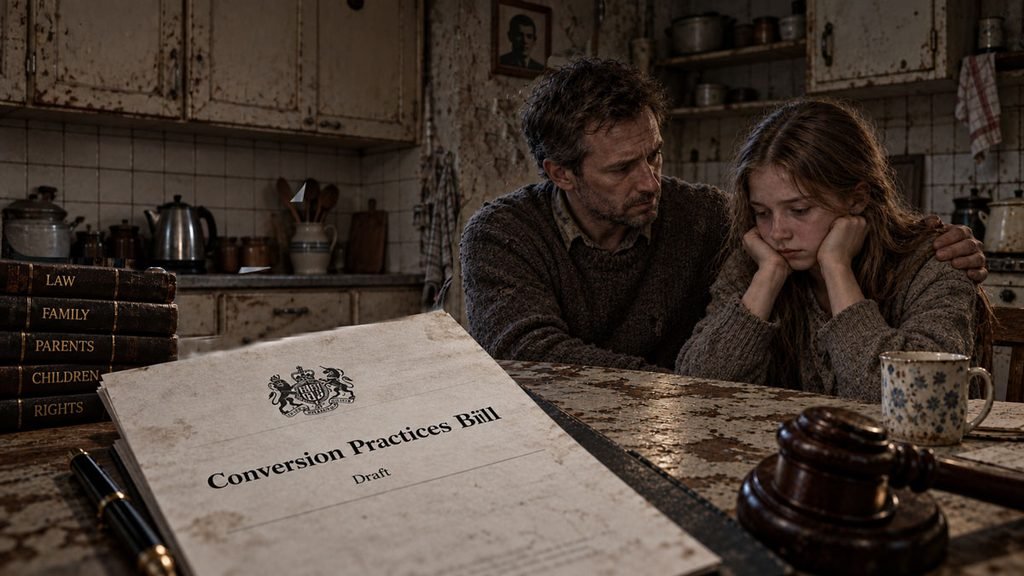
It is worth being clear about what that concept claims, because it is often blurred with something quite different. Sexual orientation concerns whom a person is attracted to. A transgender identity, as its advocates define it, makes a different claim altogether: that a person can be born in the wrong body, with an inner sense of self at odds with their sex. The distress some young people feel is real and deserves care. But the explanation offered for it is a belief, not a biological fact. Humans, like every other mammal, are male or female, and no feeling, however sincere, can change which. The Supreme Court confirmed last year that in the Equality Act, sex means biological sex.
That distinction is the key to what has gone wrong for gay children. A teenage girl who finds herself attracted to other girls, and uncomfortable with the femininity expected of her, may be told that her discomfort proves she is really a boy. A gentle, effeminate boy may be told he is really a girl. Their feelings are taken as the truth about their bodies, when it should be the other way round. Children at that age are often confused, and confusion is not a diagnosis. It is exactly the moment when they most need a parent’s steady guidance: someone who will tell them that their body is not a mistake, that there is nothing wrong with being gay, and that nothing needs to be decided in a hurry. This bill makes that guidance risky.
Here the bill turns on the very children it claims to protect, and the evidence comes from the state’s own reviewers. The Cass Review listed struggles with emerging sexual orientation among the possible drivers of gender distress, and told clinicians to explore a young person’s developing sexuality rather than ignore it. Cass’s interim report criticised the Tavistock’s gender service for a “predominantly affirmative, non-exploratory approach”, and the service has since been closed. The Charity Commission found the charity Mermaids mismanaged, and told it that any future chest-binding policy must follow Cass on involving parents.
Telling a lesbian teenager that she is really a boy is, in the most literal sense, an attempt to change her sexual orientation. On paper, this bill could reach the adults who do it. In practice, nobody expects the complaints to run that way. A ban sold as protection for gay children risks shielding the newest method of talking them out of being gay.
SCRUTINY IN NAME ONLY
The committee examining the bill is chaired by Alex Barros-Curtis, Labour MP for Cardiff West, who has pressed ministers in the Commons on getting the ban done. Before entering Parliament in 2024, he was Labour’s executive director of legal affairs, and was described as effectively running the unit that handled complaints against members.
Rosie Duffield, now an independent MP, says that unit investigated her for thirteen months over a single “like” on a single tweet, one of hundreds of members she says were pursued for gender-critical views. She has no seat on the committee. Burnham dropped Barros-Curtis from government in his cull of Starmer loyalists, and he was then given the job of scrutinising this bill.
A committee chair should be an impartial scrutineer, not a handmaiden to the legislation he is meant to examine.
WHAT THE BILL WOULD DO TO A FAMILY
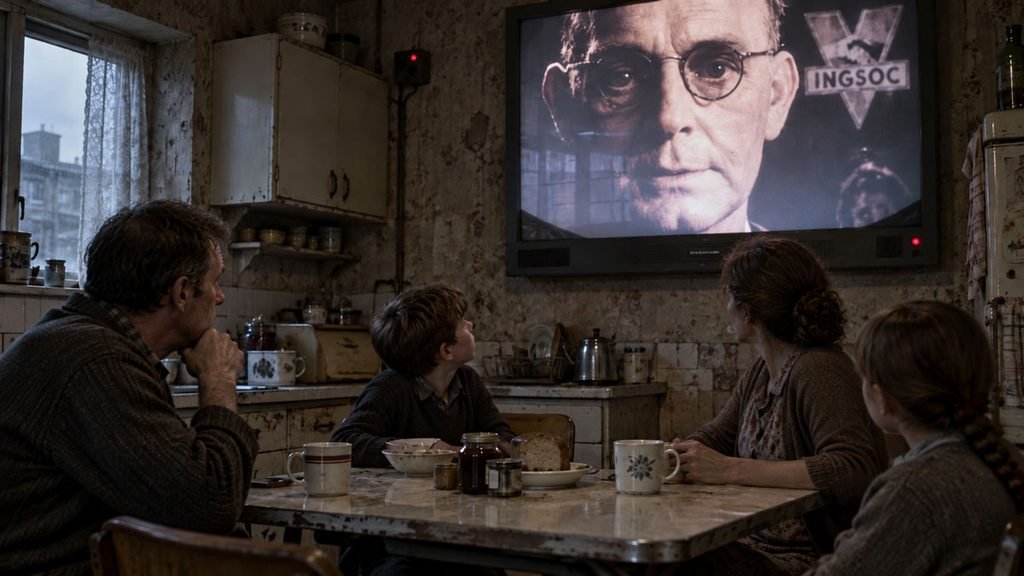
The draft lists the forms abuse can take, among them psychological pressure, emotional pressure and economic pressure. No violence is required. Raising a distressed adolescent means confiscating phones, cutting pocket money, refusing to buy a breast binder and refusing to sanction hormones bought online. Every one of those acts can be described as pressure, and every one is meant to stop a child taking a path the parent believes will harm them. Under this bill, that purpose is the prosecution’s case, not the parent’s defence.
No malice need be shown. The only intention the law asks about is the intention to change an identity. A mother protecting her autistic son or daughter from an irreversible medical pathway has no defence that she acted in her child’s best interests. Parliament knows how to write one. The offence of controlling or coercive behaviour excludes parents managing children under sixteen. That exclusion was left out of this bill, and the minister has told us it was deliberate.
Defenders point to the harm threshold: serious harm, or serious distress that substantially affects daily life. But such complaints are never built from one row over dinner. They are built from a catalogue of months of being “pressured”, “belittled” and “misunderstood”, with every refusal recast as a wound.
The relationship between a parent and a child should rest on trust. It should be a place where anything can be said at the kitchen table, where a confused teenager can tell their mother what they are feeling and hear an honest answer, without either of them fearing what comes next. This bill poisons that. The parent learns to weigh every word against how it might sound in a police interview. The child learns that a complaint can end any argument. Where there was conversation, there is calculation, and then silence. The children who lose most are those who most need an honest adult to talk to.
THE THOUGHT POLICE AT THE KITCHEN TABLE
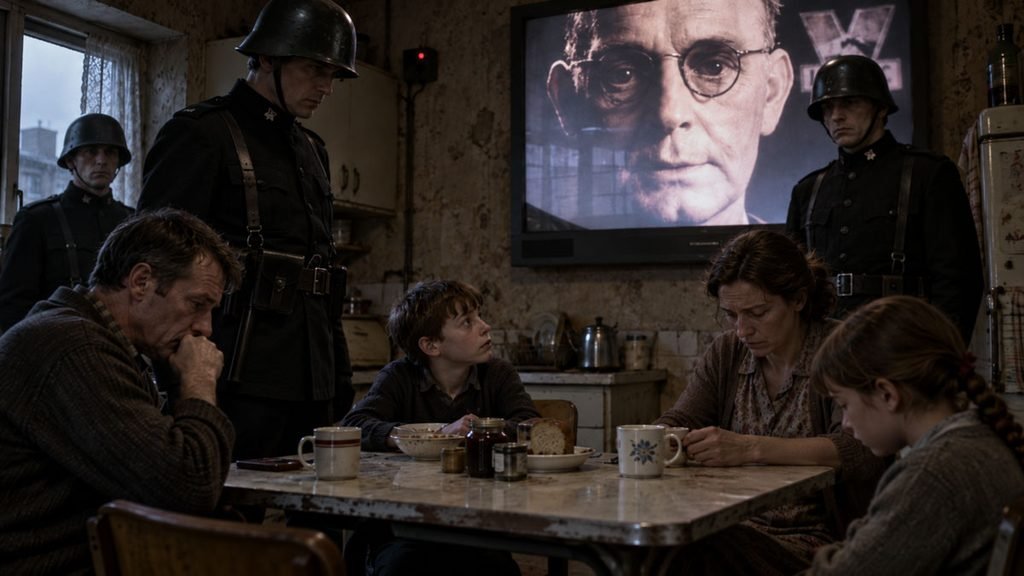
No one is suggesting the bill makes thought itself a crime. Orwell’s warning was subtler. What a person meant when they spoke becomes the business of the state. Was a father’s refusal a parent’s judgment, or an attempt to change an identity? Only an investigation can settle that, and investigating it means questioning the child, the siblings, the school, the GP and the family’s messages.
Ministers insist that the bill’s language draws on settled law on coercion. It does, but it leaves the safeguards behind. The draft lists its factors, then leaves courts to decide abuse from “all the circumstances”. Orwell warned in 1946 that political vocabulary can “give an appearance of solidity to pure wind”. Can an ordinary parent know in advance where lawful conduct ends? Bailey’s two answers, that parents are untouched and that parents get no exemption, cannot both be relied on.
If ordinary parenting is safe, the bill should say so. It does not.
The punishment starts long before any verdict. Sex Matters interviewed thirty mental-health professionals who work with gender-distressed young people, and some said they would leave the field rather than risk being accused. Parents have no field to leave. A conviction breaks a family; an acquittal often breaks it anyway, because trust does not survive a police interview. The government’s own explanatory notes complain that some existing offences cannot be committed in a private dwelling. They see the front door as a loophole to be closed.
ORDERS AT THE BREAKFAST TABLE
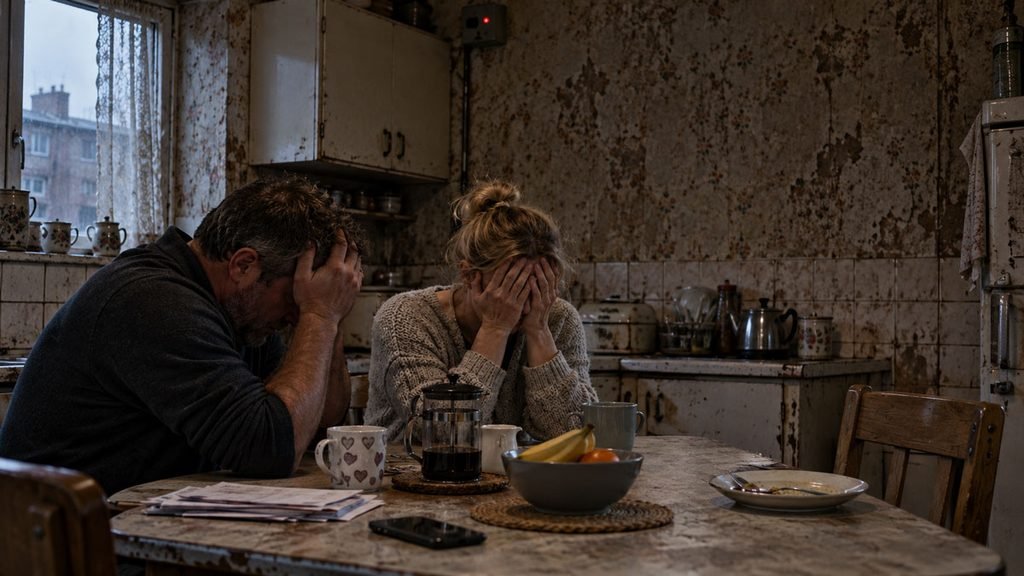
Nor does the threat depend on the police or the council. The bill lets anyone bring a private prosecution without the consent of the Director of Public Prosecutions or the Attorney General. Baroness Cash warned peers that this would allow “privately funded campaign groups, such as the Good Law Project”, to destroy the lives of those they disagree with.
The bill also creates conversion practice protection orders. The young person, the police or a local authority can apply as of right, and anyone else can apply with the court’s permission. A family judge can make one in the middle of a divorce. It can be imposed where abuse is merely “likely”; it may contain any requirement the court thinks appropriate, and breaching it carries two years in prison.
The draft never mentions pronouns, and it does not need to. In Swindon, the maths teacher Kevin Lister wanted a pupil’s parents consulted before he adopted the pupil’s new name and pronouns. He was sacked, then barred from working with children, a ruling he is appealing. That is how the institutions around the family court already treat such refusals. The order instructing a father to use his son’s chosen pronouns at breakfast is the predictable next step.
Families in the North East need no lessons in what happens when agencies are handed sweeping powers and total certainty. In Cleveland in 1987, 121 children were removed from their homes on the strength of a test later discredited, and after the Butler-Sloss inquiry 94 of them went home. Local authorities wielded those powers then. Under this bill, local authorities will be among the bodies that can apply for these orders as of right.
THE SHIELD OF THE PREDATOR

The bill is at its most dangerous here. Grooming, whether sexual, criminal or ideological, begins by separating a child from their parents. The child is told that mother and father do not understand them, that home is hostile, and that only the new friend online truly sees them. The grooming-gang scandals showed how parents who tried to intervene were disbelieved while their children were drawn away.
No case under this bill exists yet, because the bill does not. But anyone can see what it hands to the adult whispering through a fourteen-year-old’s locked phone. If the mother takes away the phone, or refuses to pay for a binder or testosterone ordered online, the mother faces the police. The groomer only has to teach the child the vocabulary of complaint, the coaching Sodha has warned about.
Ministers will reply that the definition cuts both ways, so the groomer is liable too. But the complaint comes from the child, and it lands on the parent. Private clinics are sheltered by a healthcare exemption that covers unregulated providers unless their care falls “far below” acceptable standards. The clinic is protected, the groomer is invisible, and the parent is in the dock. Mims Davies MP reminded the Commons of what happened when professionals were frightened into silence over the grooming gangs: safeguarding must never be sacrificed to ideology.
THE CHOICE THAT REMAINS
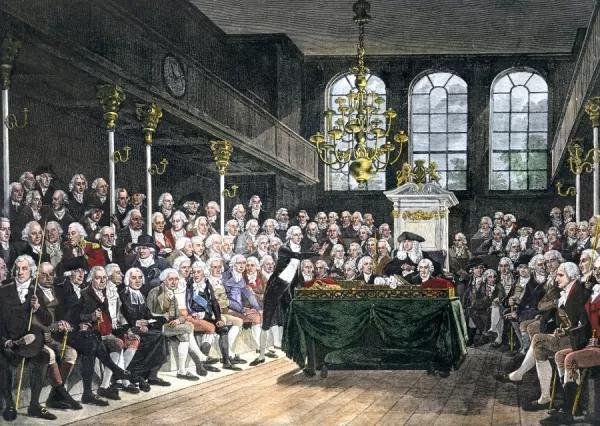
In 1604, an English court declared that a person’s house is their “castle and fortress”. The principle has survived four centuries of governments, because it rests on a simple idea: the state must justify every step it takes across the threshold. This bill reverses that burden. It also strips away traditional legal safeguards, handing the power of private prosecution to ideological campaign groups like the Good Law Project without requiring consent from the Director of Public Prosecutions or the Attorney General.
If the pictures accompanying this column look like a dystopia that does not exist, that is precisely why they are there. Orwell did not write Nineteen Eighty-Four as a prophecy. He wrote it as a warning. He said he did not believe such a society would necessarily arrive, only that something resembling it could. A warning is issued so that it never has to come true. This bill is not yet that world, but it is a door into it.
It is still a draft, so it can still be stopped. The joint committee should recommend that sexual orientation and gender identity be dealt with separately, each on its own evidence. It must insist on a statutory defence for parents who act in their child’s best interests, mandatory DPP consent before any prosecution can proceed, and the abolition of protection orders that turn domestic disagreement into contempt of court. Readers should tell their MPs, and the committee, exactly that.
Then the decision passes to Andy Burnham. He inherited this bill and he can still rewrite it. The front door was never a loophole. For a frightened child, it may be the last line of defence, and the prime minister must now decide whether his government will be the one that takes it down.
The state that claims to protect your child by policing your kitchen table has not banished coercion; it has simply claimed the monopoly on it…
Enjoyed this read? I’m committed to keeping this space 100% ad-free so you can enjoy a clean, focused reading experience. Crafting these articles takes a significant amount of research and heart. If you found this helpful, please consider a “small donation” via PayPal or GoCardless to help keep the lights on and the content flowing. Every bit of support makes a huge difference.

Support The Tribune
INDEPENDENT. READER-FUNDED. AD-FREE.
If you value this article, help keep The Heartlands Tribune publishing independent journalism without intrusive advertising or corporate sponsors.
Choose your monthly amount
Secure payment via GoCardless