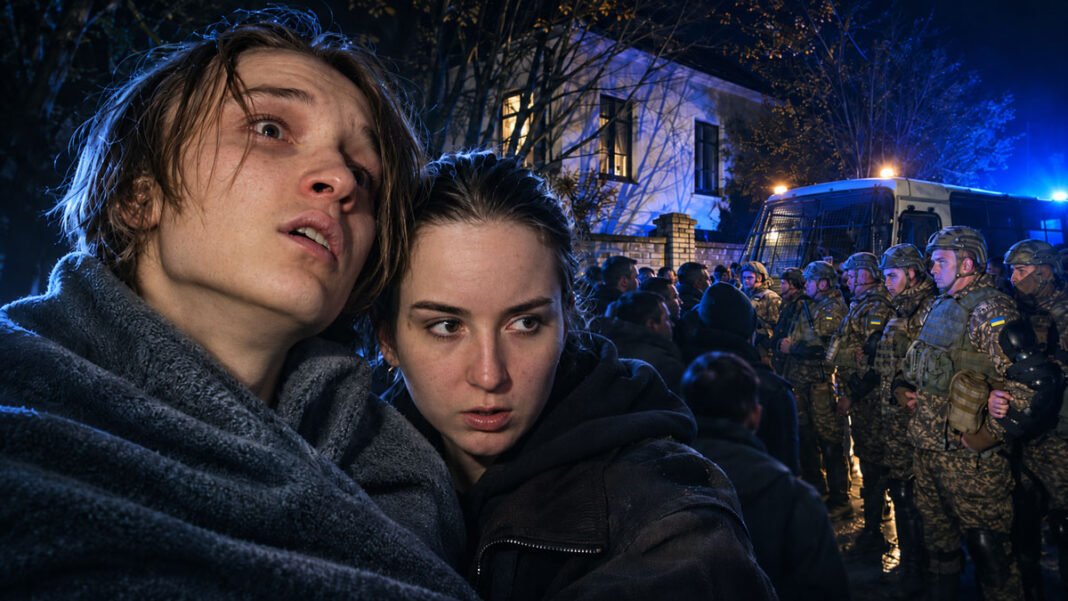
What happened near Kyiv as viral allegations sparked unrest outside the National Guard building: A fourteen-year-old lies in a Kyiv hospital with cracked ribs and sliced clothes. The authorities say he merely fell off a boundary wall. The boy says ten masked men took turns with shovels. The gap between those two stories is where an entire system stands on trial.
The House at Borshchahivka
A boundary wall is an instructive piece of architecture. It does not exist merely to keep people out. It exists to conceal what happens inside, and to ensure that when violence occurs, only one side owns the official record.
On the evening of Monday 2 November, a fourteen-year-old boy climbed the fence of a rented house in Petropavlivska Borshchahivka, a commuter village on the western edge of Kyiv, and fell into the yard. A day later, by his own account, he was in Kyiv Regional Hospital with painful ribs, cut fingers and difficulty walking. Between the fall and the hospital bed lies the question this whole affair keeps returning to: what happens behind that wall, and who gets to say?
We now have three irreconcilable versions of what took place behind that wall.
The first account, which caught fire online on Monday afternoon, claimed armed men held forty captives in a cellar, tortured them, and left one dead. That internet panic is false. The available chronology contradicts it entirely.
The second belongs to the Ukrainian state. In that version, the house was merely an ordinary military billet where twenty-two servicemen were housed, four of whom needed medical care, and the crowd at the gate had simply been duped by an outside provocation. Senior officials insist the child merely slipped from the fence, was carried inside by soldiers to protect him from stones thrown by protesters, wrapped gently in a blanket, given first aid, and released. National Guard commander Oleksandr Pivnenko insisted his men never touched him. Interior Minister Ivan Vyhivskyi went further still, asserting with immaculate bureaucratic calm that nothing at all had happened to the boy.
The third story belongs to the child himself.
On the evening of 3 November, a video recording surfaced and began circulating across Ukrainian media, reported the following day by the outlet Subota Online. From his hospital bed, the teenager does not deny climbing the wall. He admits joining the disturbance outside, being sprayed with a fire extinguisher, running home to fetch a gas mask, and returning before falling into the compound. But he alleges that after he landed, approximately ten men in dark clothes, unmarked military fatigues, and balaclavas dragged him inside. He says they pulled him by his hair, forced him upstairs, made him lie face down, cut his clothes with knives, and beat him repeatedly with fists, boots, and shovels.
Footage of a boy climbing a fence does not disprove an assault after he landed. The state asks the public to believe that a teenager broke ribs and cut his hands simply by falling into the arms of protective guards. The boy alleges a calculated, gang-handed beating by masked men.
The physical trauma is confirmed. The hospital bed is confirmed. The first story was a rumour; the second keeps altering; the third has yet to face an independent investigation. And that unanswered allegation is where an entire system stands on trial and what was revealed on the other side of that wall.
Borshchahivka, Kyiv: A Plot Nobody Can Agree On
“A wife, a mother, a Russian hand: three explanations from three officials in three days.“
The hostage story ‘officially’ fell apart within hours or so, they say: Police denied any death and any unlawful detention. Kyrylo Budanov, head of the Presidential Office, climbed the fence himself and counted fourteen people inside, not forty.
The woman who raised the alarm, Valentina Molodaya, introduced herself as the owner of a private ambulance service. Slidstvo.Info found the company had not operated since 2023, and that she runs a plastic surgery clinic. She and her driver have been detained, and the Security Service (SBU) says the action was planned in advance.
So it was a plot. Whose plot, the state cannot yet say. Budanov spoke of “outside influence” without naming anyone. Interior Minister Ivan Vyhivskyi said Molodaya’s own husband had gone AWOL and that she was trying to free him. On Wednesday, the commander of the unit that runs the house, Pavlo Kurchenko of the Azov Corps’ unit 3121, gave Ukrainska Pravda a different account.
He says that the day before the riot, the mother of one detained man offered a guardsman a bribe of about $7,000 to release her son, that she normally lives in occupied territory, and that the man’s relatives provoked the unrest. He also suggests Russia may have been involved.
You would be right to think a state that is certain it faced a conspiracy should be able to say whose it was…
National Guard House in Kyiv: What the State Admits
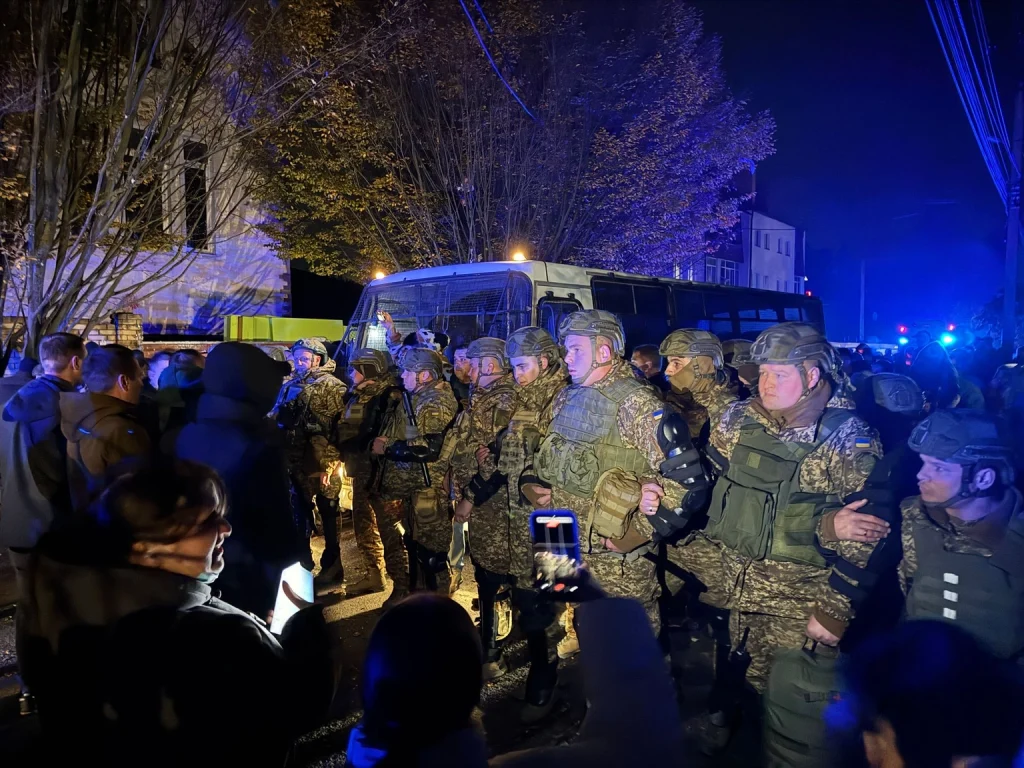
Strip away everything allegedly false and look at what remains, on the state’s own account.
The house was real, and it was rented. National Guard commander Oleksandr Pivnenko said men mobilised by the recruitment centres were brought there to be processed and checked before training. The Guard explained that men can no longer be held hundreds at a time in one place, because Russian missiles would find them. That is a real military problem. Its answer was a private home in a commuter village, holding men who had not chosen to be there.
Even the basic facts will not stay still.
Budanov counted fourteen people inside. The Guard’s figures added up to twenty-two. Kurchenko now says twenty-six. On Monday night Pivnenko said the four injured men were deserters who had been caught and returned to their unit. Kurchenko now says only two of the twenty-six were AWOL returnees.
The Dossier on the Four Injured Men
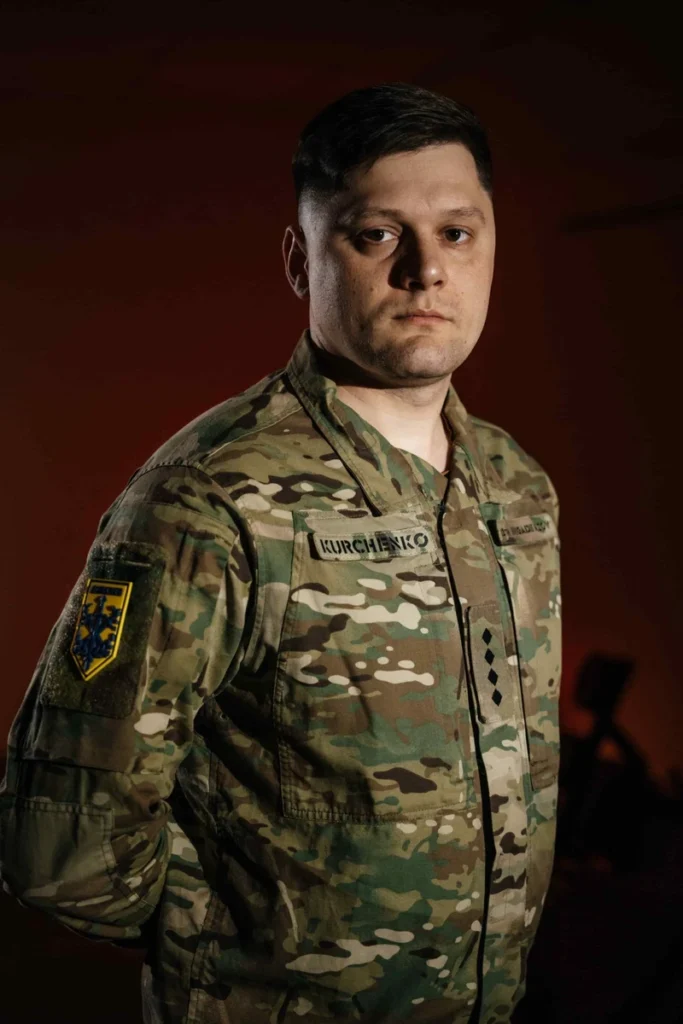
What happened to the four men, the alleged deserters, is still the central question, and on Wednesday the unit gave its answer. It came in the form of a dossier.
According to Kurchenko, one man injured his back during an air-raid alert at basic training. A hospital in Lutsk diagnosed a healed fracture of the ninth vertebra. Later he was discharged for drinking and urinating on the ward, and sent to the house with a note saying he should remain lying down; he was given medication and put under the unit medic’s supervision.
A second man, mobilised on 30 October, tested positive for drugs, tried to attack the unit’s medic, was isolated in a separate room and there, Kurchenko says, began to harm himself.
A third was brought to the house to stop him encouraging other soldiers to desert, and Kurchenko says he was not injured at all.
The fourth was being held in “quarantine” after going AWOL. Reports of the interview add that his name appears on Myrotvorets, a private website listing people accused of acting against Ukraine, because he crossed into occupied Donbas, and that his brother lives in occupied Donetsk. The unit says it has documents to back all of this.
It may all be true. But this is the account of the commander whose unit is under investigation, published before the investigators have said anything. It answers the question of how the men were injured by putting the injured men on trial. Their drinking, their drug tests, their families and their names on a nationalist blacklist are now in the national press.
The boy’s allegation, meanwhile, has not been examined at all.
Even on the commander’s own terms, the account damns the system it is meant to defend. A man with a fractured vertebra, whose discharge note said he should be lying down, was sent to a rented house. A man in drug-induced crisis was locked in a room until he began to harm himself. A soldier was moved to a different house to stop him talking about desertion. None of that amounts to a torture chamber. None of it is how a lawful state looks after men in its custody. And the official count of the injured has quietly dropped from four to three.
The Boy and the Men in Balaclavas
The official account of the fourteen-year-old is simple. Pivnenko says the boy climbed up during the disturbance and fell, and that soldiers carried him indoors to protect him from the protesters’ stones. Footage on Telegram shows him moving along the fence and jumping into the yard. Other clips show him shouting and, according to the outlets that published them, throwing stones at the windows. He was no captive and no conscript. He was a local teenager who joined a riot.
On Tuesday evening, a video appeared on TikTok in which a boy says he is that teenager, speaking from hospital. He does not deny climbing the fence or falling into the yard. His allegation is about what happened after he landed. He says about ten men in black clothing and balaclavas dragged him inside and beat him with fists, feet and shovels. He says they took him upstairs, made him lie face down while they questioned him, cut his clothes with knives and filmed it. The National Guard denies that anyone beat him.
The Tribune has not verified the video, and no medical evidence about the cause of his injuries has been made public. His account may be exaggerated or wrong. But footage of the fall cannot settle the matter, because the fall is not what he disputes.
The men he describes wore balaclavas. Ukrainian soldiers often cover their faces, and Kurchenko says his unit tries to move unnoticed. But Dmytro Lubinets, the parliamentary human rights commissioner, has warned that officials covering their faces is a serious violation, precisely because it makes them impossible to identify. Someone in that house knows who was in the room with the boy.
So far, the state’s most visible response has been aimed at his family. Vyhivskyi has said the boy’s parents could face administrative penalties, and children’s services have been to the home to talk to them about keeping children out of danger. When a citizen comes out of the state’s machinery bruised, the first file to be opened is on his family.
Three Cases Against the Crowd, One Against the Guards
The crowd was angry, and it had reason to be. This village, like every village in Ukraine, has watched its men taken off the streets for four years, and some have not come home. When word spread that men were being beaten behind a garden wall, people went to the gate. Some threw stones. Some rocked the bus carrying the very men they had come to free. Ukrinform reports sixteen guardsmen hurt, and the military ombudswoman, Olha Reshetylova, says some of those attacked had survived Azovstal and Russian captivity.
That belongs in the record, and the Tribune reports it. But the anger did not come from nowhere. The state now calling it sabotage is the same state that produced it: through 6,127 complaints in a single year, through deaths in recruitment centres, and through a house where injured men were kept from hospital.
Near midnight, masked young men, still unidentified, appeared and broke up the crowd.
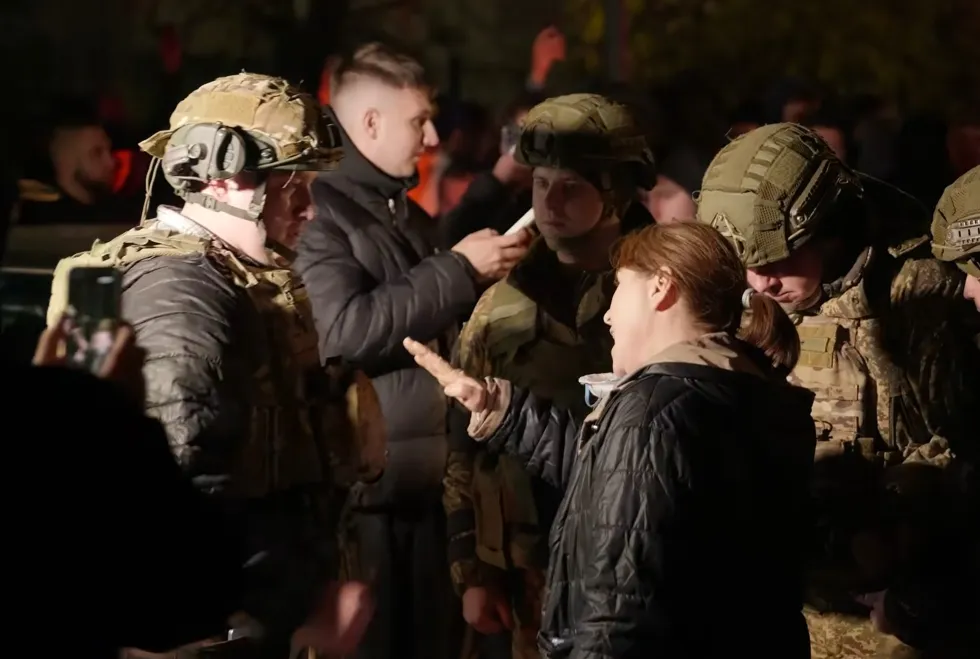
The state’s response to the crowd has been swift. Within a day the SBU said it had identified about a hundred participants, and it has opened three criminal cases: obstructing the armed forces, revealing military locations, and mass unrest. It is searching homes and weighing arrests.
The state’s response to the house has been one case, opened by the State Bureau of Investigation (DBR) for suspected abuse of authority by a serviceman, and a request that everyone avoid premature conclusions. That request has not stopped a commander publishing the detained men’s medical and family histories. A state that can identify a hundred protesters in a day has not yet said whether a fourteen-year-old’s allegation of assault is being investigated as a crime in its own right.
Why the Village Believed It: The 6,127 Complaints
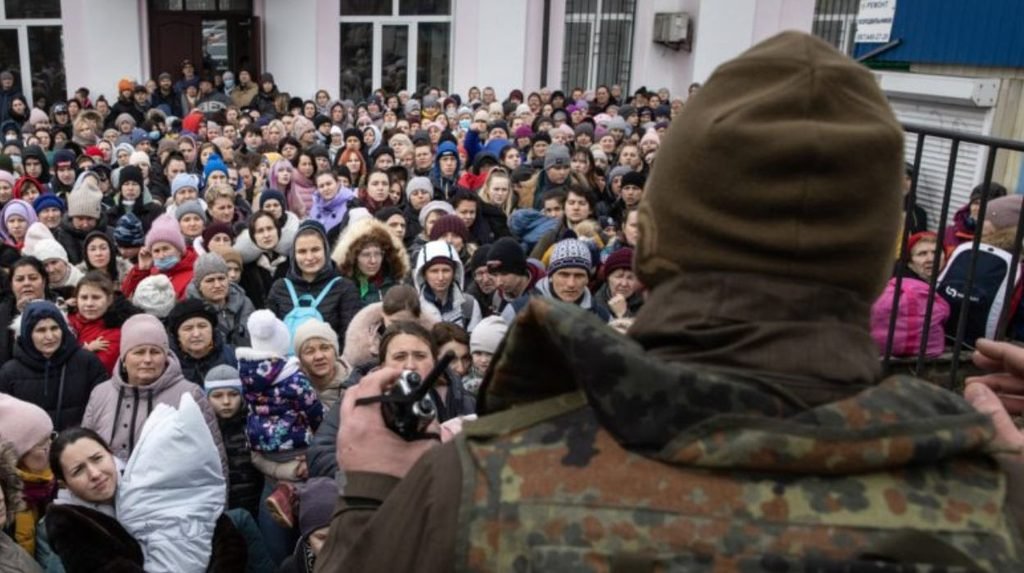
A rumour spreads on fertile ground or not at all. A woman outside told reporters that recruitment officers had seized her son on his way to work and taken him to that house. Perhaps she was wrong about where he was. She was not wrong to believe it could happen, because in Ukraine it does.
None of what follows proves anything about Borshchahivka. It explains why a hundred people believed the worst within hours. Complaints to Lubinets’s office about the recruitment centres and the military police rose from 18 in 2022 to 6,127 in 2025. In July, he reported four deaths inside recruitment-centre premises. In Uzhhorod, his monitors found people handcuffed to a ladder, and the acting head of the district centre has since been named a suspect for unlawful detention. In Odesa, the DBR alleges that recruitment officials and civilian “activists” held men captive and tortured them to hit their targets. Lubinets has said that fewer than one per cent of violations ever become public. He has also supplied the sentence that should hang over every recruitment office in the country.
Defence capability cannot be built on gross violations of the Constitution.
Dmytro Lubinets, Ukraine’s human rights commissioner
Ukrainian Desertion Figures and the Silence Around Them
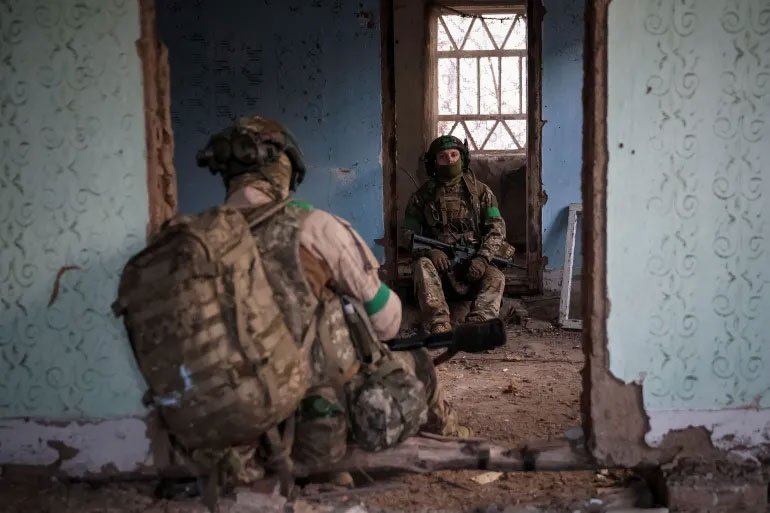
Then there are the men who run. Between January 2022 and September 2025, Ukrainian prosecutors registered 235,646 cases of soldiers going absent without leave and 53,954 cases of desertion. Cases are not people, since some men leave more than once, but the scale is undeniable. In December 2025, the Prosecutor General’s Office stopped publishing the figures, saying they could lead to false conclusions about the army’s morale.
A government that hides its desertion figures, holds men in rented houses with no published legal status, and publishes detainees’ medical files while leaving a child’s allegation unexamined is not protecting morale. It is protecting itself from the obvious question: why are so many men walking away, and why will their families go to such lengths to bring them home?
Who Benefits From the Borshchahivka Story

Moscow benefits, and wasted no time. Dmitry Peskov’s response was that anyone unwilling to fight for “the Kyiv regime” could surrender to Russian troops.
Kyiv’s commanders benefit from a story about saboteurs and disreputable detainees, because it lets them avoid talking about the house. The cost falls where it always falls: on working-class men stopped on their way to work, on soldiers dragged back to units they fled, on families who learn where their men are from a rumour on Telegram, and now on a boy in hospital whose account the state has so far met with a warning to his parents.
Britain cannot treat this as somebody else’s business. British governments have been among the loudest backers of this war and have spent heavily on it. Ministers who sign the cheques and speak of shared values owe the public more than silence about what those values mean behind that wall.
Register the Boy’s Allegation, Publish the Figures
Independent forensic specialists should examine the fourteen-year-old. His allegation should be registered and investigated as a possible assault, separately from the riot inquiry, and everyone who was in that room should give evidence, including the woman he says stopped the beating. The four men should be interviewed by civilian investigators, away from their chain of command, and the DBR, not the unit, should say how they were injured. The identities of the masked men, both those inside the house and those who cleared the street, should be established.
Every site used to hold mobilised men or recaptured soldiers should be placed on a clear legal footing, publicly registered and open to the ombudsman without notice. The desertion figures should be published again. And British ministers should ask, out loud, what happens in houses like this one.
The boy did not fall into a void. He fell into a house rented with public money, money the UK public provides; it was run by men sworn to uphold the law…they failed
The hostage story fell apart within hours. The state’s explanation has not stopped moving since…
Enjoyed this read? I’m committed to keeping this space 100% ad-free so you can enjoy a clean, focused reading experience. Crafting these articles takes a significant amount of research and heart. If you found this helpful, please consider a “small donation” via PayPal or GoCardless to help keep the lights on and the content flowing. Every bit of support makes a huge difference.

Support The Tribune
INDEPENDENT. READER-FUNDED. AD-FREE.
If you value this article, help keep The Heartlands Tribune publishing independent journalism without intrusive advertising or corporate sponsors.
Choose your monthly amount
Secure payment via GoCardless