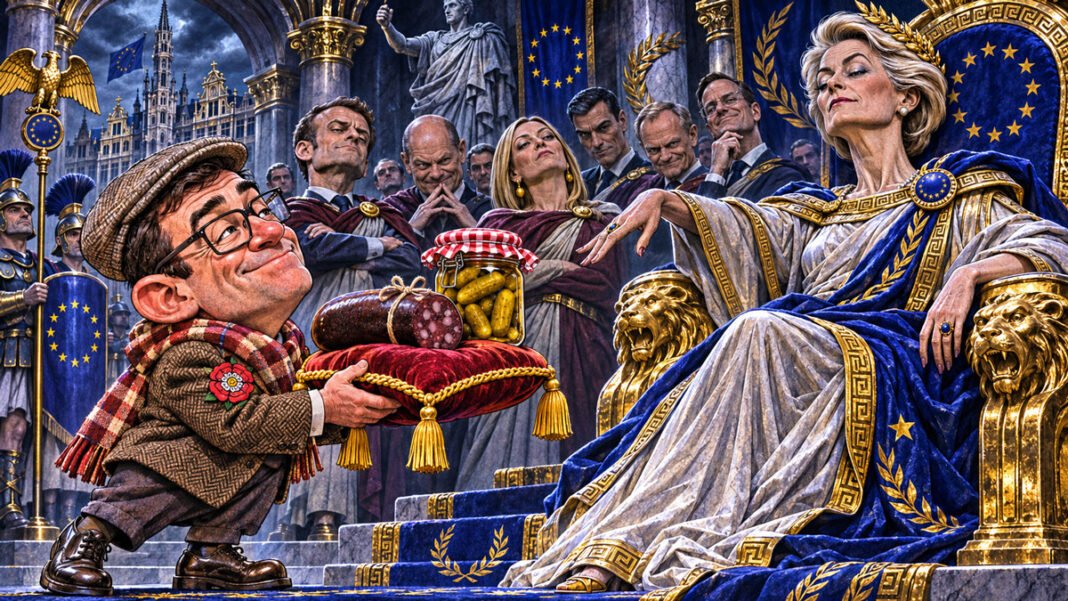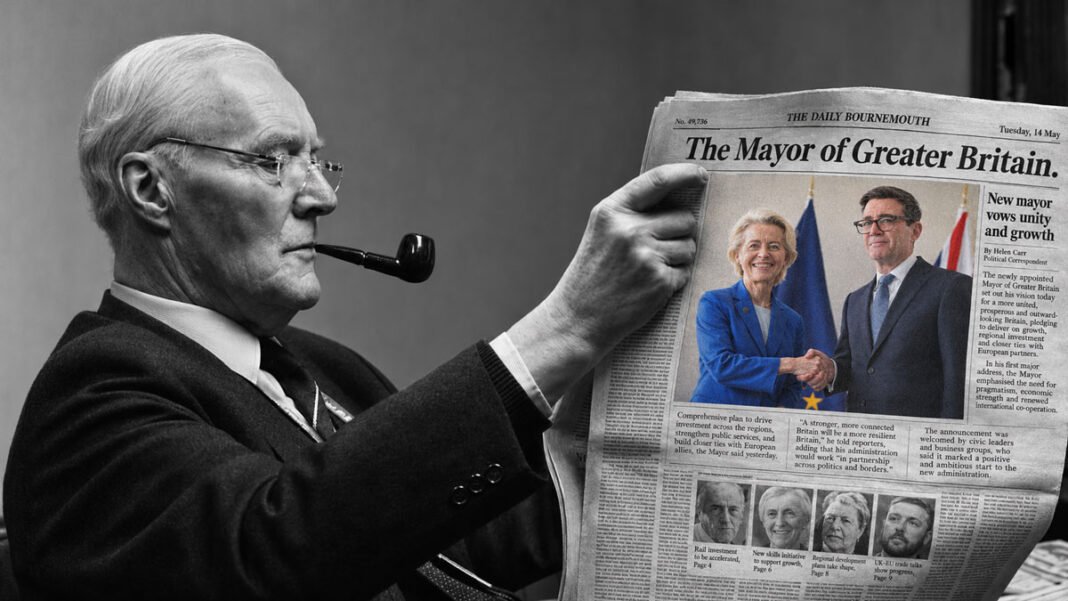
Andy Burnham has sealed his Brussels reset, and the rejoin chorus is already warming up. Before the working class is marched back towards the European Union, it should look hard at the machine it is being asked to obey. The new deal would have Britain follow that machine’s rules without a single vote on how they are made.
Burnham’s Brussels Reset: Britain Signs Up to Rules It Will Have No Vote On
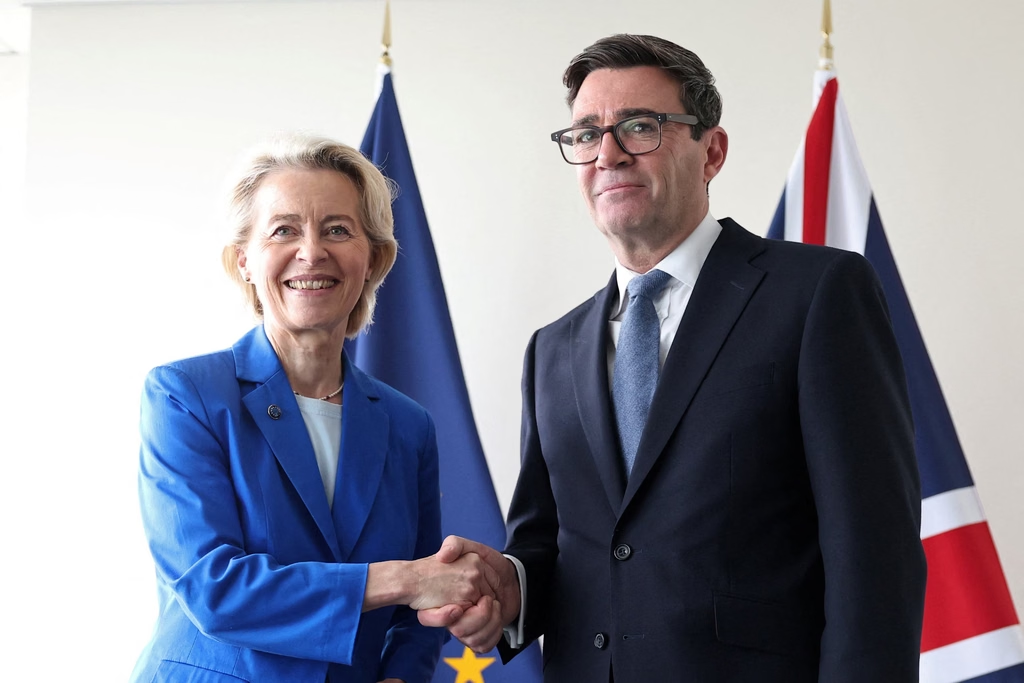
On Friday in Brussels, a string quintet played the anthems of both sides as Andy Burnham shook hands with Ursula von der Leyen and António Costa. The Prime Minister told the room “This is a good day for Britain.” Von der Leyen called it a “turning point” in relations.
Three agreements were sealed. There is a food and farming deal, a link between the two carbon trading schemes, and a youth mobility scheme that would let 100,000 young Europeans live and work in Britain for up to three years, with the same right for young Britons in the EU.
The headline figure is a gift to any press office. The government estimates the package will add 0.5% to GDP, about £17 billion, by 2040. That date is fourteen years away. In the last six years, the world has given us a pandemic, a land war in Europe and an energy shock. Every one of those billions rests on a model, and every model rests on a stack of ifs. None of it arrives soon either. The food deal is not due until March 2028, and the youth scheme promises first travel no later than January 2030.
Within hours, the familiar chorus in London was urging the government to keep going until Britain is back inside the bloc. Burnham has given them reason to hope. He has said he would like Britain to rejoin the EU within his lifetime. His Energy Secretary, Ed Miliband, said that “of course all the options will be on the table.”
Before the British working class is marched back towards Brussels under the banner of economic common sense, it is worth looking closely at the machine. The EU is not just a trading club that sometimes overreaches. Its law-making system is built to keep the people it governs at arm’s length. Decisive power sits with an unelected executive that drafts the rules, and the final deals are struck behind closed doors. Concentrated capital is far better placed than the ordinary citizen to shape them.
Dynamic Alignment: The Price Not on the Poster
The food deal is not simply a bonfire of paperwork. In March, Maroš Šefčovič, the Commission’s chief negotiator with Britain, set out the aim plainly. He wanted a common food-standards area, achieved “through the UK’s dynamic alignment with EU SPS rules.”
Dynamic alignment means that when Brussels changes its food, plant and animal-health rules, Britain changes with it. As the House of Lords Library puts it, the UK would be required to follow future changes in EU law. Jill Rutter of the Institute for Government summed it up in one word: Britain becomes a rule-taker for food and farming.
The government’s factsheet, published three days before the summit, says nothing about dynamic alignment, parliamentary scrutiny of new EU rules or the role of the European Court of Justice. The Business Secretary went further on the radio. Jonathan Reynolds claimed on LBC that EU dynamic alignment rules would not apply to Britain under the deal. Either the Commission’s negotiator has misunderstood his own deal, or the public is being told a comfortable story.
This is the point where the old complaint about the EU’s democratic deficit stops being academic. As a member, Britain had a commissioner, MEPs and a vote in the Council, however often it lost. Under dynamic alignment it has none of these. It simply receives law written in rooms it cannot enter.
If the EU was undemocratic for its members, it is doubly so for a country that agrees to follow it from outside.
Outsourcing the Hard Part: Why Alignment by Stealth
There is an older story underneath Friday’s handshakes. Since 2016, much of Britain’s political class has never really wanted to leave, and has shown even less appetite for the hard work of deciding what an independent country should do with its freedom. The tools were there: control over state aid, public procurement, trade and industrial strategy. Very little was built with them. Successive governments treated Brexit as damage to be limited, not a power to be used.
Yet those same politicians know it is dangerous to defy a democratic decision openly. In 2019 the escape hatch was a second referendum. Today the route is quieter. Burnham keeps his red lines for this Parliament while saying a deeper reset will wait for the next. Over the coming year, London and Brussels will hold what he calls an “informal brainstorming process” on the future relationship, and the options are to be put to the public eventually. In the meantime, every alignment clause moves the starting line a little closer to Brussels. By the time anyone is asked, half the answer will already have been written.
Bertolt Brecht once mocked a government so disappointed in its citizens that it might find it simpler to dissolve the people and elect another. In European politics that joke has hardened into a habit. Denmark voted against the Maastricht Treaty in 1992 and was asked again. Ireland rejected the Nice Treaty in 2001 and the Lisbon Treaty in 2008, and on both occasions was sent back to the polls until it gave the right answer.
Public opinion in Britain has moved, and polling now suggests that most people think leaving was a mistake. If the country wants to rejoin, it has every right to say so. The objection here is not to asking the question. It is to the method: hollowing out a decision by stealth, then presenting the public with a done deal dressed up as a choice.
That method announces contempt for democratic majorities, and it raises a harder question for our institutions. If parties, elections and parliaments exist not to let the people create and control governments, but to manage them, why should anyone take part? Britain voted to leave in 2016, on a turnout higher than at any general election since 1992. Both main parties stood in 2017 promising to honour the result, and in 2019 the country gave a large majority to the party that promised to get it done. If decisions made again and again can be quietly unpicked whenever representatives find them inconvenient, what are those institutions for? The working class voters who turned out in 2016 will draw their own conclusions, and no one in Westminster should be surprised by them.
To see why the method matters, look at the machine Britain is being steered back towards.
How the EU Machine Works: Commission and Parliament
Start with the European Commission. It has 27 commissioners, one from each member state, every one of them appointed by national governments and not one of them elected. Yet this body holds the sole right to propose almost all EU law. Every directive that ever reshaped a British industry began as a Commission draft, written by people no voter could remove.
At the top sits a president who has never faced the voters. In 2019 Ursula von der Leyen did not stand in the European elections. She was not even a party’s lead candidate. Her own centre-right group had campaigned behind Manfred Weber. After days of haggling behind closed doors, EU leaders threw him aside and produced Germany’s defence minister, a politician who had neither campaigned nor publicly expressed interest in the job.
MEPs were furious. The Greens’ leader, Ska Keller, called it a “backroom stitch-up” and “grotesque”, a deal that satisfied nothing but party power games. The Dutch Green MEP Bas Eickhout accused the Council of slaughtering the rule of law to hand out jobs for Merkel, Macron and Sánchez. Then the Parliament was handed a ballot with one name on it. Von der Leyen scraped through by nine votes above the minimum.

In 2024 the show was given better costumes. Von der Leyen was named her party’s lead candidate and toured Europe with branded mugs and hoodies, yet once again she refused to stand for Parliament. Almost nobody she met on the campaign trail could vote for her. The German Green MEP Daniel Freund pointed out that she was seeking the most powerful office in the EU “without even appearing on a single ballot paper.” When the votes were counted, EU leaders proposed one candidate: her. MEPs were again offered a yes or a no, and she obtained 401 votes.
“A choice of one is not an election. It is a coronation with a show of hands.“
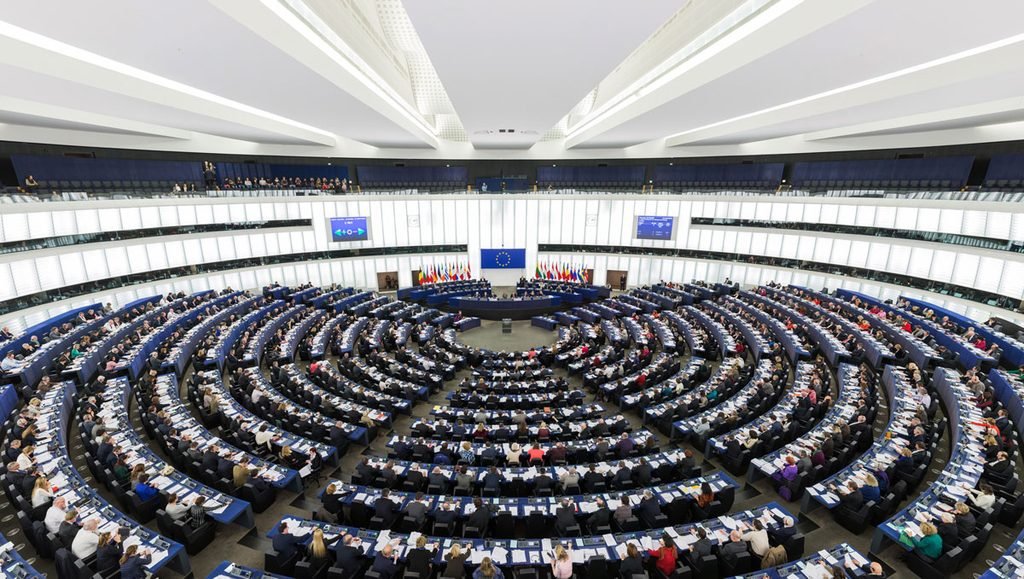
The European Parliament is the institution the EU’s defenders reach for whenever the word democracy comes up. Its 720 MEPs are elected, and since the Lisbon Treaty they share the passing of most laws with national ministers. But they cannot start a single one. They can ask the Commission to propose a law, and the Commission can refuse, provided it explains itself. In 2019 MEPs had the chance to defend the lead-candidate system, the one democratic innovation they had fought for. They protested loudly about the stitch-up and then voted the winner in anyway. A parliament that cannot bring a bill, and that rubber-stamps an executive chosen by heads of government, is not a parliament as Britain understands the word.
In theory, the Parliament can sack the Commission. In practice the bar is a two-thirds majority, and no censure motion has ever passed. The one time the threat bit was in 1999. The Santer Commission resigned after an independent report on fraud and mismanagement, before MEPs could throw it out. The von der Leyen Commission has faced a string of censure motions since. In July 2025 MEPs rejected one by 360 votes to 175. In October 2025 it saw off two more, one of them tabled by the Left group. In January 2026 another fell by 390 votes to 165.
The censure motions were not about nothing. In May 2025 the EU’s own General Court annulled the Commission’s refusal to give a New York Times journalist access to text messages between von der Leyen and Albert Bourla, the chief executive of Pfizer. Those messages were exchanged while the bloc was buying billions of vaccine doses. The Commission’s defence was that it could not find them.
Where EU Law Is Really Made: The Trilogues
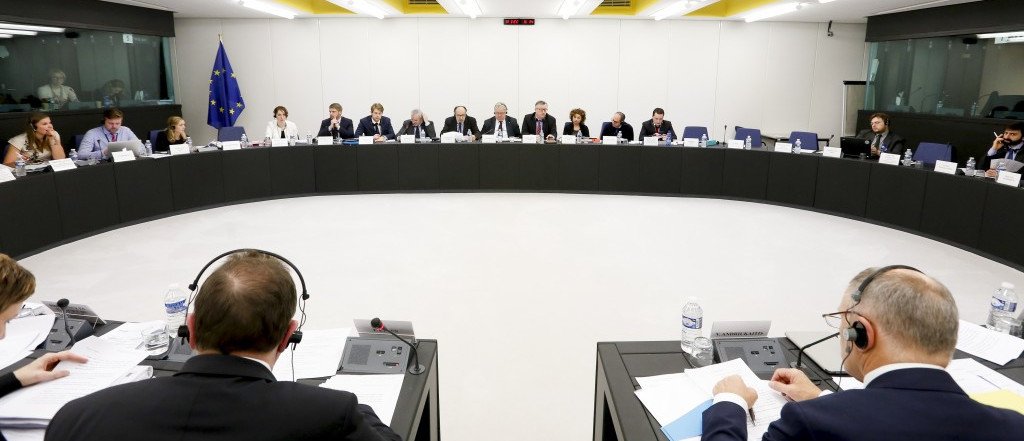
The formal procedure is not where most EU laws are settled. The real bargaining happens in “trilogues”, closed meetings of small negotiating teams from the Parliament, the Council and the Commission. When the EU Ombudsman, Emily O’Reilly, investigated in 2016, she found that around 85% of EU laws were being agreed at first reading thanks to these talks, up from 29% two terms earlier. She warned that deal-making behind closed doors risked “the creation of public suspicion and uncertainty”.
Secrecy does not keep everyone out. The environmental lawyers ClientEarth note that information about these negotiations still reaches the lobby groups with the most money and the best connections. The public waits outside while the best-funded interests pick up what is going on inside.
Those interests are well funded indeed. A study by Corporate Europe Observatory and LobbyControl found that digital industry lobby spending in Brussels reached €151 million a year, up from €113 million in 2023. In the first half of 2025, Big Tech met senior Commission staff 146 times, more than once every working day. A corner shop, a family haulier or a small food processor has no lobbyist in Brussels. Each of them has to comply with whatever comes out of those rooms. Compliance costs land hardest on firms without legal departments, and that steadily tilts the market towards the giants.
The Council of the EU is where national ministers vote. Most decisions go through qualified majority voting, which needs 55 per cent of member states representing 65 per cent of the EU’s population. As a member, Britain could be outvoted and still bound. Under alignment, it is not even in the room to be outvoted.
A Court That Writes the Market Into Stone
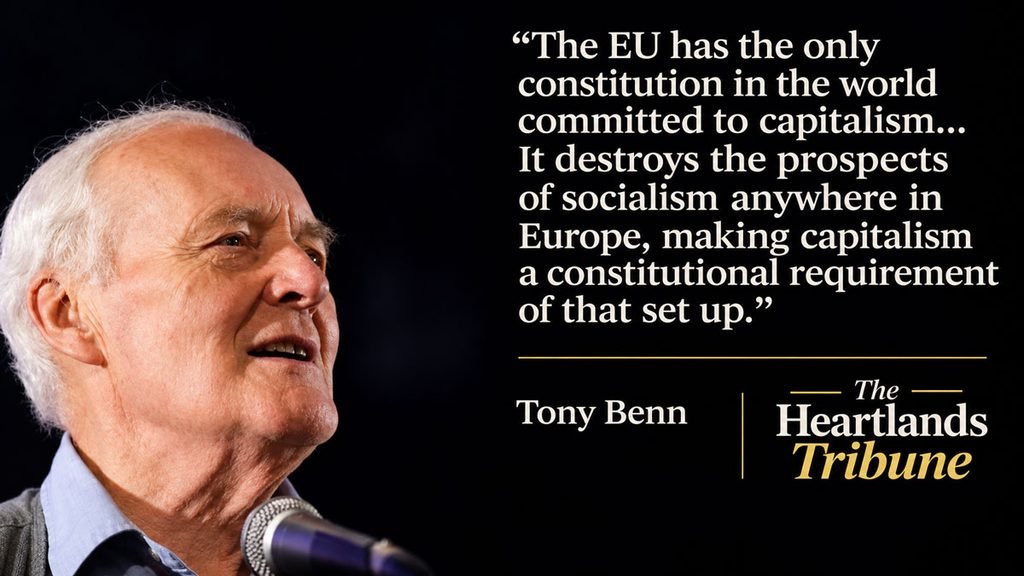
Then there is the Court of Justice. Its rulings carry real weight for the working class, and the labour movement should not forget them. In the Viking and Laval cases of 2007, the Court held that strike action could be an unlawful restriction on a company’s freedom to set up business or provide services across borders. In Laval, the target of the action was a Latvian contractor undercutting wages on a Swedish building site. A court in Luxembourg weighed a trade union’s most basic weapon against a business’s market freedoms and came down on the side of the business.
During the euro crisis, the treaties appeared to rule out bailing out member states. In the Pringle case of 2012, the Court read that no-bailout clause narrowly enough to let the eurozone’s permanent rescue fund go ahead. Supporters call that pragmatism. Critics see a court that bends the treaties when the single currency is at stake, and they have a point. The price of those rescues fell on the Greek working class. In July 2015 Greeks voted decisively in a referendum to reject the bailout terms. Within days their government signed up to harsher ones, after the European Central Bank had squeezed the banks shut.
Read The Small Print
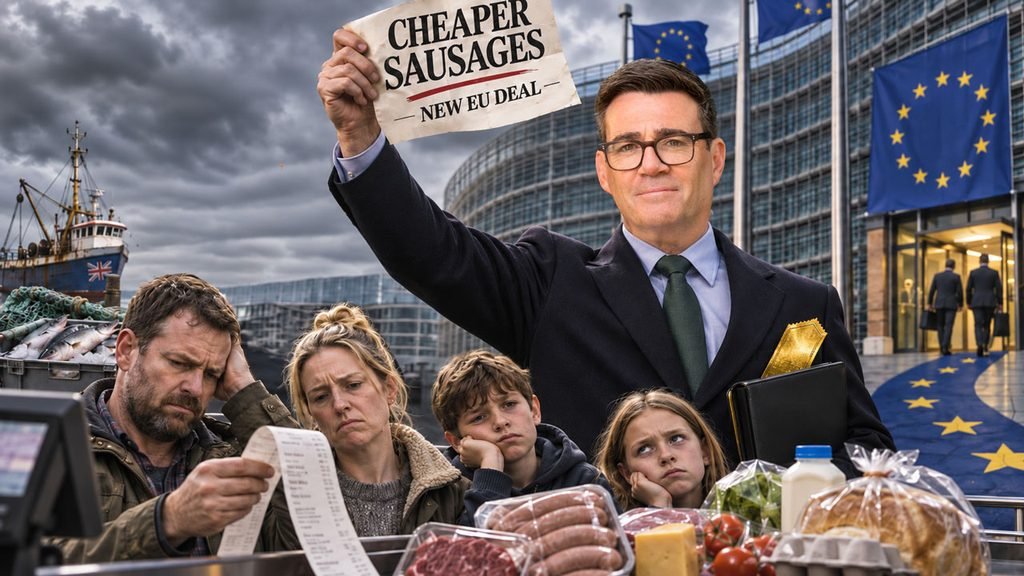
The great EU reset is being sold to the British public as an economic triumph. Ministers boast that £6.5 billion of British exports, including steel and aluminium, will escape the EU’s carbon border tax, while farmers will finally be freed from costly checks at the border. Strip away the publicity and the picture looks rather different.
That £6.5 billion is the value of exports potentially covered by an exemption, not £6.5 billion in savings. The government’s own explainer describes the deal as “creating the conditions for an exemption”. The carbon trading link is not expected to operate until January 2028, and the EU’s side of the exemption is still subject to EU legislative procedures. The agricultural agreement is scheduled for March 2028. The government is celebrating benefits that have yet to arrive while presenting projected economic gains as though they were money already in the pockets of British families.
Ministers boast of a £17 billion boost by 2040 from Andy Burnham’s Brussels reset. The small print reveals delayed 2028 start dates and binding EU rules Westminster cannot vote on.
And what is Britain giving up in exchange? The government’s own documents provide the answer: dynamic alignment. The food agreement will, in Whitehall’s words, “function on the basis of” the UK and EU applying the same rules, at the same time, on an ongoing basis. England’s own rules on gene-edited crops survive only until July 2028, after which the EU’s framework takes over. Under the emissions trading agreement, Britain will follow the EU rules listed in the treaty as they change. Even proposals to extend Britain’s own carbon scheme to new activities or gases must be submitted to the European Commission for approval. If Brussels widens its scheme and Britain declines to follow, the EU may take temporary measures against it.
The UK will have a seat on joint committees, which decide by mutual consent, so in principle Britain can say no. In practice, saying no puts the benefits of the deal at risk. The government calls what Britain gets in return “an early decision-shaping role” on EU rules in development. Shaping is not deciding. A voice is no substitute for a vote when somebody else writes the legislation.
We are told that the European Union is democratic because its Parliament is elected and national governments sit on its Council. That is true, but it rather misses the point. Britain is no longer represented in either institution. Yet Westminster is being asked to accept continuing regulatory obligations arising from decisions taken by those institutions. And even when Britain was a member, national elections could not simply overturn treaty obligations. Competition law, state-aid controls and the free movement of capital were embedded in a legal framework beyond the authority of any single elected government.
Why it Will Never Change
“There will be no compromise on the single market. Never, never, never.” – Michel Barnier (2020
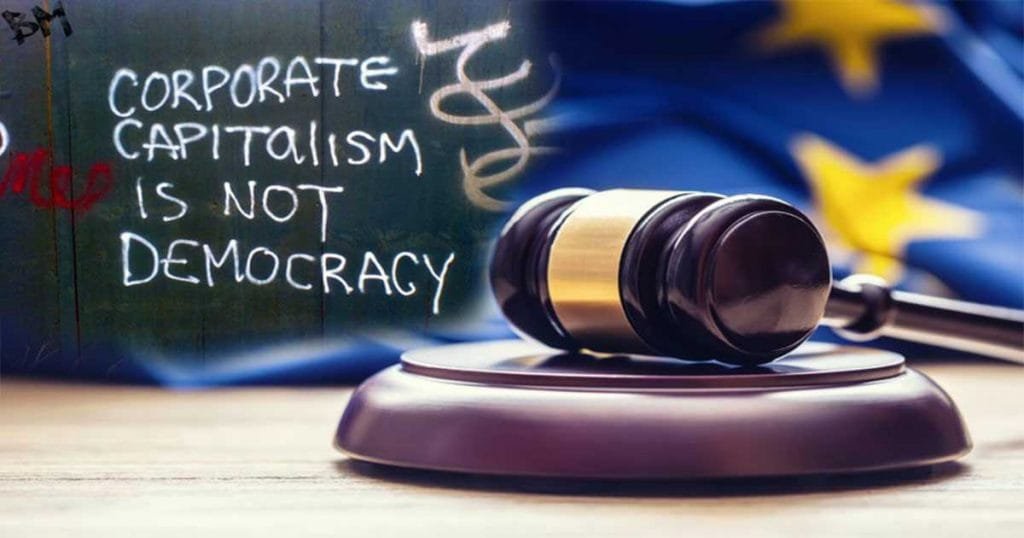
The treaties permit public ownership, but that freedom comes with conditions. A government may nationalise a railway, water company or steelworks, yet the financing and operation of public enterprises remain subject to EU competition and state-aid rules. Where public investment counts as aid that must be notified, it cannot proceed until the Commission has approved it. For a socialist government seeking to rebuild industry, those are real constraints on democratic economic policy.
Nor can those foundations easily be rewritten. Fundamental treaty change normally requires unanimity among member governments followed by ratification in every member state. France and the Netherlands rejected the proposed European Constitution in 2005, only for much of its institutional substance to return through the Lisbon Treaty. The lesson was uncomfortable: European integration could continue even after electorates had rejected the constitutional project presented to them.
The Tribune campaigned to leave precisely because of these questions of democratic accountability and economic sovereignty. We wanted the freedom to rebuild British industry, restore public ownership and put the interests of the working class before the demands of an economic system built around competition and the free movement of capital.
Nobody disputes the importance of trading with our European neighbours. Removing unnecessary barriers is welcome where it genuinely helps British producers. But every agreement must be judged against the obligations it creates, the powers it restricts and the benefits it actually delivers. An agreement that makes trade easier in return for accepting future rules we cannot vote on carries a democratic cost, however attractive the government’s economic forecasts might appear.
The British people voted to leave the European Union. They did not vote to replace membership with a succession of agreements that gradually return its authority over British law without restoring Britain’s representation.
The principle remains simple: those who make the laws governing our country must ultimately be accountable to the people who live under them.
A Commons Vote on Every EU Rule Britain Adopts
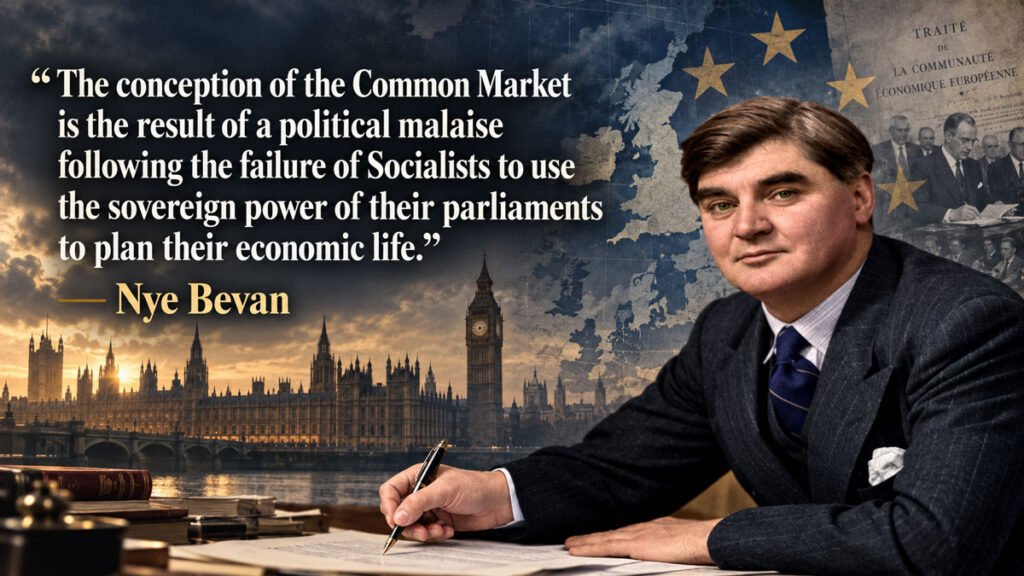
The legislation to put Friday’s deals into effect enters Parliament next week. MPs should treat it as the most important constitutional question of this Parliament, not a technical trade bill. At a minimum, every new EU rule Britain is expected to adopt should come before the Commons with a vote. The full legal texts should be published before MPs are asked to approve anything. There should be a clear exit route if Brussels changes the rules in ways no British voter would accept. Any step beyond the government’s red lines should be decided openly by the public, not reached by quiet drift.
For forty years we were told Britain needed a seat at the table. Dynamic alignment is the first deal that asks us to eat whatever is served without even offering us a chair.
Enjoyed this read? I’m committed to keeping this space 100% ad-free so you can enjoy a clean, focused reading experience. Crafting these articles takes a significant amount of research and heart. If you found this helpful, please consider a “small donation” via PayPal or GoCardless to help keep the lights on and the content flowing. Every bit of support makes a huge difference.