Members Over Ministers: Graham Has Her Mandate, Now Unite Needs Its Freedom
Unite’s members have handed their general secretary a decisive second mandate. The union still hands Labour £870,000 a year.
Two numbers came out of Unite this week. The first was announced from Holborn on Wednesday morning: Sharon Graham re-elected general secretary with 68,694 votes against Simon Dubbins’s 31,130, from 100,089 ballots cast.
The second number is £870,000, and nobody wants to talk about it. That is what Britain’s largest industrial union still pays every year in affiliation fees to a party that has spent eighteen months breaking one of its own strikes.
The first number is a mandate. The second is a standing order that no longer makes sense to anyone paying it.
Graham won on the same proposition she was elected on five years ago, and repeated in her victory statement: members over ministers, the workplace over Westminster. When she first said it in 2021, the party managers filed it under rhetoric, the sort of thing a general secretary says before quietly resuming her seat at conference. They were wrong then, and the margin this week tells them how wrong. She took the job with 46,696 votes on a turnout of around ten per cent.
She returns with close to seventy thousand and better than two thirds of the vote. Her critics will point out that a hundred thousand ballots in a union of well over a million is a thin democratic base, and they have a point worth making about the state of union democracy generally. It is not a point about Sharon Graham. She has more members behind her now than she had authority to begin with, which is the opposite of what usually happens to trade union leaders after five years in office.
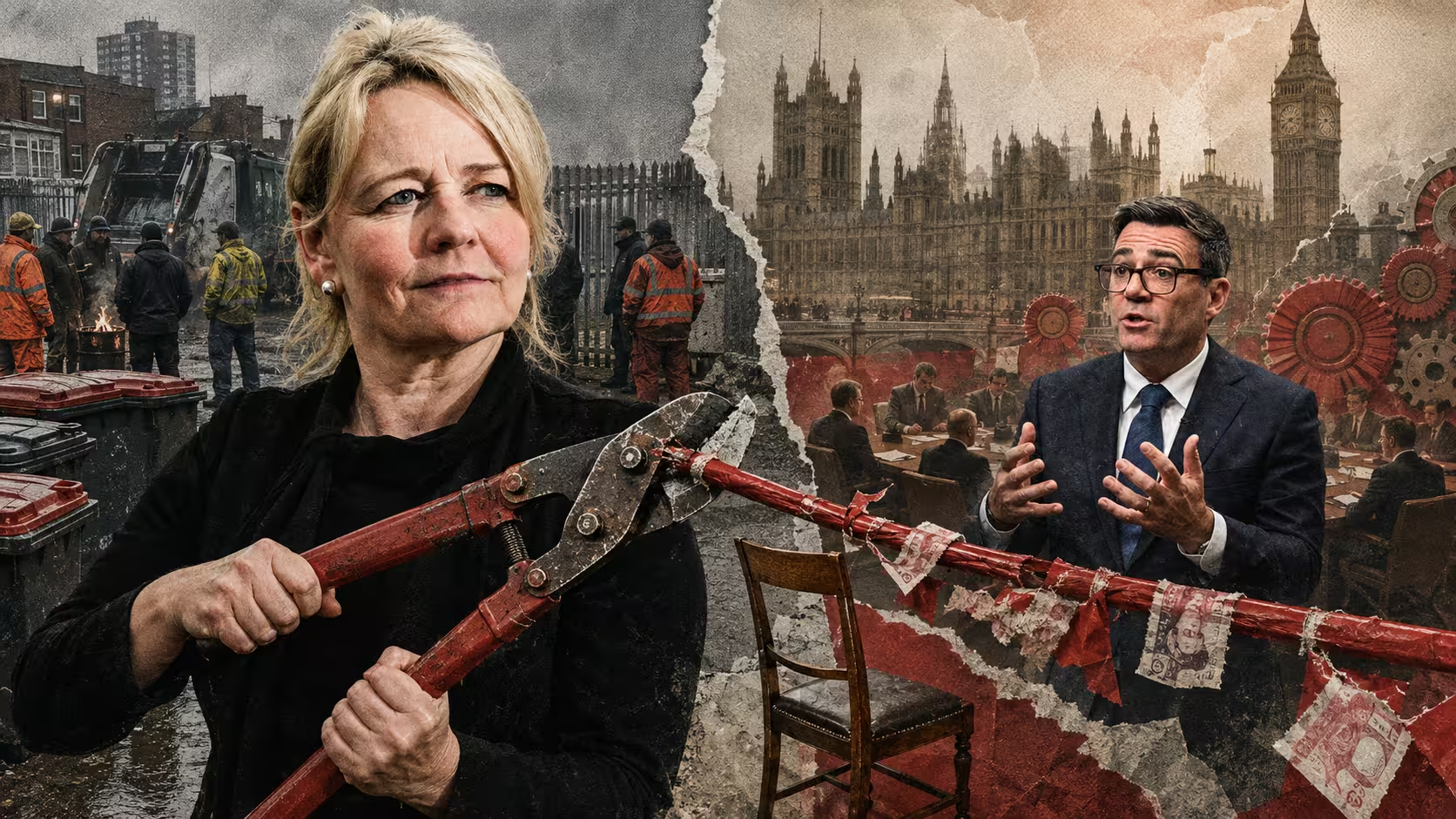
She earned it in the least glamorous way available. Her campaign’s figures put the first term at more than 1,800 disputes, 280,000 members involved, and over £700 million in additional pay. The emblematic fight was not against a hedge fund or a foreign multinational. It was in Birmingham, against a Labour council. Refuse workers have been on all-out strike since 11 March 2025, and the authority has spent at least £33 million attempting to break them. The dispute turns on the regrading of drivers, which Unite says would cost some workers £8,000 a year, in a city that declared effective bankruptcy in 2023.
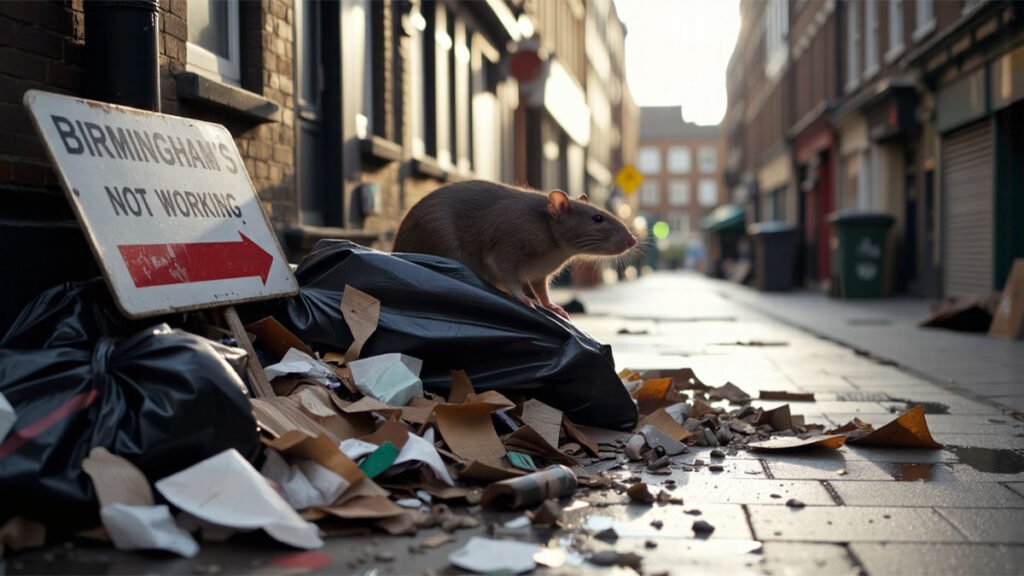
A Labour council found thirty-three million pounds to defeat four hundred binmen. It could not find the money to pay them.
Playing Away From Home
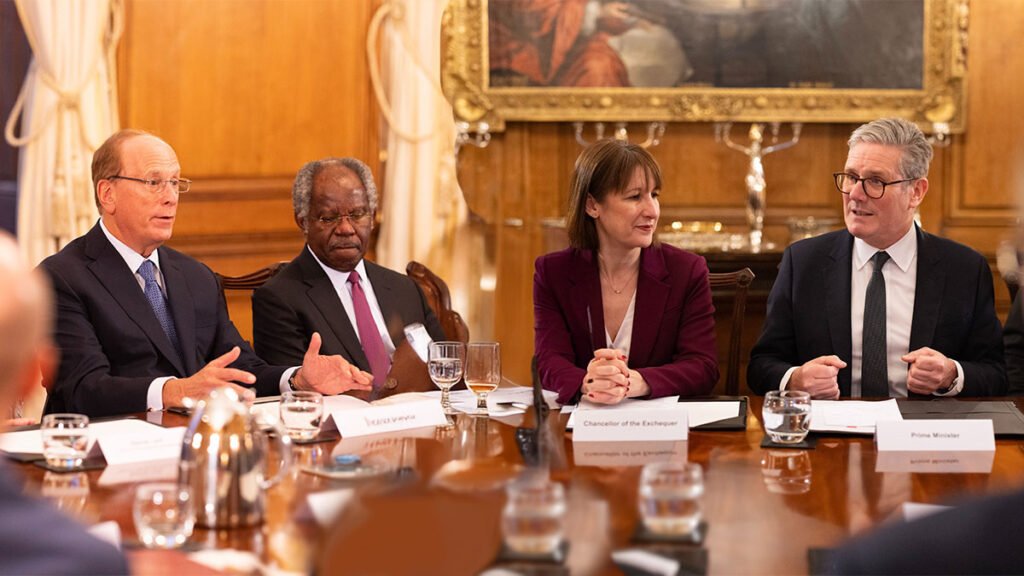
That is the relationship in miniature, and it explains why the marriage metaphor everyone reaches for is the wrong one. Labour is not an unfaithful husband who might yet be reformed by patience. Labour has never been monogamous. It keeps the City, the corporate donor class and the trade unions in the same household, tells each of them something different, and has arranged the finances so that only one of them pays maintenance. The bosses get policy. The donors get access. The cleaners, drivers, refuse workers and carers whose subscriptions fund the arrangement get a press release about the value of the historic link.
Unite has begun to notice. At the 2025 policy conference, delegates voted to review the union’s affiliation and to suspend Angela Rayner, then deputy prime minister, from Unite membership. On the first anniversary of the all-out strike in March this year, the executive council cut the affiliation fee by forty per cent, a reduction of £580,000, taking the annual payment from £1.45 million to £870,000. Graham’s message to the party was to wake up and smell the coffee. All of it is real, and all of it is a rebuke rather than a break. Forty per cent less money is still money. A suspended membership card is still a card.
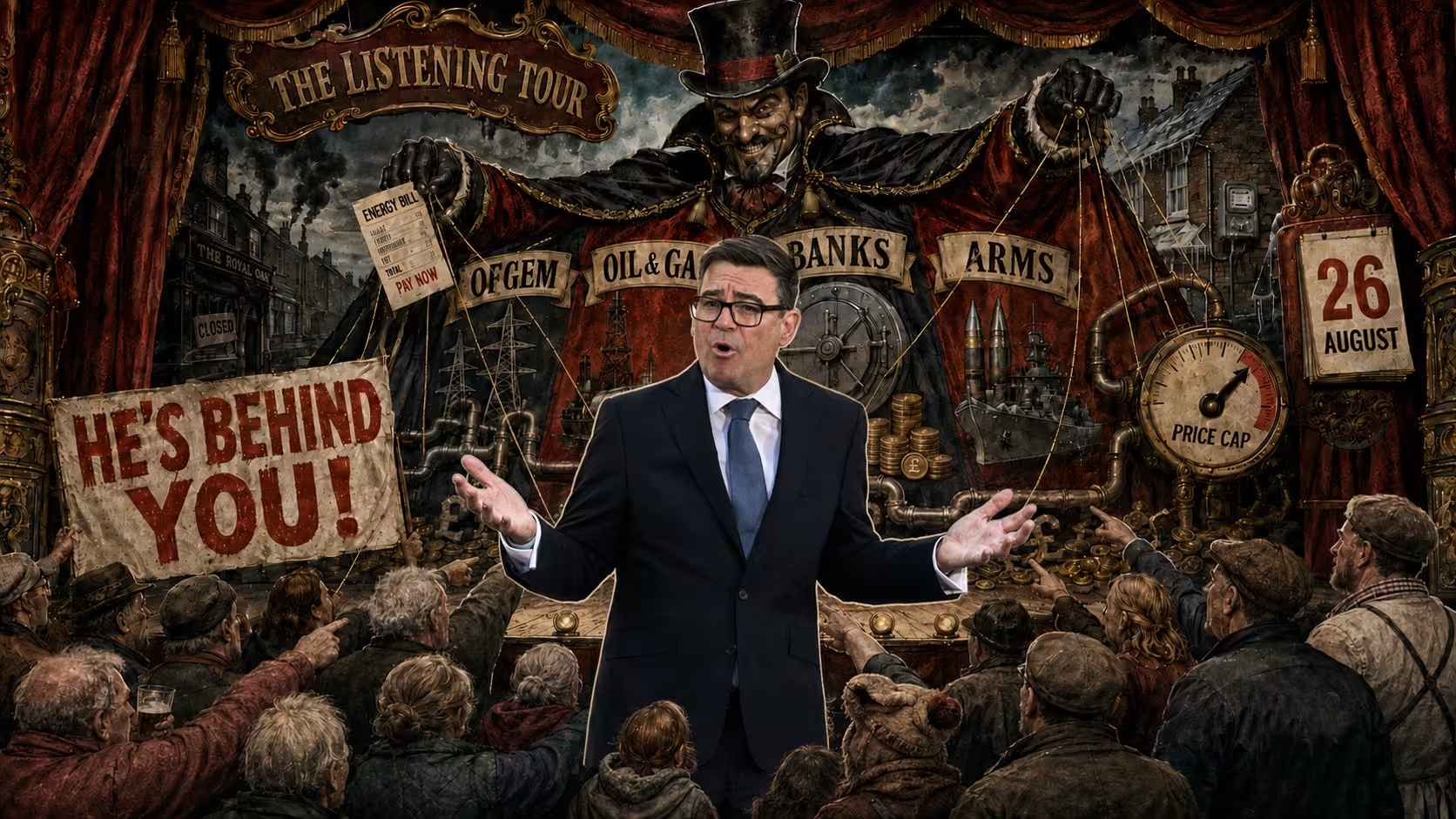
Then came the leadership. Keir Starmer announced his resignation on 22 June, and Andy Burnham, nominated by 379 Labour MPs, was acclaimed leader on 17 July and became prime minister on 20 July. Unite’s executive endorsed him conditional upon delivery, keeping its support under review, with Graham calling the moment a last chance saloon. Read that again, because it is the whole problem stated in the union’s own words. The largest industrial union in the country, having spent a year and a half fighting a Labour council and a Labour government, responded to a coronation by nominating the man being crowned and promising to keep an eye on him.
Burnham is a more capable politician than his predecessor and a more sympathetic listener. He is also the author of a devolution model built on public-private partnership, arriving in Downing Street through a seat vacated for him by an ally, without a contest, without a manifesto, and without a single member of the public voting on any of it. Managed decline under new management is still managed decline.
The Seat at the Table

The case for staying is honestly held and deserves a straight answer. Affiliation buys structural rights: places on the National Executive Committee, votes at conference, a claim on the party’s programme that no outside pressure group can match. Walk away, the argument runs, and Unite hands the party wholesale to the people who have been trying to loosen the union link for thirty years.
The trouble is that the seat has been occupied throughout the period in which every position that mattered was lost. Privatisation, deregulation, the anti-strike laws, the retreat on employment rights: none of it was halted from inside the room. A union that must cut its funding by forty per cent and suspend the deputy prime minister to be heard at all has already conceded that formal influence is not working. Presence at the table has become a receipt for policy decided elsewhere.
Independence is not weakness. It is the ability to back any candidate who backs the union’s members, to punish any government that does not, and to spend a political fund on the working class rather than on a party machine that treats them as legacy stock. Unite has already begun formally consulting members on whether to remain affiliated, with the question expected to reach a rules conference. Graham now has the mandate to put it there and win it.
She has proved she can beat bad bosses. The last bad boss on the list wears a red rosette.
When a party chooses to marry corporate interests, the union’s duty is not to salvage the relationship, but to file for divorce.

Sources
Unite the Union, “Sharon Graham re-elected as Unite general secretary in decisive victory”, 12 August 2026 https://www.unitetheunion.org/news-events/news/2026/august/sharon-graham-re-elected-as-unite-general-secretary-in-decisive-victory
Unite the Union, “Unite gives conditional nomination for Andy Burnham as Labour leader”, 9 July 2026 https://unitetheunion-newsroom.prgloo.com/news/unite-gives-conditional-nomination-for-andy-burnham-as-labour-leader
Unite the Union, “Unite leader Sharon Graham joins striking Birmingham bin workers at protest”, March 2026 https://www.unitetheunion.org/news-events/news/2026/march/unite-leader-sharon-graham-joins-striking-birmingham-bin-workers-at-protest
LabourList, “Unite cuts Labour affiliation fee by 40%”, March 2026 https://labourlist.org/2026/03/unite-union-labour-affiliation-fee-cut/
New Statesman, Sharon Graham interview on affiliation, July 2025 https://www.newstatesman.com/politics/labour/2025/07/sharon-graham-interview-unite-labour-affliation-angela-rayner-hard-to-justify