AS UNFAIR AS AMERICAN HEALTHCARE: BURNHAM’S SOCIAL CARE TEST
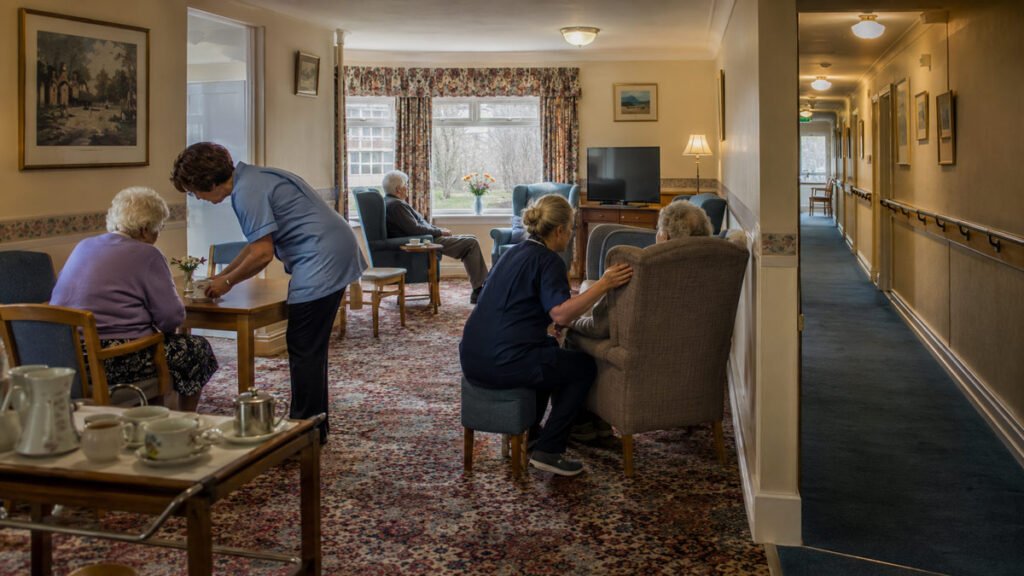
There is a plaque waiting to be written for British social care, and it would read like a charge sheet. Baroness Louise Casey, who led the commission into social care under Keir Starmer, counted 22 attempts at reforming the sector in England since 1997, none of which fixed the foundations. Royal commissions, green papers, white papers, a Dilnot report, a Care Act, a levy announced and cancelled, a cap legislated and abandoned. A generation of politicians has treated the care of the old, the disabled and the dying as a problem too electorally dangerous to touch and too expensive to solve. So they did the cheapest thing available. Nothing.
This morning Andy Burnham stood in a London care home and called that record a “major dereliction of duty”, declaring that social care in England is “as unfair as American healthcare”. Strong words, and true ones. On Monday he told the BBC he would put whatever political capital he has into fixing broken social care. He has brought forward Baroness Casey’s reporting date from 2028 to next summer, and set out the principles of a National Care Service: seamless movement between hospital, home and community, sustainable funding, prevention first. He is meeting Ed Davey and the Conservatives’ Stuart Andrew to seek common ground.
We have covered Burnham’s promises before in these pages, and our position has not changed. The words are better than Starmer’s. The test is delivery. And on social care, the options on the table are not equally serious.
THE FOUR DOORS
Strip away the consultation language and England has four choices…
The first is a cap on lifetime care costs. Sir Andrew Dilnot proposed £35,000 in 2011. The Conservatives legislated for a cap in the Care Act 2014, announced an £86,000 version in September 2021, and then Rachel Reeves abandoned the whole thing in July 2024. Understand what a cap actually does. It does nothing for the quality of care, nothing for the workforce, nothing for the person with no assets. Its function is to protect the estates of homeowners from catastrophic costs. That is not a wicked aim, and the lottery of dementia versus cancer is genuinely unjust: the heart attack is free on the NHS while the long fading costs a family everything. But a cap is an inheritance protection scheme dressed as care reform. It fixes who pays, never what is paid for.
A cap is an inheritance protection scheme dressed as care reform. It fixes who pays, never what is paid for.
The second door is a more generous means test. Today you qualify for council help only once your assets fall below £23,250, a threshold that forces people to spend themselves into poverty before the state notices them. The abandoned reforms would have lifted that ceiling to £100,000. Better, certainly. But this is adjusting the dials on a machine that is broken.
The third is free personal care: the state pays for the help with washing, dressing, medication and meals, while accommodation and living costs stay with the individual. Scotland has done this since 2002. It was introduced for over-65s and extended to all adults in 2019. Wales caps home care costs and Northern Ireland provides free home care for the over-75s, though in each nation support is heavily rationed, so only those with the most acute needs receive help. That last clause matters. Free personal care without funded capacity becomes a queue, and Scotland’s experience proves an entitlement on paper is not a carer at your door. Still, the principle is right, and the price is not fantasy. The Health Foundation puts free personal care at around £6.5 billion extra in 2026/27, rising to around £7.5 billion by 2035/36, against current spending of £28.7 billion. For comparison, that is less than we found for a single year’s uplift to the defence budget, and nobody asked whether the country could afford that.
The fourth door is the one Burnham himself built. As Health Secretary under Gordon Brown he proposed a publicly funded National Care Service, free at the point of use like the NHS, and the plans fell through when the coalition arrived and the Tory press screamed “death tax”. Sixteen years later, the man who wrote the white paper holds the office that can enact it.
So which is workable? The cap alone is a Treasury accountant’s answer to a moral question. The honest floor is free personal care, funded and delivered, with the National Care Service as the destination: a system where care, like health, is a shared risk rather than a private catastrophe. A funding settlement changes who pays the bill. It does not, by itself, lengthen a fifteen-minute home visit, the practice Burnham himself promised to end when he pitched free care for Greater Manchester back in 2017. And none of the four doors leads anywhere unless he walks through two others first. One is labelled ownership. The other is labelled pay.
HOW OTHER COUNTRIES DID IT

Britain talks about care reform as if it were an unsolved problem of physics. It is no such thing. Germany made long-term care universally available through social insurance in 1995, and Japan followed the model in 2000, though where Germans may opt for cash benefits, Japan restricted support to services. In Germany, Japan, South Korea, the Netherlands and Israel, compulsory long-term care insurance carries the main burden, financed by payroll contributions or a mix of contributions and taxes. These are ordinary capitalist democracies that decided, decades ago, that the risk of needing care should be pooled across society rather than dumped on whichever family drew the short straw. Germany did it under Helmut Kohl, a Christian Democrat. The scandal is not that Britain cannot find a model. The scandal is that the models have been sitting there for thirty years while we produced twenty-two reports.
There are honest caveats. In Germany the cost of housing in residential care is not covered by the insurance, and the system still rests on a mixture of public insurance and informal family care. No country has abolished the family carer. But every serious country has stopped pretending the family carer does not exist. Which brings us to the two British scandals hiding inside the care debate.
THE IMPORTED WORKFORCE, AND WHY IT EXISTS
Ask why so many care workers are migrants and you will get a shrug about labour shortages. The real answer is uglier: cheap labour was the policy. After Brexit ended free movement, the sector could not staff itself at the wages on offer, so in 2022 the government opened the visa route. International recruitment into England’s independent care sector rose from 20,000 in 2021/22 to 105,000 in 2023/24. The number of non-EU migrant care workers more than doubled from 140,000 to 300,000 after 2021, while the number of British care staff fell. British workers were not refusing to care. They were refusing to do skilled, exhausting, intimate work for the minimum wage on zero-hours terms, and who can blame them.
What was built instead was a captive workforce. A sponsored worker’s right to remain in Britain depends on the employer, and recruitment agencies charged workers thousands in fees before they ever left home. That is a formula for servitude, and servitude duly followed. The Gangmasters and Labour Abuse Authority reported that 61 per cent of all worker abuse complaints it received between April and June 2024 related to the care sector. The Independent Chief Inspector of Borders and Immigration found sponsorship certificates granted to care homes that did not exist, illegal recruitment fees, modern slavery and wage underpayment, while the sector recruited heavily from Nigeria and Zimbabwe, both on the World Health Organization’s red list of countries from which health workers should not be actively recruited. We stripped poorer nations of their nurses to avoid paying our own people properly. Ministers presented the visa route as pragmatism. In practice the state used visa supply as a substitute for enforcing decent wages. There is a name for that arrangement: managed exploitation.
You cannot import your way out of poverty pay, and you cannot deport your way out of it either.
The response has been to slam the door. On 22 July 2025 the government banned international recruitment of care workers altogether, and there may be up to 40,000 visa-holding care workers in this country who do not currently have a job in care, abandoned when their sponsors lost their licences through no fault of the workers. Despite years of overseas hiring, 111,000 posts still stood vacant in March 2025, with an estimated 470,000 more needed by 2040. The lesson is not complicated. You cannot import your way out of poverty pay, and you cannot deport your way out of it either. The only exit is to make care a job worth doing: proper wages, training, progression and a union. Unison’s Andrea Egan has already told Burnham that the £500 million behind the Fair Pay Agreement “isn’t enough” for a multi-billion-pound problem. She is right.
THE ARMY THAT WORKS FOR £2.47 AN HOUR
And behind the paid workforce stands the unpaid one, the largest care service in Britain, run from spare bedrooms and kitchen tables. There are 5.8 million unpaid carers in the UK, and the economic value of their work is some £184 billion a year, more than the entire NHS budget in England. More than 600 people give up work every day to care. For this they receive Carer’s Allowance, worth £86.45 a week in 2026/27, the lowest benefit of its kind, equivalent to £2.47 an hour. This year marks fifty years since its introduction, and had it kept pace with earnings, carers would receive an extra £160 a month. Instead, 1.2 million unpaid carers live in poverty, and the Department for Work and Pensions spent the decade hounding nearly 144,000 of them for overpayments generated by its own cliff-edge rules. Every pound the state saves on social care is a pound extracted from these people in unpaid labour, lost careers and broken health. Any reform that does not count them is an accounting fraud.
FOLLOW THE MONEY OUT OF THE BUILDING
Here is the door Burnham must walk through if the rest is to mean anything. British social care is not underfunded in the way a village hall is underfunded. Money pours in and is pumped straight back out. The five largest private equity-backed care home providers have borrowed £35,072 for every bed they own, paying interest of £102 per bed per week, which is 16 per cent of the average weekly fee, against £19 a week for the largest not-for-profit providers. The eighteen largest for-profit providers owe nearly 60 per cent of their debts to related companies, often offshore, at interest rates of 7 to 16 per cent, a structure that functions as hidden profit extraction and tax avoidance. In just three English regions, private care companies extracted £256 million in profit between 2021 and 2024, more than a third going to firms owned by private equity or based in tax havens, with directors earning ten and sometimes sixty times the average wage while frontline staff were frequently paid below the living wage.
This is the machine every previous reform politely declined to mention. Pour new billions into it, whether from a cap, a levy or general taxation, and a reliable percentage will leak offshore before it ever reaches a bedside. Burnham said this morning that the system is built on an overstretched public sector and profit-making private firms. Good. Then the National Care Service must not become a National Commissioning Service, a public logo on the same private extraction. It must mean transparency of ownership as a condition of every public pound, an end to the offshore debt shuffle, a growing public and not-for-profit sector, and a workforce paid as professionals. And it must be funded from wealth, from the assets and estates this economy has spent forty years inflating, not from another national insurance raid on working class wage packets to protect the inheritances of the comfortable.
Care is the basic measure of a civilised society, not a commodity to be traded or a gap to be patched with cheap labour. A government that found billions last December to fatten corporate drug margins under its pharmaceutical deal with Washington, a deal analysts say will divert some £45 billion from NHS services by 2036, can afford to care for its own people.
Burnham knows all this. He wrote the plan sixteen years ago. He has the office, the mandate of a party desperate for a purpose, and a Casey report landing next summer. Twenty-two attempts failed because twenty-two governments feared the Daily Mail more than they feared the judgement of history. The twenty-third has no such excuse.
A country that refuses to pay for care pays for it anyway. It pays in blocked hospital beds, in carers broken at fifty, in houses sold and wages stolen and lives quietly shortened behind drawn curtains. The only choice any nation ever gets is whether to pay together, or to let the weakest pay alone.
Enjoyed this read? I’m committed to keeping this space 100% ad-free so you can enjoy a clean, focused reading experience. Crafting these articles takes a significant amount of research and heart. If you found this helpful, please consider a “small donation” to help keep the lights on and the content flowing. Every bit of support makes a huge difference.