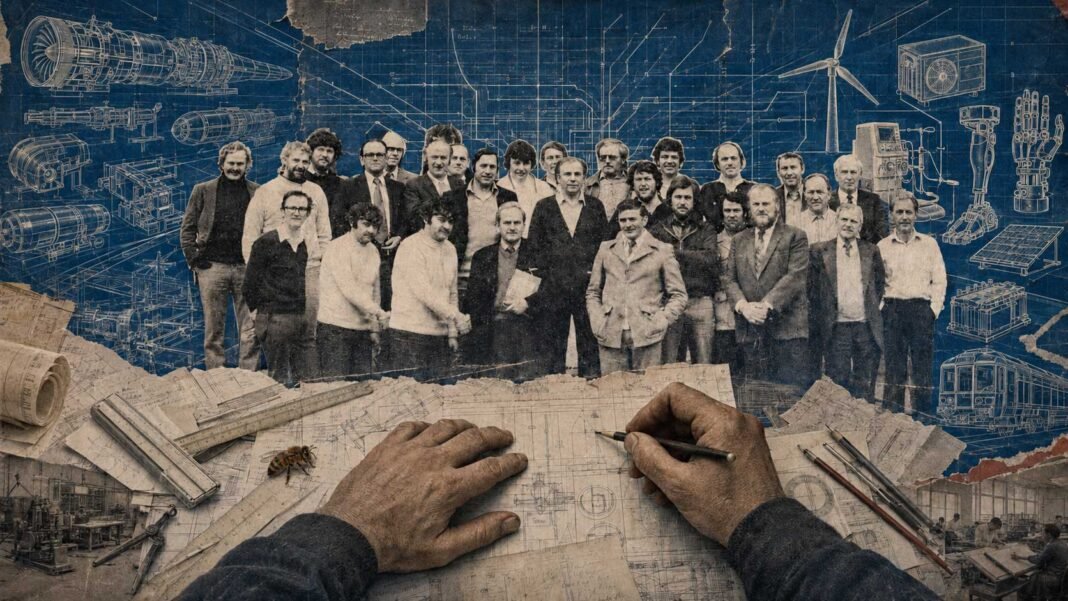
The Lucas Plan at Fifty
On 13 July this year, at the University of Manchester, the defence minister Luke Pollard launched an alliance of thirty-five British universities with the Ministry of Defence. It comes with a £182 million skills package, five new technical excellence colleges, and a charter committing member institutions to grow research capacity in defence and national security fields and to channel their graduates into defence careers. The Ministry describes the thinking behind it as a “whole of society” approach. It is, whatever else you call it, industrial planning: the state deciding what gets built, who gets trained, and where the money goes.
Fifty years ago, in the same industry, in some of the same towns, a group of shop stewards proposed the exact reverse. They wanted the planning without the war.
They lost. It is worth understanding precisely how they lost, because the usual explanation, that the idea was lovely but impractical, is the one thing the evidence does not support.
The Combine
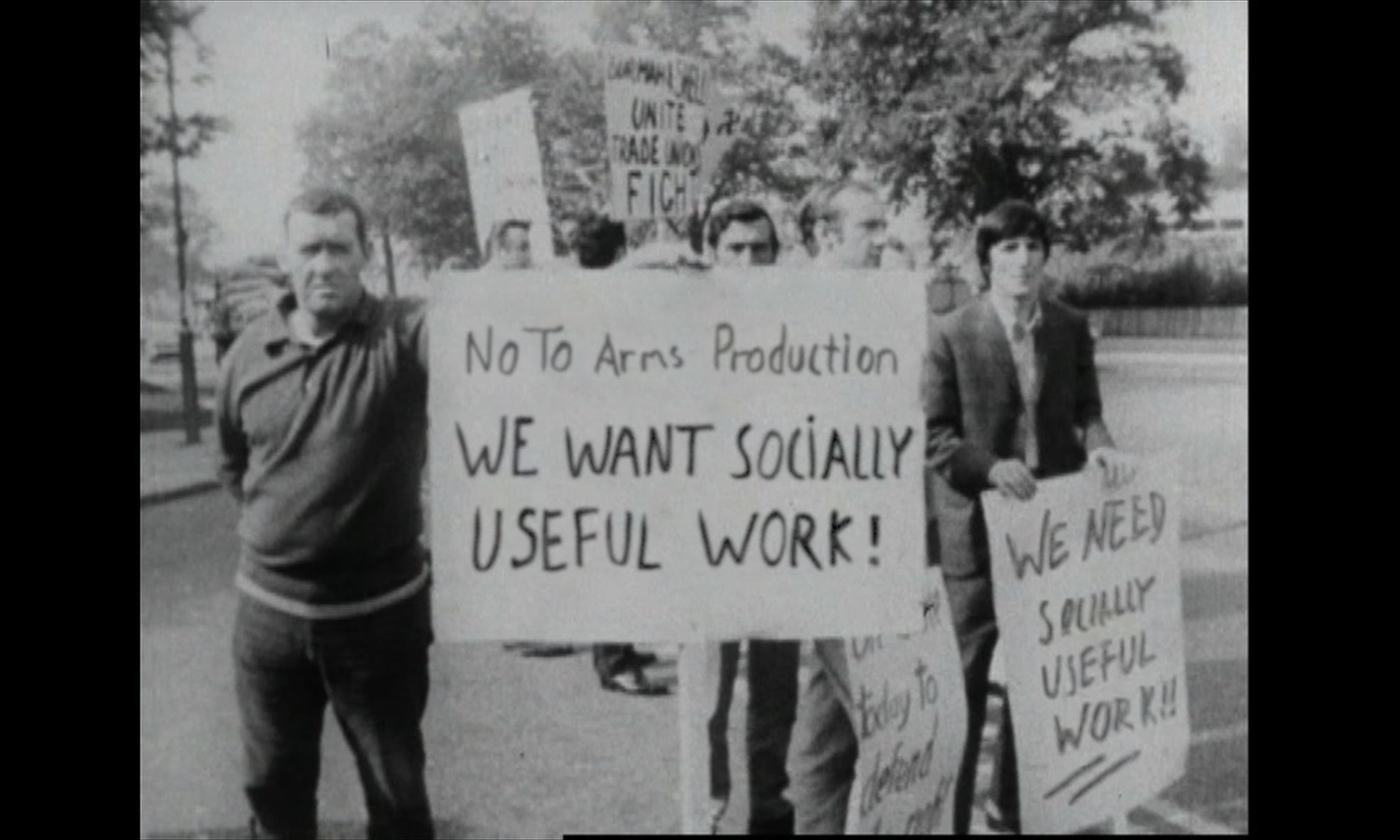
Lucas Aerospace was part of Joseph Lucas Ltd, a Birmingham firm whose name was stamped on half the electrical components in British industry. By the mid-1970s its aerospace division employed somewhere between eleven and thirteen thousand people across seventeen sites, from Burnley to Willesden, organised in around a dozen separate trade unions. Roughly seventy per cent of the work was military, paid for by the taxpayer.
That fragmentation was not an accident of history. It was an asset on the balance sheet. Management negotiated centrally and the workforce negotiated locally, site by site, craft by craft, which meant management could play Bradford off against Burnley and draughtsmen off against fitters indefinitely. Between 1969 and 1973 the stewards built the thing that made everything else possible: the Lucas Aerospace Shop Stewards’ Combine Committee, a cross-site, cross-union body meeting at independent venues, with the deliberate architecture of one site, one vote. It bridged the oldest division in British industry, the one between the men who designed the thing and the men who made it.
Then came 1974, restructuring, and the promise of thousands of redundancies dressed in the familiar language of international competition and technological change.
In November of that year thirty-four Combine delegates went to the Department of Industry to ask Tony Benn, then Secretary of State, to nationalise Lucas Aerospace. Benn told them he did not have the power. He suggested instead that they write their own corporate plan, something the government could point to as justification for intervention. It was a piece of advice offered almost casually, and it produced one of the most extraordinary documents in the history of British labour.
The Combine’s first instinct was to ask the experts. They wrote to around 180 universities, research institutes and official trade union bodies asking for ideas for socially useful products. They received three replies. The intellectual establishment of a country then still calling itself an industrial nation had, on this question, almost nothing to say.
So they asked themselves. Questionnaires went out across every plant: what machine tools do we have, what skills sit on this floor, what could we make that people actually need? Over fourteen months the workforce produced more than 150 detailed product proposals, with drawings, costings and training requirements attached.
What was in it
The list reads today less like a period curiosity than a leaked memo from the future. Kidney dialysis machines and portable life support. Artificial limb control systems and sight substitution aids for blind people. Heat pumps, solar collectors, fuel cells and combined heat and power units for social housing. Wind turbines, on the reasoning of Combine delegate Phil Asquith that the step from an aircraft power generator to a wind turbine is not a large one. Hybrid petrol and electric power packs for road vehicles. Braking and retarder systems. Submersibles and oil spill recovery gear, taking underwater telemetry developed for hunting submarines and pointing it at the seabed instead. And telechirics, remote manipulators designed on the explicit principle that the machine should extend the worker’s hands rather than replace them.
They did not stop at paper. A prototype road-rail vehicle was built and demonstrated, a bus capable of running on both tarmac and standard railway track, aimed at rural areas where the Beeching cuts had left the rails and taken the trains.
Nobody should claim the Lucas workers invented the heat pump or the hybrid engine. They did not. What they did was harder and rarer. Working from a shop floor in Burnley, without market research budgets or consultants, they identified in 1976 almost every technology that half a century of subsequent industrial history would validate. Benn’s judgement on it has aged rather well. He called it one of the most remarkable exercises that has ever occurred in British industrial history.
The Plan carried on its front page a sentence that ought to be carved somewhere in Westminster: there cannot be islands of social responsibility in a sea of depravity.
The argument beneath the argument

The Plan is usually remembered as a list of products. Its intellectual core was something more dangerous.
Mike Cooley was a senior design engineer at Lucas, chair of the local branch of the technical union TASS, and the man who gave the Combine its philosophy. In Architect or Bee? he took Marx’s contrast between the bee that builds by instinct and the architect who builds the structure in imagination first, and turned it on the drawing office. Technology, Cooley argued, is not neutral. Machine design, shop layouts and control systems are engineered choices, and under industrial capitalism they are engineered to concentrate judgement upwards and strip it out of the hands below.
Cooley was watching computer-aided design arrive at Lucas and he understood immediately what it was for. Taylorism had already been done to the assembly line, timing and fragmenting manual work until the worker became an appendage. CAD, he warned, was Taylorism arriving for mental labour: capturing the tacit, uncodified knowledge of experienced engineers, formalising it into software, and then discarding the engineer. His alternative was human-centred systems, machines built to augment the person operating them. He was sacked, effectively, in 1981. That same year he received the Right Livelihood Award for the theory and practice of human-centred, socially useful production, and he gave the prize money to the Combine.
Read that argument again in 2026, with generative AI being trained on the accumulated work of software developers, illustrators, translators, radiographers and writers, and then sold back to their employers as a reason to employ fewer of them. Cooley described the mechanism forty-six years ago, in a book about drawing offices in the West Midlands. The workers are the experts, he said. It was not a slogan. It was a claim about where knowledge actually lives, and the entire AI industry is currently proving him right by mining it.
How it was killed
Three institutions closed the door, and it matters which three.
Lucas management refused to negotiate on the Plan’s contents at all. Not to reject specific products, but to refuse the premise. What a company makes is a managerial prerogative and a property right, and admitting the workforce to that decision was intolerable regardless of the merits. The Combine had not proposed a wage claim. They had proposed a different constitution for the firm.
The official trade union machinery, particularly within the Confederation of Shipbuilding and Engineering Unions, was cool at best and hostile at worst. A cross-factory, multi-union combine committee that bypassed national bargaining structures was a challenge to the unions’ own hierarchy as much as to the company’s. There is an uncomfortable lesson in that for the movement, and it has never really been absorbed.
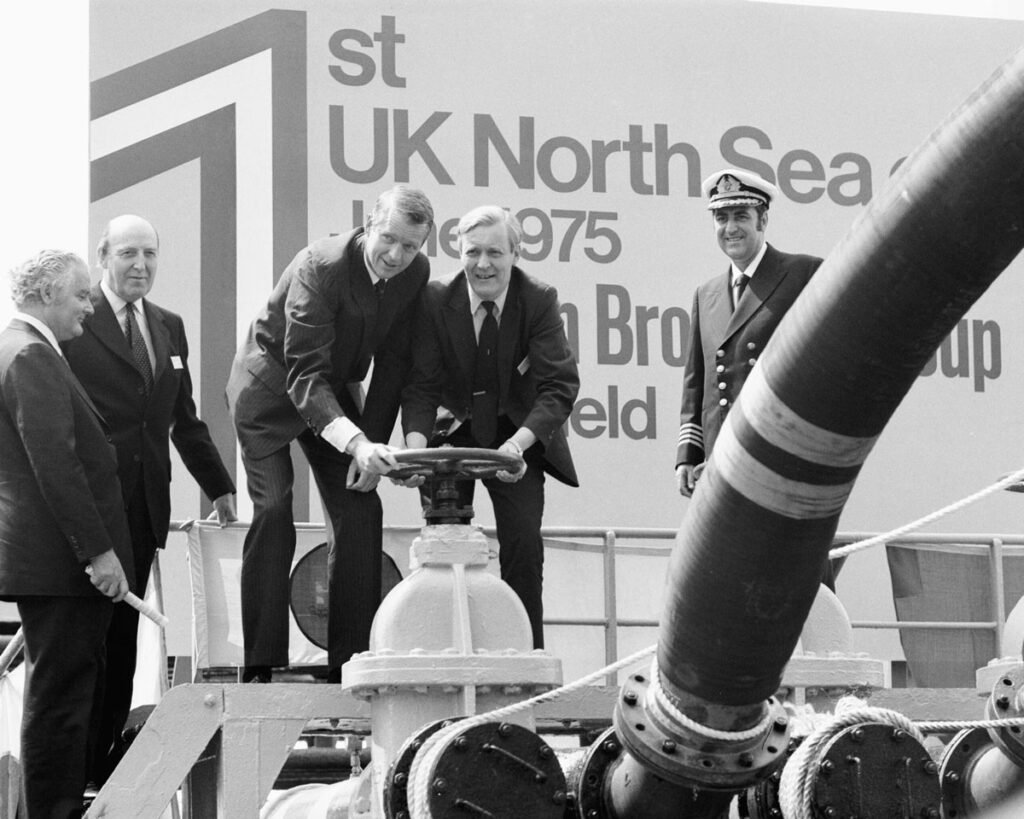
And the state walked away. Benn was moved from Industry to Energy in June 1975, before the Plan was even published. The Industry Act 1975 contained the statutory planning agreements that could have compelled a company taking large volumes of public money into genuine co-determination over its future. They were never used on Lucas. The government kept paying for the military contracts, kept paying the redundancy money, and declined to pay for the alternative.
The serious objection deserves a serious answer. Was the Plan commercially naive? In parts, certainly. Lucas Aerospace was a components supplier, not a consumer manufacturer, and some of the 150 ideas were sketches rather than propositions. Shop stewards are not marketing departments.
But that objection collapses on contact with what the Plan actually asked for, and with what the British state is doing right now. The Combine never proposed that Lucas simply start selling dialysis machines into a void. They proposed a phased conversion underwritten by the state, on the reasoning that public money was already the customer. That is not utopian. That is the exact model by which the Defence Investment Plan, published this July, commits £298 billion over four years, holds core defence spending at 2.7 per cent of GDP from 2027-28, and puts £5 billion into drones and autonomous systems. Guaranteed public demand is precisely what makes an industrial sector viable, and Whitehall knows it, because Whitehall does it every single day for weapons.
The Lucas Plan was not rejected because industrial planning does not work. It was rejected because industrial planning works extremely well, and letting workers do it would have shown who else could.
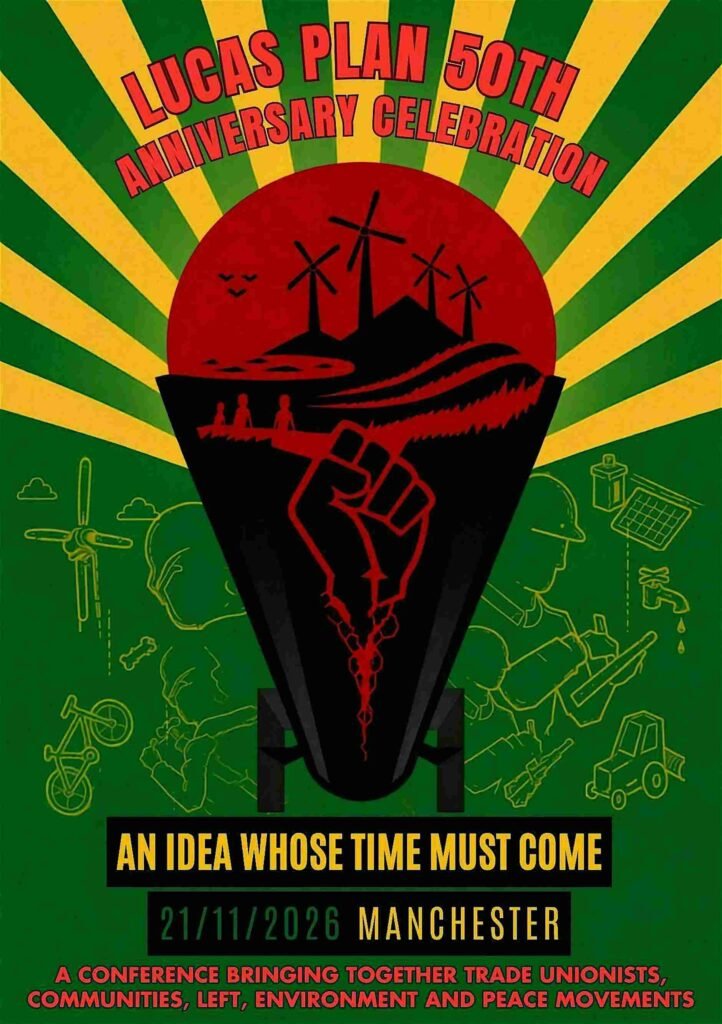
An Idea whose time must come: Lucas Plan 50th Anniversary Celebration
Britain’s manufacturing sector now accounts for around 8.5 per cent of national output. In the decade the Lucas workers were writing, it was closer to a quarter. Into that hollowed landscape the government is now pouring the largest sustained defence build-up since the Cold War, £250 million in Defence Growth Deals, £182 million in skills, thirty-five universities signed up for life, 24,000 apprenticeships a year, all of it directed by the state towards a single purpose.
Everything the Combine asked for exists. The capacity to plan, the money to fund it, the institutional machinery to align research and skills and procurement behind a chosen outcome. All of it is operational. It is simply pointed somewhere else.
Which is why the most instructive Lucas Plan of 2026 is not in Britain at all. In July 2021 the private equity house Melrose Industries announced the closure of the GKN Driveline plant at Campi Bisenzio outside Florence, sacking more than four hundred workers by email. The GKN Factory Collective occupied the plant and, instead of negotiating better redundancy terms, drafted a conversion plan: cargo bikes and photovoltaic panels, built under workers’ control, in alliance with the climate movement. Five years on the sit-in continues, the workers have raised hundreds of thousands of euros in popular shareholding, and they have formed a cooperative.
The crucial part is what happened around them. Tuscany passed a regional law on industrial consortia in December 2024, and in July 2025 the Industrial Consortium of the Florentine Plain was established between the region, the metropolitan city and three municipalities, creating the legal vehicle to take on a plant abandoned by a British fund and reindustrialise it. That is the statutory backing Lucas never got. It is what a planning agreement looks like when a government is prepared to use one.
So the demand at fifty is not commemorative. Give the Defence Diversification Agency that the TUC voted for in 2017 and Unite has argued for since real statutory powers, public capital and a duty to bargain with the workforce over conversion, not just over severance. Attach conditions to defence contracts requiring genuine co-determination on product strategy where public money dominates the order book. Extend the same principle to the technology question Cooley identified, so that the introduction of algorithmic management and AI systems into a workplace becomes a matter for negotiation rather than announcement. And accept the Combine’s founding insight, that the people who know what a machine can do are the people standing in front of it.
The men who built the Combine are mostly gone now. Mike Cooley died in 2020. Their archive is being digitised, their film exists, and their anniversary is being marked this year by trade unionists and environmentalists, including at Manchester Friends of the Earth’s An Idea Whose Time Must Come, under a title that has hardened since 2016, from a question to an imperative.
We looked at this idea ourselves six years ago, in Five Lessons From The Lucas Plan. The lessons have not aged. Only the excuses for ignoring them have multiplied.
They were told their plan was unrealistic by an establishment that has spent the following half century failing to build the wind turbines, heat pumps, hybrid vehicles and dialysis capacity they designed, while presiding over the fastest deindustrialisation in the Western world.
Nobody has ever refuted the Lucas Plan. They only ever refused it. Refusals can be overturned.