A decade after the EU referendum, Britain’s ‘Remoaners’ are still trying to scrub out seventeen million votes with an asterisk. Their contempt is not for a treaty, but for the people who dared to touch the ballot.
Only When They Lose
Andy Burnham did a great job picking at the scab, and social media is the new frontline where the Brexit wound refuses to close.
A decade on from the referendum, the die-hard Rejoiners are still weeping into their timelines, crying “Bregret” and sneering about “Brexshit” as if their surface-level understanding of the European Union were an intellectual badge of honour. Their historical amnesia is almost comedic. It was Ted Heath and the Tory establishment that dragged Britain into this neoliberal architecture in the first place, yet a certain brand of comfortable liberal still treats a corporate, right-wing trading bloc as if it were an international peace commune.
Their contempt is not really for a treaty. It is for the people who dared to vote the wrong way….
There is a peculiarly British arrogance that only surfaces when the establishment loses an argument to the public. It retreats immediately into the small print. The loudest voices no longer sit in Whitehall committee rooms; they lurk on social media, clutching the word “advisory” with the smug satisfaction of a clerk who has found an expired parking voucher.
You know the profile: the constellation of yellow stars, the “Still European” bio, the reflex reply insisting the 2016 vote was merely a glorified opinion poll. Leaving a treaty organisation no more makes you un-European than resigning from a Pall Mall club removes you from London. But this was never about geography. It was about belonging to a professional class that wears its virtue as a badge and its defeat as a personal insult.
Ask yourself a straight question: suppose Remain had scraped over the line by a single postal vote in Oxfordshire. Would these same voices have spent ten years demanding that Parliament rip up the result? Would they have dismissed their own victory as an “advisory” suggestion?
Not on your life. A Remain victory would have been declared the settled will of the nation, carved into granite and placed permanently beyond appeal. The crime of 2016 was that the working class broke the script. The former pit villages and steel towns, written off by polite society for forty years, walked into polling stations and voted the wrong way. From that moment on, the asterisk became more sacred to the establishment than the ballot paper.
Push a Remoaner past “Advisory” and you get three more excuses: the bus, the margin and, when all else fails, Russia.
THE PROMISE IN THE SMALL PRINT
Since the Rejoiners are so fond of facts, let us deal with theirs.
Yes, the referendum was legally advisory. The European Union Referendum Act 2015 contained no clause compelling the Government to act on the result. Nobody serious disputes it. But before a single vote was cast, David Cameron’s government spent £9.3 million of public money sending a leaflet to households across the country. It said, in plain English: “This is your decision. The Government will implement what you decide.”
It did not say “we will take your views into account”, nor “subject to approval by people who know better”. It said implement.
Parliament then did exactly what the constitution requires. After the Supreme Court ruled in the Miller case that ministers needed Parliament’s authority to trigger Article 50, MPs passed the European Union (Notification of Withdrawal) Act 2017, by 498 votes to 114 at second reading.
Theresa May invoked Article 50 on 29 March 2017. Weeks later, both main parties fought a general election on manifestos pledging to respect the result. That is not a mob trampling the constitution. That is the constitution working.
A vote can have no automatic legal force and still carry full democratic legitimacy. The Remoaners have spent a decade pretending not to know the difference.
THE BUS, THE MARGIN AND RUSSIA
Push a Remainer past the advisory argument and the arithmetic, and you get three more excuses: the bus, the margin and, when all else fails, Russia.
The Arithmetic
The arithmetic of the sore loser, endlessly recycled online: “only 37 per cent of the electorate voted Leave.” Correct, 37.4 per cent. And 34.7 per cent voted Remain, a figure that never makes it into the thread. The 27.8 per cent who stayed at home voted for nothing, yet we are invited to file their silence under Remain.
Of those who did vote, 51.9 per cent chose Leave, a margin of almost 1.27 million votes, on a turnout of 72.2 per cent. That turnout was higher than at any general election since 1992. Apply the Rejoiners’ test consistently and no modern British government survives it.
The Margin
Then the margin. Fifty-two to forty-eight, we are told, is far too narrow for constitutional upheaval. The European Union itself was built on less. In September 1992, France ratified the Maastricht Treaty, the treaty that created the EU, by 51.05 per cent to 48.95, a thinner margin than Brexit. Three months earlier, Denmark had rejected it outright, by fewer than 47,000 votes. Brussels did not treat that as the sacred will of the Danish people. Denmark was handed a package of opt-outs and asked to vote again, and in May 1993 it gave the right answer.
A narrow vote, it seems, is a solid foundation when it builds the European Union and a constitutional outrage when it leaves it.
Labour’s 2024 landslide rested on roughly one registered voter in five. Strangely, nobody called his government advisory.
The Bus
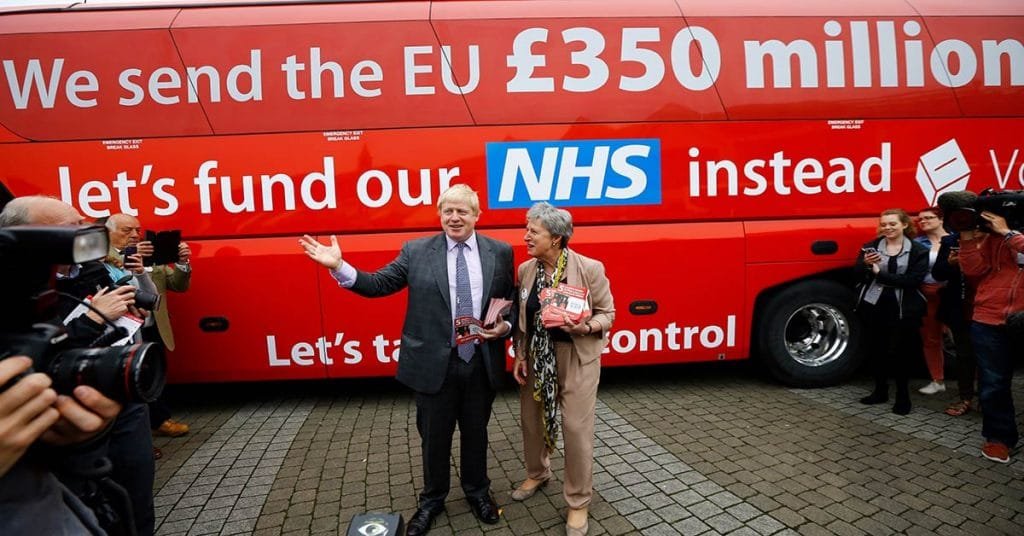
Every campaign has its slogans, and the £350 million on the side of a bus was one of them. It was hardly a secret weapon. The UK Statistics Authority publicly called the figure misleading weeks before polling day, and the bus was picked apart on the news night after night. To claim that 17.4 million adults heard all that and still voted on the strength of a bus is not analysis.
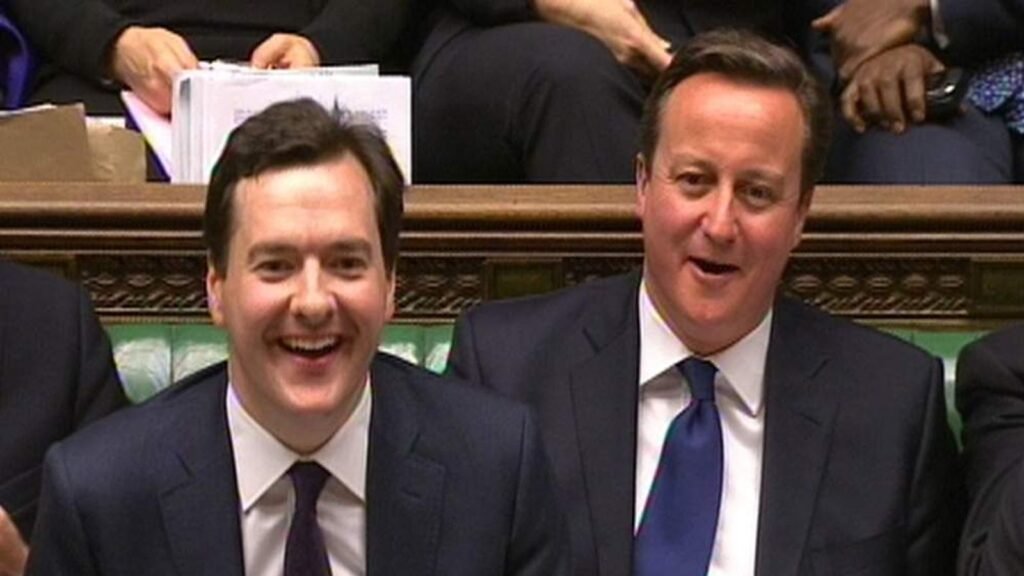
It is contempt with a footnote. And if campaign exaggeration voids a result, the Remain side should look at its own record. The Government spent £9.3 million of public money pushing its case through letterboxes. George Osborne stood in a DIY warehouse and declared that “a vote to leave will push our economy into a recession”, with half a million jobs lost and a punishment budget of tax rises and spending cuts to follow. The recession never came. Philip Hammond scrapped the punishment budget within weeks of taking over at the Treasury.
The Russians
Which brings us to Russia, the Remainers’ last resort. Very well, let us talk about Russian money and the British press in 2016. Two newspapers told their readers to vote Remain: the Independent and the Evening Standard. Both had been bought by Alexander Lebedev, a former KGB officer once posted to the Soviet embassy in London, and both were run by his Moscow-born son, Evgeny. Nobody sensible thinks that made Remain voters Kremlin stooges.
But apply the Remoaners’ own rule, under which any Russian connection anywhere near a campaign is proof of a plot, and they have some explaining to do. Strangely, the rule only ever seems to point one way.
As for the material case for our departure, one could fill volumes citing the socialist giants who warned for decades that the European project was an engine of corporate power, from Clement Attlee and Nye Bevan to Tony Benn, Peter Shore, Barbara Castle, Michael Foot and Dennis Skinner. They understood that you cannot build a democratic socialist commonwealth if your economic policy is permanently policed by an unelected commission in Brussels. But strip away the constitutional theory, and the core of the matter remains what it has always been: it is the economy, stupid. The working class did not vote to defend abstract statutes; they voted against forty years of managed decline, wage stagnation and the deliberate sacrifice of domestic industry to global capital.
Dislike the result if you must. Campaign to reverse it, and win the argument if you can. That is your democratic right. What you are not entitled to do is pretend that one word in a statute cancels a government’s promise, an Act of Parliament and the votes of 17.4 million people.
In the Remoaners’ democracy, the people are sovereign when they vote correctly and merely advisory when they don’t. The ballot was never their problem. The voters were.
Enjoyed this read? I’m committed to keeping this space 100% ad-free so you can enjoy a clean, focused reading experience. Crafting these articles takes a significant amount of research and heart. If you found this helpful, please consider a “small donation” via PayPal or GoCardless to help keep the lights on and the content flowing. Every bit of support makes a huge difference.

Support The Tribune
INDEPENDENT. READER-FUNDED. AD-FREE.
If you value this article, help keep The Heartlands Tribune publishing independent journalism without intrusive advertising or corporate sponsors.
Choose your monthly amount
Secure payment via GoCardless