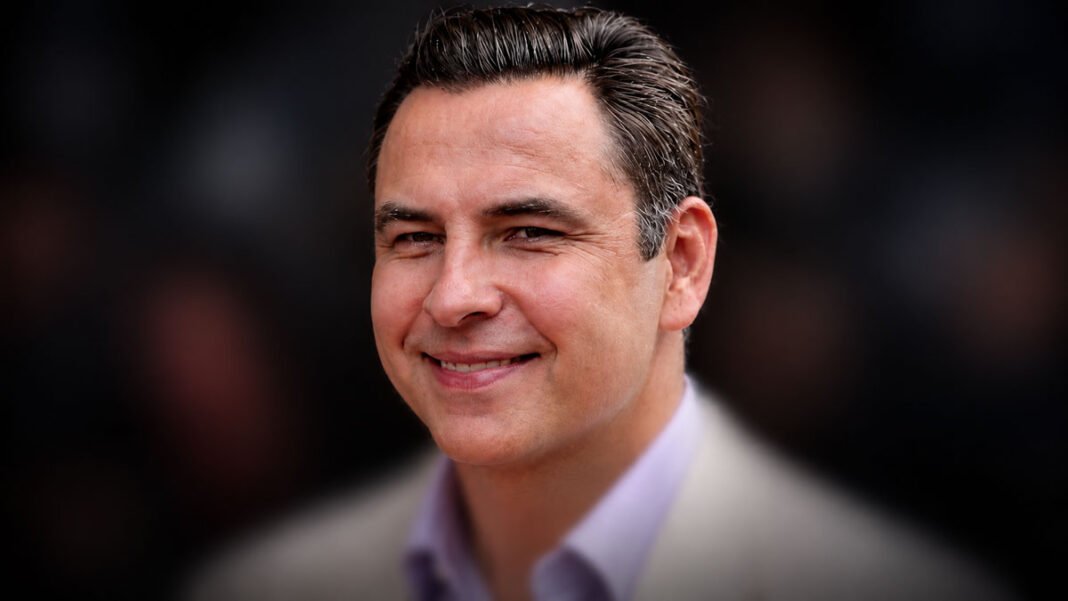
Britain jailed Russell Brand this week and named David Walliams in investigations. Thousands of poor, mostly white girls abused by grooming gangs are still waiting for the same justice, and every day the state stays silent, its own credibility drains further.
A Question of Class and Justice
How the British State Sacrificed Working-Class Girls While Revelling in Celebrity Scandals
There is a grim, reliable rhythm to English public life. When a famous name is accused, the state discovers its limbs. Police forces find resources that were supposedly extinct; detectives scour decades-old diaries; press conferences are summoned, the media springs to life and the machinery of the Crown Prosecution Service whirs into immaculate, high-profile motion. The law, we are invited to believe, is an eagle that strikes without fear or favour
That is how it should be. Justice must not only be done; it must be seen to be done.
This week Britain has been shown what it can do when it decides that something matters. On Monday Russell Brand was jailed for ten and a half years for rape and sexual assault. The women he attacked were believed, and twelve jurors convicted him on their word. And as though this week were determined to drag the secrets of Britain’s celebrity establishment into the daylight, the High Court refused David Walliams’ attempt to prevent the publication of allegations of sexual misconduct involving young women and teenage girls. He denies them, and no court has ruled on them, but the box has been opened, and we all await what comes out before Pandora shuts it closed.
Meanwhile, outside Southwark Crown Court, a Metropolitan Police detective said the Brand verdict proved that no one is above the law, “no matter how famous or powerful they may be”.
Yet travel north, through the hollowed-out post-industrial towns of Rotherham, Oldham, Rochdale and Telford, and that proud declaration begins to ring rather hollow. The same justice system that can reach decades into a celebrity’s past somehow spent years failing to see what was happening to working-class girls in plain sight. Police dismissed victims, authorities ignored warnings, and officials shuffled paper while children were groomed, raped and traded like chattel.
The public notices this disparity. They see it with the plain common sense that Westminster considers uncouth. The question ordinary people ask on factory floors, building sites and across kitchen tables is not complicated: if the criminal justice system can summon the forensic determination to investigate and prosecute celebrity figures like Russell Brand, why have so many men involved in the organised sexual exploitation of working-class girls escaped justice? And where is the reckoning for the police officers, council officials and institutions whose failures allowed these crimes to continue for years?
The question is treated by the political establishment as an embarrassment, an unwelcome intrusion into managed decline. The standard defence, stated as fairly as possible, is that celebrity cases differ fundamentally from street grooming. Famous men leave paper trails, agent correspondence, hotel itineraries, and high-profile witnesses; organised grooming networks, by contrast, rely on coercive silence, unrecorded cash, destroyed phones, and the deliberate targeting of teenage girls whose testimony defence barristers can easily pull apart in court. Gathering evidence against gang networks, authorities insist, requires painstaking, multi-agency intelligence operations spanning years.
That defence would carry weight if the delays were purely operational. They were not. They were political, institutional, and rooted in a deep, rotting class contempt.
As Baroness Casey’s audit and Alexis Jay’s landmark Rotherham report laid bare, children were not ignored because the police lacked detective talent. They were ignored because of who they were. They were working-class girls in broken mill towns, children in care, teenagers with chaotic lives whom respectable middle-class officials felt comfortable writing off as “lifestyle choices” or child prostitutes. The institutions of the British state did not fail these children by accident; they sacrificed them to protect institutional peace. Fear of racial tension, bureaucratic inertia, and a toxic cocktail of cowardice meant that civil servants, councillors, and senior police officers preferred quiet council offices to the messy reality of pursuing violent predatory networks.
Even now, after a succession of inquiries, reviews, and belated local trials, the accountability remains an insult. A handful of ringleaders have received hefty sentences, yet hundreds of abusers remain uncharged. Worse still, not a single senior official, chief constable, or council director who turned their back on those girls has ever stood in a criminal dock for malfeasance in office. In modern Britain, failure at the top of a public body is rewarded with an early pension or a quiet consultancies sideways move.
The comparison with celebrity trials cuts to the marrow of what is broken in our state. Celebrities are pursued because prosecuting them flatters the system. It proves the institutions are progressive, modern, and vigilant; it generates glowing headlines and demands minimal self-examination from statutory services. Pursuing the grooming networks of northern towns does the opposite. Every successful prosecution of an organised grooming ring is not a tribute to the state’s vigilance, but an indictment of its prior criminal neglect. It reminds the world that local authorities, social services, and constabularies were complicit in leaving children to the wolves for decades.
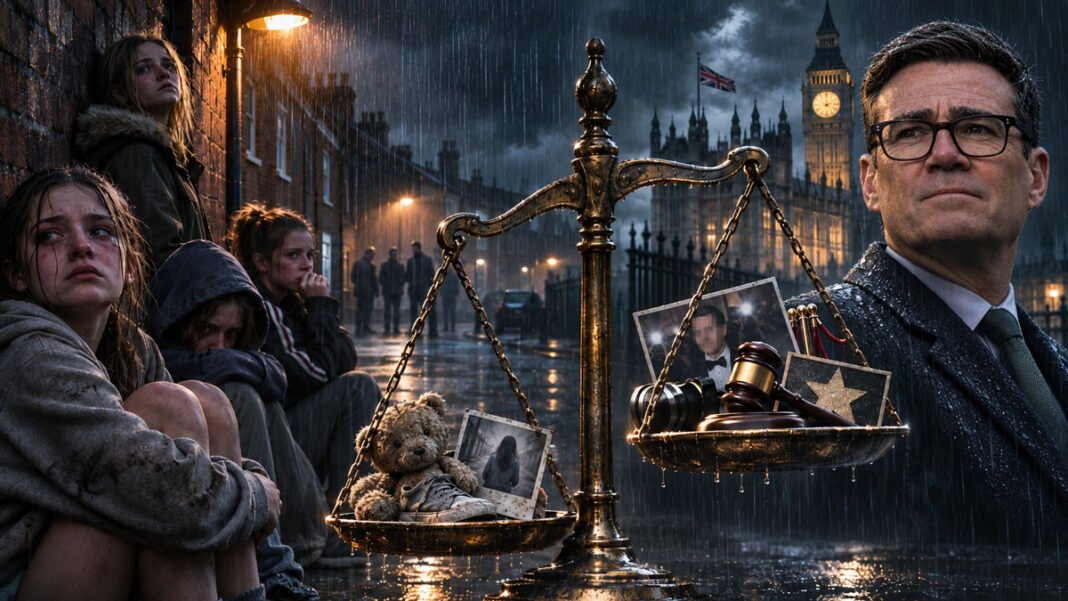
This is the two-tier reality of British justice: energetic when there are headlines to be harvested, sluggish and evasive when institutional reputation is on the line.
They have waited more than twenty years. Most are still waiting.
WHAT HAPPENED TO THEM
We have to say plainly what happened, because for more than two decades, official language has helped obscure the sheer horror of it.
This is just one of the thousands of cases. An 11-year-old girl, already known to police as a victim of sexual abuse, was found in a derelict house with adult men. Who did the police arrest? The child, for being drunk and disorderly. Not one of the men.
A police officer described the sexual abuse of a 12-year-old girl by up to five adult Asian men as “100% consensual”. Fathers who desperately tried to rescue their daughters from houses where they were being abused found themselves arrested instead.
These are not rumours or allegations plucked from social media. They are cases raised during a parliamentary hearing into the Rotherham child sexual exploitation scandal.
The clip below is deeply disturbing. But it needs to be heard, because it exposes the horror inflicted on vulnerable children in our post-industrial heartlands, and the appalling failures of the very institutions entrusted with their protection.
Children were treated as offenders while the adults exploiting them escaped arrest. Parents trying to protect their daughters found themselves on the wrong side of the law. And when Parliament demanded answers, senior police officers couldn’t even explain who had made some of these decisions.
We owe those girls more than another carefully worded apology. We owe them the truth, accountability and the courage to name what happened without hiding behind the language of institutional failure.
Those children weren’t failed by a lack of safeguarding terminology. They were failed by adults who had a duty to protect them.
In Rotherham, at least 1,400 children were sexually exploited between 1997 and 2013. In Telford, more than a thousand were abused over three decades. In Rochdale, girls as young as 13 were passed between men above takeaways and in taxis. In Oxford, a judge sentencing one man described how he prepared a 13-year-old girl for gang rape. In Telford in 2000, 16-year-old Lucy Lowe was killed with her mother and sister when the man who had abused her since she was 13, and who had fathered her child, set fire to their home.
In Manchester, Victoria Agoglia told the people responsible for her what was happening. In July 2003 she told her social worker that she was using heroin every day and that an older man was injecting her in return for “favours”. A week later she told her drugs worker. No investigation followed. A man already identified as her pimp had been given permission to visit her where she lived three times a week. In September a 50-year-old man injected her with heroin, and she died five days later. She was fifteen.
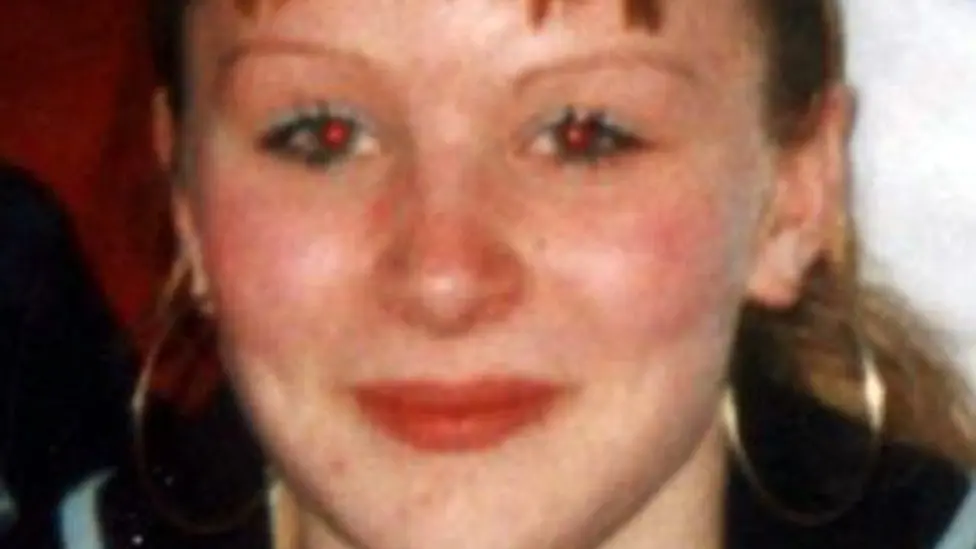
When these girls asked for help, the state sent them away, and often it went further. South Yorkshire officers treated them as “consenting” to their own abuse. One parent was told that having an older Asian boyfriend was a “fashion accessory” for girls in Rotherham. Baroness Casey has said that many victims were convicted as “child prostitutes”. When a father in Rotherham went to rescue his daughter from her abusers, South Yorkshire Police arrested him. Katie Lam told the House of Commons about it.
These girls were let down once by the men who abused them and again by the institutions that ignored them. Since then they have been let down by every government that has handled their suffering as a problem to be managed rather than a crime to be punished.
A COVER-UP
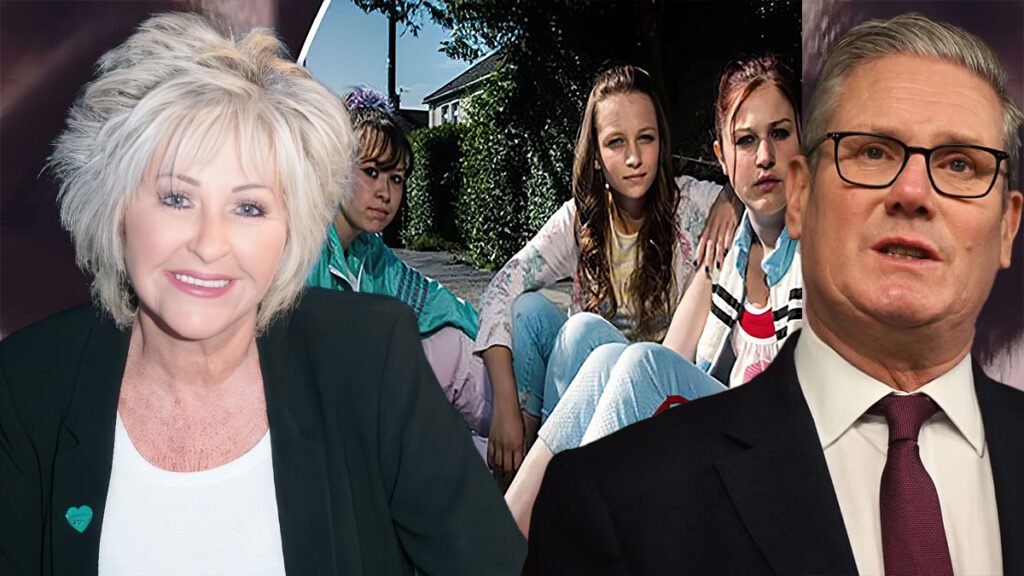
The public sees a cover-up, and so does this paper. The evidence for it is on the official record.
Operation Augusta, set up after Victoria’s death, identified at least 57 children believed to be victims and up to 97 suspects. Greater Manchester Police closed it in July 2005, citing resources. Baroness Casey’s national audit found that the ethnicity of perpetrators had been “shied away from”, that two-thirds of offenders still had no ethnicity recorded, and that the word “Pakistani” had been removed from archived victim files. In 2020 the Home Office at first refused to publish its own research into grooming gangs, claiming publication was not in the public interest.
Taken together, this is not a series of unconnected blunders. It was a choice, made again and again over twenty years by councils, police forces and the Home Office, to protect institutional peace at the expense of children. The authorities were afraid of being called racist and afraid of unrest in towns already divided and already poor. They decided the truth was more dangerous than the abuse. So they managed it quietly, and the girls were left to their abusers.
They decided the truth was more dangerous than the abuse.
PROCESS INSTEAD OF JUSTICE

The betrayal did not end when the abuse came to light. The girls’ suffering became a political argument.
In January 2025, Keir Starmer rejected a national inquiry and accused those demanding one of jumping on a “far-right bandwagon”. Six months later, after Casey’s audit, he reversed his position. Then it took most of another year to find a chair. During that time four survivors resigned from the victims’ panel, and two of them told this paper’s readers they feared a whitewash.
The inquiry did not formally begin until April 2026. Operation Beaconport, the national review of closed cases, has received more than 1,200 investigations that police dropped, and by the summer it had sent eight back to be reopened. Operation Linden investigated 47 South Yorkshire officers, and not one lost their job. Four former Rotherham officers have since been arrested over allegations that they abused children themselves. One was arrested on suspicion of misconduct in public office. None has been charged.
The gangs are being prosecuted at last: Operation Stovewood has now jailed 52 men in Rotherham alone. But the state has never prosecuted itself. Victims keep getting reviews, apologies, panels and promises that lessons have been learned. What they keep being denied is consequences.
BURNHAM’S PROMISE
No politician has made more promises about this than Andy Burnham, and no politician now has more power to keep them.
Soon after he became Mayor of Greater Manchester in 2017, Burnham commissioned an independent review of how child sexual exploitation had been handled across the region. When its first report exposed Augusta in 2020, he promised that resources, race and the passage of time would never again stand in the way of justice. To his credit, that report led police to reopen Victoria’s case.
What followed was slow and incomplete. The Oldham review, commissioned in 2019, did not appear until 2022. Survivors and campaigners attacked it as limited. The Rochdale report in 2024 found widespread organised abuse between 2004 and 2012 and concluded that many of the abusers had still not been caught. Then, in July 2024, the two reviewers who had led the work for seven years resigned before the final stage. A whistleblower told GB News that they had been blocked from accessing information. The review Burnham promised Greater Manchester ended with his own investigators walking out.
There is a further question that only he can answer. Augusta was shut down weeks after Burnham became a junior Home Office minister in 2005. No published evidence links him to that decision. But Maggie Oliver, the detective who resigned from Greater Manchester Police over Rochdale, says he turned away from victims, and she calls the Oldham review a cover-up. His office denies it. The man who promised Greater Manchester justice now leads the whole government. He should open every file from his own review, and he should give evidence under oath to Baroness Longfield’s inquiry without waiting to be asked.
THE QUESTIONS THAT MUST BE ANSWERED
So who was watching the watchers? These questions must be answered, plainly and publicly.
Who decided to shut down or restrict investigations such as Operation Augusta, and why?
Who set the limits of the reviews and inquiries that followed, and did any of them have a conflict of interest?
Why were victims ignored, disbelieved or sidelined while the men abusing them carried on?
If criminal thresholds were not met in the past, will obstruction, suppression or misconduct in public office now be examined?
And above all: will victims ever see justice, or only process?
Justice is not another review. It is not another apology. It is not another promise that lessons have been learned. Justice means consequences. Until those with power are held to account, survivors will keep turning up in Parliament, on television and in the newspapers with their own evidence, documents and names, because every institution that should have listened failed them.
THE COST OF SILENCE
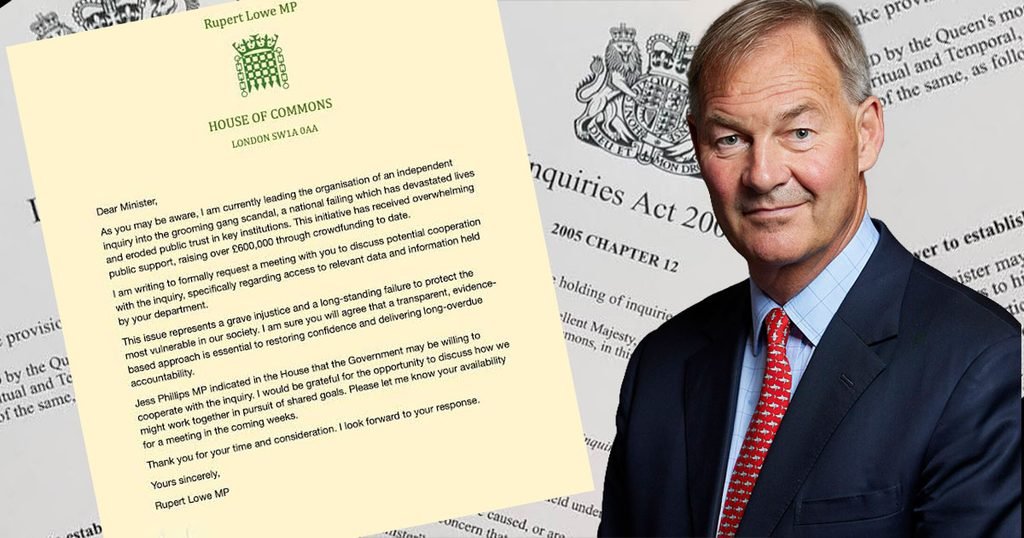
Every day this stays in the dark, the government loses the argument by default. People are right to want justice. When they see a state that can jail a famous comedian and name a famous author, yet has never charged a single council director or police commander over grooming gangs, they draw the obvious conclusion. When mainstream politics will not tell them the truth, they go to people who claim they will. Reform has made Burnham’s record a campaign weapon.
Rupert Lowe raised more than half a million pounds for his own grooming gangs inquiry, saying the political system would not act, and turned that campaign into a political party, Restore Britain. Every closed file and every unanswered question is a gift to both of them.
Sunlight is the only disinfectant. A government that wants to take the anger out of this issue has to tell the whole truth: name the people who failed these girls, open the records and bring the charges the evidence supports. Anything less leaves a stain across the country and lets a bitterness keep rising that will turn very sour.
Justice must not only be done, it must be seen to be done. Until the state shows the same relentless fury against the abusers of forgotten children as it does under the cameras of high-society scandals, ordinary people will rightly conclude that in twenty-first-century Britain, the scale of justice is weighted entirely by class.
Enjoyed this read? I’m committed to keeping this space 100% ad-free so you can enjoy a clean, focused reading experience. Crafting these articles takes a significant amount of research and heart. If you found this helpful, please consider a “small donation” via PayPal or GoCardless to help keep the lights on and the content flowing. Every bit of support makes a huge difference.

Support The Tribune
INDEPENDENT. READER-FUNDED. AD-FREE.
If you value this article, help keep The Heartlands Tribune publishing independent journalism without intrusive advertising or corporate sponsors.
Choose your monthly amount
Secure payment via GoCardless